First Look 2026 Review: IT GOES THAT QUICK, A Home Movie That Goes Beyond
It's sort of a continuation of a home movie. But categorizing the film as either a documentary or a narrative would be doing the film a disservice.

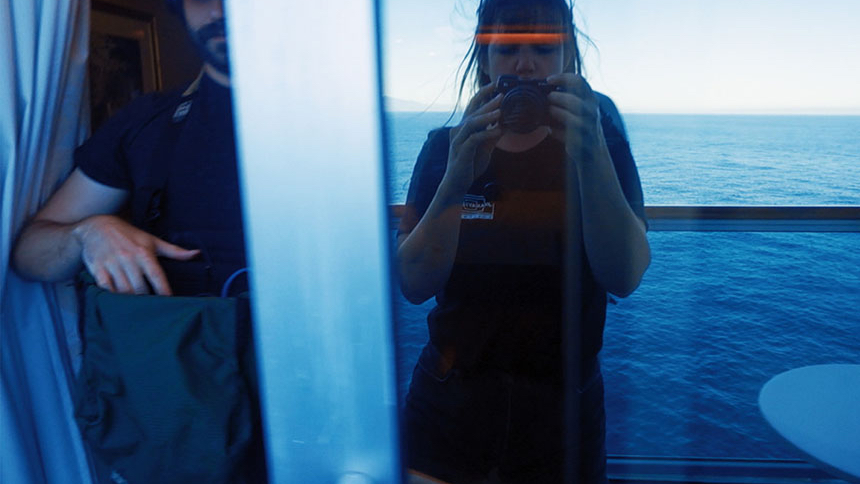
We associate home movies as nostalgic trips to the past, documenting precious events in life: birthdays, holiday gatherings, weddings, vacations, and so forth.
In documentaries and narrative features, these old, faded images are used as ephemeral artifacts, to give more layers and contexts to support the narrative. But what if these artifacts are the subjects themselves in a film?
Filmmaker couple Ashley Connor and Joe Stankus started working on It Goes That Quick in 2016, filming the lives of their respective families. It’s sort of a continuation of a home movie. But categorizing It Goes That Quick as either a documentary or a narrative would be doing the film a disservice. In it, the filmmakers' family members play themselves, with no clear narratives or big drama, other than displaying the passage of time, Connor and Stankus make the case for quotidian life as art.
Sure, there are gatherings and personal landmark moments in It Goes That Quick, captured in old film and video formats, but the majority of footage shot in the last ten years are more about life, as is -- like them arguing about little things and driving -- featuring lots and lots of moments that take place in cars. I remember a discussion in film class back in college, that if a person in the distant future who views movies from our lifetime, they may not understand our language, but our movement in mundane activities -- walking, eating and driving -- will be the most abundant things they will witness on screen and thus will represent our lives.
Abbas Kiarostami's driving scenes are famous for showing the passage of time and observing life passing by through car windows. For Connor and Stankus, being seasoned filmmakers, this notion is not lost on them. There is a lot of eating and driving in the film.
The title of the film comes from a family member telling a story of losing money fast in Vegas, at a family gathering. But it serves as the unrelenting passage of time, juxtaposing filmmakers' families getting older and greyer.
There are many humorous, as well as sad moments. They also make clear that their family members are being 'directed'; we see and hear one of them calling, "Action," or "Cut," or tail slating (for sync sound), within the previous scene.
They are not reenacting some dramatic moments, though; it’s more of a stage direction -- where to look and what direction to exit the frame. At one point, the arguing old couple say “I love you,” to each other while sitting on the sofa in their living room. Stankus calls the cut, and his grandma says, “I usually call him honey.”
Divided by chapters of the family circles in different configurations (there are grandparents, parents and lots of uncles), they argue about how to arrange tables and what to serve at a Seder dinner, doing favors by giving them rides to and from stores, go grocery shopping, plant trees to commemorate their pet dog who passed away, and gather their old belongings from their old house as they move to an assisted facility.
In the center of it, there are Conner and Stankus as a couple, as they document their wedding, birth of their son and their little trip to Paris. As an established DP, Connor gives the 16mm Bolex-shot home movie footage a little cinematic flair.
It Goes That Quick borrows that documentary/narrative hybrid form to present the most authentic representation of life on screen, but it defies any genre conventions. The filmmakers’ method comes across as genuine, not a gimmick.
What they are after is paying an ode to their family members by showing the most mundane moments in their lives, which is totally recognizable and relatable. I wish all families had their own version of this to cherish.
It Goes That Quick enjoyed its world premiere at First Look Film Festival at Museum of Moving Image in New York last weekend.
Dustin Chang is a freelance writer. His musings and opnions on everyting cinema and beyond can be found at www.dustinchang.com