Diagonale 2026 Review: WAX & GOLD Probes Memory and Myth of Ethiopia's Beloved Autocrat
Austrian filmmaker Ruth Beckermann uses the spatial and historical layers of the Hilton Addis Ababa to examine how the legacy of Haile Selassie is constructed, negotiated and contested through personal memory, archival material and competing narratives.

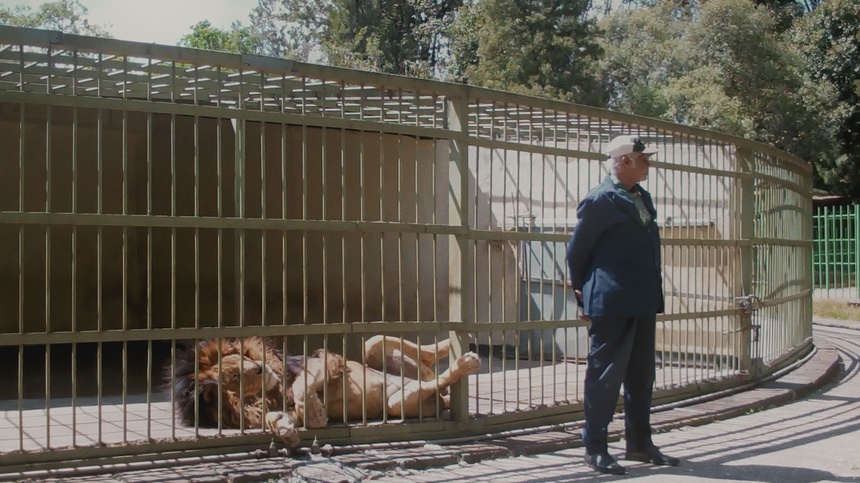
Austrian docu-maker Ruth Beckermann’s latest work, Wax & Gold, takes a simple idea of wandering the corridors of the Hilton Addis Ababa and manages to elaborate it into an essay on collective memory and national identity. The hotel was founded under Emperor Haile Selassie, who retains an almost mythologised status among locals.
While Beckermann does not necessarily aim to untangle this hagiography, Wax & Gold brings political mythology and historical omissions into friction. The title refers to a traditional Ethiopian rhetorical device in which speech carries dual meanings, used to convey nuance, satire, social critique or to navigate complex power dynamics.
Beckermann’s work has long been defined by an essayistic impulse. From Die papierene Brücke through Jenseits des Krieges to Waldheims Walzer, her films operate through juxtaposition, combining archival material, testimonies and the director’s own voice-over, which enters into dialogue. Her previous work Mutzenbacher is also built on a simple idea with an even more minimalistic execution.

Men of different demographics are confronted with excerpts from the pornographic novel Josefine Mutzenbacher or The Story of a Viennese Whore, seated on a couch in front of a camera, and the encounter turns into a form of psychoanalytical session. Wax & Gold, however, has a richer texture, as Beckermann traces Selassie’s presence across nations and periods through archival material and personal recollections, including those of a former servant.
The Hilton hotel serves as a monument to Selassie’s efforts to rebuild Ethiopia, conceived as part of a national modernisation programme, while its standardised global interior is inhabited by specific local histories. Within this bounded environment, Beckermann stages encounters with employees, guests, artists and descendants of imperial figures, allowing for competing interpretations of Selassie. The inclusion of translated excerpts from Ryszard Kapuściński’s The Emperor introduces a demythologising layer, portraying Selassie as an autocratic ruler, while interviewees question whether Kapuściński’s book is fiction or non-fiction.
Curiously, Beckermann’s film feels topical, despite dealing with a subject that is not unfamiliar in historical discourse. She adopts the position of a curious European trying to understand Ethiopian culture and history simply by asking questions. Wax & Gold is not an outright debunking of what could be described as a nostalgic optimism among those who experienced Selassie’s 44-year reign.

They speak positively about his contributions to the nation, while avoiding mention of his material privileges, such as owning 27 limousines. The cult of personality persists, though its root causes remain difficult to pinpoint. In a way, Wax & Gold becomes a psychoanalytical session, not unfolding on a couch but within the controlled, luxurious space of the hotel, where subjects are confronted not with pornographic literature but with their own historical memory.
Beckermann does not engage in the tendential style associated with Sacha Baron Cohen´s approach. While she asks a few provocative, and at times subtly humorous, questions, she remains well-versed in the subject and genuinely interested in hearing a range of perspectives and their justifications from locals, expats and visitors.
Similarly to Mati Diop’s documentary Dahomey on the restitution of colonial artefacts to Benin, Wax & Gold engages with a postcolonial subject, albeit in a more observational and deconstructive manner. Beckermann’s film remains engaging despite its essayistic form, built from a combination of archival material and interviews conducted within the spatial and historical layers of the Hilton Addis Ababa.
The film screened at the 2026 Diagonale.
Wax & Gold
Director(s)
- Ruth Beckermann