Oscars 2026 Interview: 100 LITERS OF GOLD Teemu Nikki on Addiction Without Moralism, Comedy Without Templates, Making a Finnish "Beer Western"

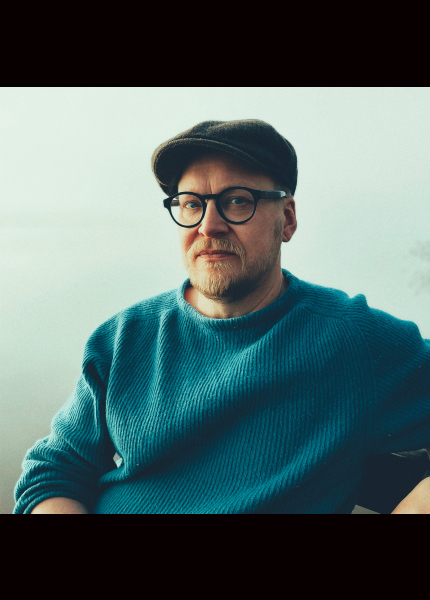
Finnish filmmaker Teemu Nikki delivers the kind of film that resists easy classification, a comedy that slowly sheds its own skin, a portrait of addiction that refuses moralism, and a Western-inflected homecoming set against the disarming warmth of a Finnish summer in 100 Liters of Gold.
Already a breakout box-office success at home and Finland’s official submission as Best International Film for the Academy Awards, the film marks a new high point in Nikki’s singular trajectory: an auteur who moves fluidly between genres yet maintains a tone instantly recognisable as his own.
Shot in the village where Nikki grew up, the film is steeped in personal history, family-made sahti, childhood locations, even his sister’s artwork, and driven by a script written specifically for the duo Elina Knihtilä and Pirjo Lonka. What begins as a raucous drinking escapade between two sisters gradually reveals deeper fractures, turning the film into what Nikki aptly calls a “cry comedy,” a work that laughs with its characters while never looking away from their wounds.
In discussion with Screen Anarchy, Nikki is disarmingly candid about navigating national stereotypes, resisting formula, and embracing risk, whether in shooting a “beer Western” or in preparing a retro sci-fi follow-up. He speaks with equal parts pragmatism and mischief about low-budget discipline, the perils of improvisation, community support, and the uncanny experience of seeing Dennis Lehane draft the American remake of his film.
Screen Anarchy: What drew you to this story of two sisters with what appears to be an alcohol problem?
Teemu Nikki: That’s not an easy question at all. The film is shot in my childhood village, and the drink at the centre of the story, sahti, is something my family has always made. So first, I simply wanted to go back home and make a film there. And I knew from the beginning that it would involve a lot of drinking, but I didn’t want it to be just a drinking comedy. I wanted something with deeper layers.
Another source of inspiration came when I saw Elina Knihtilä and Pirjo Lonka performing together in a theatre play, playing drunk. The moment I saw them, I knew I wanted to write the script for them. Without those two actresses, there would be no film.
How do you write a film about alcoholism, or partying and drinking, without falling into The Hangover template?
I honestly didn’t know whether I’d accidentally made a Finnish version of The Hangover. I hope I didn’t. For me, the key was realism. I wanted the two women to be believable and human, even though some of the things they do are outrageous.
They’re more sensitive, more vulnerable than characters usually are in drinking comedies. And the ending is very different from what audiences might expect from that genre. Drinking comedies usually don’t end like this one.
There’s a moment where they wake up from their drunken stupor, and you play with flashbacks before jumping straight to the hours before the wedding. It misdirects the audience almost playfully.
True. I wanted to move through that section as quickly as possible, you know, the obligatory “what happened last night” part, because for me the more important shift comes later. The idea was to start with the outrageous, entertaining drinking storyline… and then make the audience slowly realise: is this funny anymore? Drinking is fun until it isn’t.
That’s something I wanted to express clearly. That element is not present in The Hangover, and it’s also where I tried to avoid the clichés of Finnish countryside farces. There are many of those, and I didn’t want to repeat them.
And of course, you also wanted to avoid moralizing or becoming patronizing?
I hope I’m not a moralist! For me, the most important thing is to stay on the same level as the characters. I never want to look down on them or say they’re making the “wrong” choices. They’re living their lives the best way they can.
What I do believe is that if you have things you haven’t talked about, traumas, emotional wounds, you should talk about them. Alcohol is the wrong kind of medicine for those issues. The ending reflects that: one sister chooses a different path. Is it a happy ending? I don’t know. But I believe in it.
It’s not an American comedy where everything is neatly resolved. There are still issues they’ll need to work out, though maybe one of them gets away.
Weren’t you worried about reinforcing stereotypes about Finnish people?
I get that question a lot, and honestly, no, I wasn’t worried. For me, the film isn’t about Finnishness. It’s about people with problems, and about a small community that’s very proud of its traditional product, which happens to contain alcohol.
Of course, like every country, Finland has people who struggle with drinking. But I hope international audiences don’t walk away thinking everyone in Finland is an alcoholic. That’s not the story.
When developing the script, did you consult support groups, therapists, or organizations dealing with alcoholism? Or was it primarily your own creative process?
I’m 50 and I work in the film industry, so trust me, I know a lot of people who have quit drinking. Many friends.
And that was part of why I wanted to treat the subject seriously. A couple of my sober friends read the script and gave feedback. One of them even told me that the story is, in its own way, happy. That meant a lot to me.
So it was inspired by real-life experience then?
Yes, absolutely. In Finland, like in many countries, alcohol can be a problem. So while I don’t think the film relies on stereotypes, some of it is rooted in reality.
Despite the subject, you and your DoP went with warm summer image. Why?
It’s a Western. I like to play with genre conventions, and when I returned to my village with my DOP, who also grew up about ten kilometres from my childhood home, we looked at the fields and long roads and immediately felt it had all the elements of a Western.
There are standoffs in the film, moments where characters size each other up to see who’s the toughest man, or woman, in the village. I wanted the feeling of those 60s and 70s Westerns.
And because I haven’t lived there for almost 30 years, the whole film is coloured by my slightly romanticised memory of the place. I also like that the film begins as a comedy and gradually becomes something quite different.
So the film was shot entirely on real locations in Sysmä?
Yes, every location is real. I chose them all myself because I grew up in those places. My brother even helped make the sahti for the film. My childhood home appears in the film, and my sister created the mosaic artwork you see.
It’s a personal film in many ways. A few moments are based on real events, for example, one of my friends really did save himself from drowning with a canister of sahti because he couldn’t swim.
So the movie is a family affair. Did you also involve local residents? Are there any non-professionals acting in the film?
All the main roles are played by professionals. Local people appear as extras or in very small parts.
Your childhood friends didn’t come knocking, asking for a part?
Actually, my childhood friends are in the film, in the scene where the men come out of the sauna naked. That’s them. That moment is also taken from real life. When I first brought my partner to visit the village, I said, “Let’s stop by my friend’s house.”
Four naked, fairly drunk men walked out of the sauna in the middle of the day to greet her. She still tells that story, “the first time I visited your village, there were naked men everywhere.”
On that note: there isn’t any frontal nudity in the film.
No, no frontal nudity. The night before shooting, my friends insisted, “Of course we’ll be naked.” But when the cameras rolled, suddenly they all preferred to use towels.
Watching the film, and since we’ve talked about Finnish stereotypes, I actually felt it landed closer to British comedy stereotypes and British pop culture. Was British cinema, especially sitcom-style humour, an influence?
No, I wouldn’t say so. Not knowingly, at least. Of course, I love British cinema, but the only film that consciously came to mind was Another Round with Mads Mikkelsen. I like that film a lot. Its tone is very different, it’s more of a drama than a comedy, but I appreciate how it laughs with its characters, not at alcoholism.
That’s something I really tried to do as well. I’m not making fun of alcoholism; I’m laughing with people trying to survive their lives.
While watching your film, the tone, the rhythm, the sister dynamic, I was reminded of Edgar Wright’s SHAUN OF THE DEAD.
Oh, I love Shaun of the Dead. I’m very happy you made that comparison. And the others, Hot Fuzz, The World’s End, I love those films. I never consciously thought about them while making this, but they may have influenced me subconsciously. They felt very fresh when they came out. There is something similar in The World’s End, and that film is also about alcoholism. So yes, perhaps you’re right.
Now, about shooting with professionals rather than local non-professionals, I read that your company works with tight budgets and strict schedules. Was that the reason? Or were there production constraints that shaped your approach?
Yes, in a way. My producer Jani Pösö and I own the company, and when we started it, we made a conscious decision to remove obstacles from filmmaking. Budget is always the biggest obstacle, of course. Over the years, we’ve made films with all kinds of budgets, some very small, some bigger.
This one had an okay budget, but we had only 20 shooting days, which is not much. And interestingly, we didn’t cut anything. Every scene written in the script ended up in the film. I think there are only seven unused shots. Usually you remove scenes, rewrite, restructure, but this time it stayed exactly as written. Budget-wise, it’s good not to shoot anything you don’t need.
Did you have room for improvisation, or did the schedule force you to follow the script strictly?
I’m not a huge fan of improvisation in general. In this film, we used very little of it, maybe a few lines here and there when a moment needed something extra. But otherwise, it was all scripted.
I tend to approach each project differently. I even say that after finishing a film, I like to “break everything I know” and reinvent my process for the next one. And indeed, the project I shot right after this one was full of improvisation, complete anarchy on set. But 100 Liters of Gold didn’t need improvisation. I never felt it was necessary.
But you did rehearse with the actors before shooting?
Yes, I rehearse a lot, always. And because I wrote the script specifically for the actresses, we read it together many times during the writing process. That made it easier to shape the scenes; I had already heard the dialogue spoken aloud before we ever stepped on set.
So they also gave you notes while you were writing?
Not many. We talked a lot, but they didn’t give many concrete notes. Often when you read something that isn’t finished, actors don’t want to interfere too much because they don’t yet know where it’s going or what the tone will be.
But hearing the lines spoken was enough for me to recognise instantly when something didn’t work. Then I’d change it. I always ask actors how they feel about the scenes. In previous projects, there were more notes, like in The Death Is a Problem for the Living, where I also cast the actors before writing the script. We did a lot of readings for that one too, and it was also a film about addiction, this time gambling. I seem to enjoy making films about addictions.
Well, every director has a signature, maybe this is yours. Did you expect the film to become a box-office hit in Finland?
No, not really. I expected we’d get more spectators than usual, because the channel that pre-bought the film promotes heavily, so we knew we’d get good visibility. But now it’s the second most-watched film in Finland this year; only Minecraft has sold more tickets.
I’m also curious about the humour. People often describe Finnish comedy as “dark,” but I didn’t find this film particularly dark. How do you see the tone operating abroad?
No, this isn’t that dark. My previous films are much darker, so dark that some audiences say they’re too dark to be funny.
What’s interesting about 100 Liters of Gold is that it’s a comedy, but also very touching. It’s almost a “cry comedy”, there isn’t a word for it, so people call it a dark comedy. I cried myself while watching it.
And yes, in Finland we do tend to laugh at dark things. Look how dark it is here half the year, maybe it’s in our genes.
There’s a common development template: a local story designed to have global impact. Were you following that, avoiding it, or aware of it at all?
No. I don’t believe in templates. When I watch a film and realise it’s unfolding exactly the way it “should,” I stop watching. I’m not interested in textbook filmmaking. For me, this film simply became a story about family issues and a small community proud of its product. And small villages are quite similar around the world. For example, our Italian co-producers understood the story immediately, because it’s like a film about a small Italian village making wine and competing over who makes the best batch.
When we did the Oscar campaign in the U.S., people there liked it a lot too. But what’s interesting is that every country focuses on something slightly different. The film has many themes: an ancient drink, the sisters’ trauma, family dynamics, almost like you have to “kill your father” symbolically, and then it’s also a comedy and a sensitive story about alcoholism. Even with all those themes, it’s still a unified piece. That’s why I think it travels. Different audiences latch onto different aspects.
In Finland, we can see after 15 minutes that the sisters are alcoholics, even if funny things are happening. In Italy, viewers were like, “Oh, these ladies are fun!” and they recognise the alcoholism much later. Each culture reads it differently.
And how did the Italian co-production come about? It feels like quite an unusual combination.
Andrea Romeo. He has bought all of my films. He simply loves them. A few years ago, he founded a production company, and our first project together was The Death Is a Problem for the Living.
For 100 Liters of Gold, we did all the music and post-production in Italy. And because it’s a Western, the score naturally has a Morricone feel. Our Italian composer Marco Biscarini, who was actually a student of Morricone, was perfect for it.
Since Italian Westerns are spaghetti Westerns, what would you call a Finnish one?
A beer Western.
Can you elaborate on the upcoming projects?
Well… at the moment there are three different projects at various stages, but I can only talk about one. It’s called Memory Lane, a retro science-fiction film about manipulating memories. The other two I won’t discuss yet because they’re still too early in development.
But one is about a man living alone in the forest. I’ve been staying in the forest with the actor, in character, just the two of us. He hunts, fishes, picks berries, and I film everything. At the same time, we’re writing the script based on what we discover about solitude and survival. I have no idea how the film will turn out, but I’m very excited. It could be something truly interesting.
You mentioned retro sci-fi, that’s quite a genre leap. You’ve said you don’t like to repeat yourself. Where does this impulse come from?
I’m a huge fan of genres. I love cinema in all its forms. And I believe you have to take as many risks as possible if you want to make interesting films. This is my eighth feature. They’ve all been very different: The Blind Man Who Did Not Want to See Titanic was experimental; Euthanizer was a super-dark comedy about killing animals, 100 Liters of Gold is a “cry comedy.”
I enjoy exploring genres even though my tone stays consistent because, well… it’s me. I’d love to make a musical someday. And I will make a horror film, I just haven’t yet found the perfect thing to be afraid of.
You said filmmakers should take risks. You sound like a director, but producers rarely talk that way.
I know! But luckily I have Jani Pösö as my producing partner, and he feels the same. We believe that if you follow the template, you might make a solid 7/10 film. But if you take risks, if you try to reach higher, the result might be excellent… or it might be very bad. But it usually won’t be a “7.” And we’re not interested in 7s.
And speaking of labels and categories, we’ve talked about how your films travel. 100 LITERS OF GOLD didn’t strike me as arthouse at all, it feel closer to mainstream.
It’s hard for me to define it, but I understand why you say that. It’s the second most-watched film of the year in Finland, after Minecraft, so yes, there’s some mainstream in it. But it’s funny: because of the festival selection and international attention, people don’t necessarily perceive it as commercial or mainstream. Maybe the accessibility is what people like about it. I haven’t seen many of the other Oscar-submitted films yet, but I imagine some are much darker.
Were there any big dilemmas during the shoot?
No. It was incredibly smooth. The village helped us enormously. Whenever we needed something unexpectedly, people just stepped in. I remember going to the hairdresser in the village, the same one in the film, and saying, “Hi, I’m Teemu Nikki, we’re shooting 100 Litres of Sahti,” which is the Finnish title. She immediately replied, “Oh my God, that’s not enough!” At her own wedding, they had 300 litres of sahti.
Really? Do you have regrets?
I always do. I hate my films when they’re finished. I love the process, writing, shooting, but once the film is ready, it’s dead for me. Frozen. No longer mine. It belongs to the audience. I don’t like watching my films after they’re completed. It’s like an old girlfriend, you were deeply in love once, you spent all your time together, but when it ends… you don’t necessarily want to see her again too soon.
But actually, no regrets. But if I watched it again, I’d probably see things I could have done better. I’m responsible for everything, every choice, because I had the power to choose. I always question myself; that’s part of the job. Every film has things I’d now change. But I need time, maybe not ten years, but at least a couple, to forget the process and watch it as an outsider. Only then can I say, “Why did I do that?”
How do you feel about the Oscar campaign?
Well… I’m not a big fan of competitions. Films aren’t really comparable. And the Oscars are such a bizarre competition, 90 films in the international category, and who knows how many voters actually see all of them?
The whole process feels a bit mysterious. And expensive. You need a lot of money. I’m very happy the film was chosen as Finland’s Oscar submission, but realistically, our chances are small.
ANOTHER ROUND was popular globally, and it was also optioned for multiple local remakes. Is something similar happening with your film, or would you be open to it?
Yes, actually. The funny thing is, Dennis Lehane, who wrote Shutter Island, has the U.S. remake rights. In fact, I’ve seen the first draft of the script.
You’re not afraid he’ll make it better than you?
I hope he will! I genuinely hope so. Even I would make it better now.