Tallinn 2025 Review: LIFELIKE Moves Beyond Coming-of-Age
Turkish director Ali Vatansever examines how a family shifts its dynamics as a terminal diagnosis intersects with caregiving, belief, and the virtual spaces that offer temporary escape.

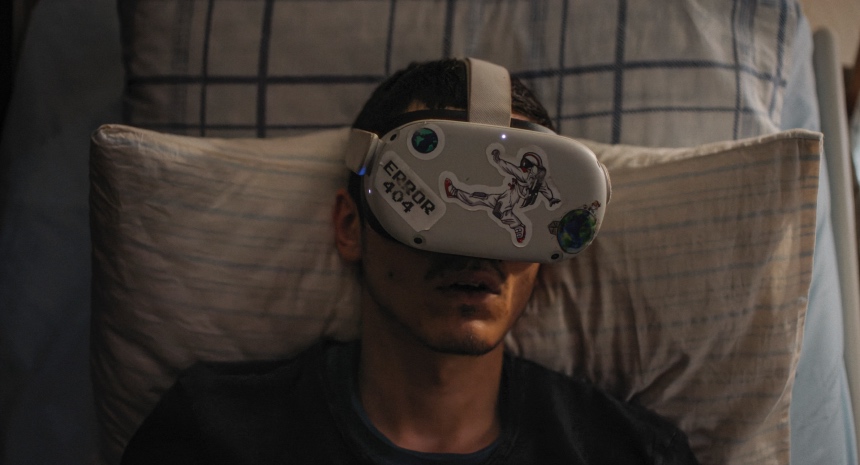
The Turkish coming-of-age drama LifeLike unfolds inside a household held in place by inevitability.
A family on the 20th floor of a housing block tends to a son whose illness shapes every gesture of their days. Within this limited space, director Ali Vatansever juxtaposes physical deterioration and paralysis with the elastic freedoms of VRChat, where the young man withdraws into a world of avatars and provisional selves.
The film centers mostly on the mother, father, and son, each responding to impending loss through separate strategies. LifeLike emerges as a portrait of a family facing mortality directly as well as the parallel realities they construct to withstand it.
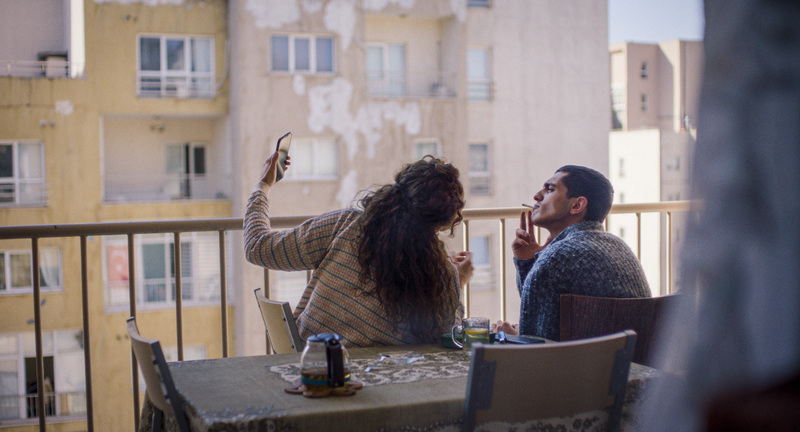
Nineteen-year-old Izzet (Onur Gozeten), bedridden in the terminal stage of cancer, conducts much of his social life in the virtual multiverse of VRChat. His mother Reyhan (Esra Kızıldoğan) has become a full-time caregiver, turning her attempts to save her son into content for social media. The exposure makes her a minor influencer recognized in public, and the practice offers a form of ongoing parasocial contact during round-the-clock caregiving.
His father Abdi (Fatih Al), a school-bus driver, initially appears as a passive element wary of Reyhan’s increasingly new age efforts born of desperation. Steeped in religious tradition, he consults a local imam, who counsels surrender to divine fate as his son’s suffering increases.
LifeLike takes inspiration from the first modern Turkish case of euthanasia, in which a father ended the life of his terminally ill son. The taboo itself does not dominate Vatansever’s third feature. It remains embedded in Izzet’s growing pain and his recognition that “desperate times call for desperate measures”.
Abdi’s passivity, grounded in his religious background, shifts only after the son's suicide attempt forces him to act. Reyhan has driven most decisions until this point, including rationing Izzet’s morphine patches. Tension mounts as the couple begins to argue over how many patches are enough to alleviate suffering and how many could enable a suicide at home.
The film’s first third follows Izzet, leaving his parents in orbit. He initially appears as a typical teenager, although his awareness of his prognosis has made him more mature. Instead of loud VRChat party rooms, he builds his own pixelated "fortress of solitude" by a virtual lake between picaresque mountains.
His football friends visit to exchange stories over weed, remarking that he has the “coolest parents”. As his physical condition worsens, he becomes more withdrawn and increasingly committed to the idea of assisted suicide, which finally prompts his father to engage beyond his role as the family’s breadwinner.
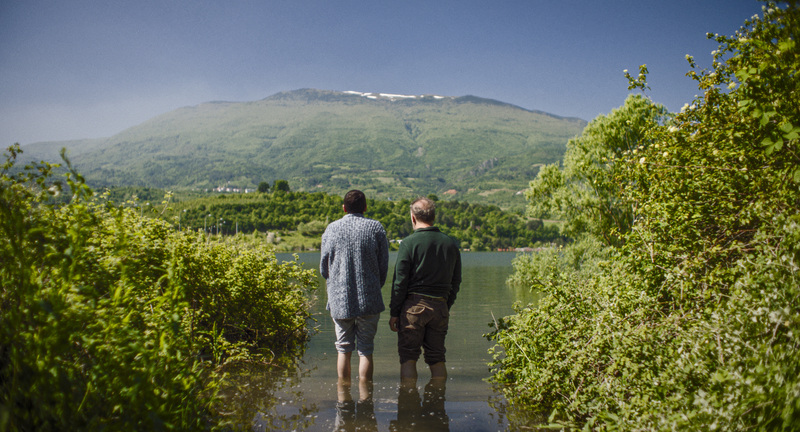
Family dynamics shift as Abdi grows more open to Reyhan’s research into possible cures, from tortoise blood to herbal medicine. Reyhan, meanwhile, reveals a more performative side, masking deeper desperation. Abdi makes a last attempt to help his son and takes him on a trip to obtain the supposed miracle plant remedy.
LifeLike is less a story about euthanasia in a traditional environment than a psychological study of family dynamics in the face of looming tragedy. Each family member adopts different coping strategies. The film’s most misleading element is the expectation that VRChat will serve as a major hybrid storytelling device.
In practice, it remains peripheral. The core is the three family members coming to terms with the unthinkable and adapting in uneven, unpredictable ways. Vatansever avoids overt moral positions and instead frames the drama as a process of adaptation that does not follow the standard stages of grief. The progression is irregular and reflects the turbulent emotional shifts of an unprecedented situation.
The 115-minute running time contains slower, repetitive stretches, particularly in the first half. Once Abdi becomes more active, the film gains momentum, especially during Abdi and Izzet's trip, which offers quality bonding time and father-son shenanigans.
Vatansever avoids the familiar gloom associated with late-stage terminal illness and maintains Izzet’s teenage register, including moments of rebelliousness. The early repetition is offset by a final act that introduces indirect humor and culminates in a cathartic, psychedelic sequence orchestrated by Vatansever with cinematographer Konstantinos Koukoulios and editors Evren Luş and Feyza Kayıkçı. The finale stands in deliberate contrast to the film’s prevailing social-realist style.
LifeLike may feel overstretched, yet it offers a distinct perspective on shifting household dynamics shaped by terminal illness. It approaches the euthanasia narrative from a different perspective wthout being unnecessarily activistic.
LifeLike won the Best Director and Best Original Score award in the Official Selection Competition at the 29th edition of the Tallinn Black Nights Film Festival.
Bir Arada Yalniz