Serial Killer Brno 2025 Interview: GENERATIONS' Anna Emma Haudal on Ghosts, Inheritance, and Hidden Traumas We Carry

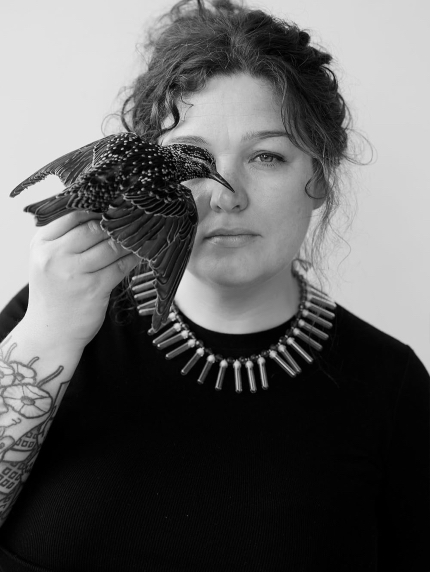
Danish writer-director Anna Emma Haudal delivers a genre-defying entry, Generations, into the country’s storied television tradition, one that combines Nordic noir with family drama accross generations. Known for her coming-of-age dramedy Doggystyle, Haudal here ventures into darker and more layered terrain: a mystery rooted in crime and inheritance, of shame, trauma, and memory, passed silently through bloodlines.
Developed for DR, the series begins with the discovery of a dead infant and spirals into a multi-generational reckoning that blurs the borders between realism and the supernatural. Epigenetics meets folklore, and family secrets take on the gravity of myth. At its heart is a question both scientific and spiritual: how much of what we carry belongs to us, and how much to those who came before?
In discussion with Screen Anarchy at the television and web series international festival in the Czech Republic, Serial Killer in Brno, Haudal discussed how Generations grew out of personal loss and historical research, her intuitive, character-first approach to storytelling, and the creative freedoms, and constraints, of working within Denmark’s public broadcasting system. She also reflects on the shifting balance between art and responsibility, collaboration and control, and why, even amid ghost stories and generational curses, she still insists on finding hope.
Screen Anarchy: Your new project feels quite different from the traditional Danish crime series. Instead of leaning on the usual tropes, you put women at the center and bring in unexpected topics, even a revenge porn subplot. It’s also a mystery and a family drama that weaves in themes of epigenetics, inheritance, shame, and generational trauma. How did this all come together?
Anna Emma Haudal: It’s really a coincidence of many things that it ended up like this. The show has a mystical layer as well. If you keep watching, you’ll see that the main character, Rikke ends up defending her grandmother. And the grandmother’s story involves ghosts, spirits, questions about what happens when we die, and that sense that someone is still here even though they’re not.
I wanted to give hope. During the pandemic my grandmother died, and at the same time I was returning from maternity leave to write this story. Around then, some close friends of mine lost their child in a terrible accident. When a child dies, it feels like reality itself is broken. I even had some strange experiences afterwards, almost supernatural. It felt as if he was still around us, leaving signs. We decided to accept it as part of the spirits of nature. That experience became part of the series.
Of course, when I first write, not everything fits together. There are so many layers. But by episode six, it all comes together. Every little detail has a meaning. It’s a story told through details, and it’s very cinematic.
Unlike a traditional crime series, where everything is explained and you can half-watch while doing the dishes, this series really asks you to pay attention. The clues, the secret signs, are embedded in the cinematic language itself.
You’ve said before that your process begins with characters, not plot.
Yes. I never start with a plot and then fit characters into it. I always develop the characters first, and then the story grows out of their journeys. Each of their paths is like a thread, and the plot is sewn together from that.
Of course, during writing, I also do research. In Denmark, particularly in the 1900s through the 1950s, there were many young women who became pregnant outside marriage. There are no exact nationwide statistics on how many women in Denmark killed their newborns between 1900 and 1950, but historical records and court documents suggest that there were several hundred such cases during this period. I found this history so tragic, these women carrying such trauma and shame.
Just before my own grandmother died, I discovered she had also hidden her pregnancy with my mother. She married my grandfather while pregnant, and they even altered my mother’s birthdate to conceal it. It was all tied to the shame of the time: cultural [and] social, not just religious. In the countryside, becoming pregnant before marriage was deeply stigmatized.
So I began to explore how such shame and trauma are passed on, even across generations. That’s where the idea of epigenetics came in: how experiences leave traces that shape us long after.
So the series deals with trauma as something inherited, passed on in subtle, invisible ways?
For me, it became personal. I realized I had been part of this hidden trauma all along, because I was literally one of the eggs inside my grandmother when she went through this. She had dreams of studying in Copenhagen, but her mother pulled her back to control everything. That was normal for women then. And I think much of the shame women still carry can be connected to those earlier traumas.
That was the inspiration. The series begins with the revelation of a dead baby, which becomes the epicenter of the family’s unraveling. They have to confront who they are, where they come from, and how this hidden history affects them. At first, of course, no one believes the grandmother. They think she’s crazy.
The series unfolds slowly, deliberately. The plot doesn’t drive the characters forward like a motor. Instead, every choice they make has consequences, and that’s how the story evolves.
And you weave this together with family dynamics, a core part of your storytelling.
There’s a storyline with the little sister, for example, who becomes pregnant and tries to hide it, but she can’t, because she’s not good at hiding anything. These dynamics between family members are really my thing. I love writing them, and I think that’s where the series finds its emotional truth.
The series begins with a crime framework, but then shifts into family and generational dynamics. Was that crime element something the broadcaster insisted on?
No, actually I’ve been completely free. The only thing they asked for was that the series shouldn’t be too slow. All the topics and layers are mine. But I chose to pitch it with a crime frame at the beginning, because otherwise it wouldn’t get made.
If you just say, “I want to write a story about family across generations,” it’s very hard to get that greenlit. With the crime element, everything else could grow.
So you pitched before you had the full scripts?
Yes. First, I had a short pitch, just about family and generations. Then I discovered this real history of hidden pregnancies and infanticide, and everything came together. They greenlit on the basis of storylines. In this case, they gave me three months to develop, and from there we went forward.
Were you asked to hit certain trends or narrative beats?
Not really. But I’ve worked with DR before on another series, so they know me well. They trust that I deliver. Maybe if I had come from the outside, they would have asked for more control. But they know with me that the story only really lives once it’s on the page, when the characters start talking to each other and the dynamics grow.
I don’t like to build plots first. I’m not a brain-plotter. For me, it has to start with characters that feel alive, characters I’d want to watch, maybe even have dinner with. That’s especially true in a series format. In film, I might work more with plot upfront.
But in a series, it’s the characters that keep you watching episode after episode. They have to feel like real human beings, with secrets you uncover step by step.
DR has a reputation for high-quality drama. What was their process with GENERATIONS?
They do have a strict process sometimes, but they’re also very respectful. They know not all writers work the same way. Some, like Adam Price, are more plot-driven. But because I’m also a director, my process is different. I direct while I write. I imagine the production design, I cast while writing, and I collaborate with a production designer from the very beginning so that everything, the sets, the world, the symbols, is connected to the characters.
Casting is especially important. When I see an actor read, even during casting, it can inspire me to write differently. Not because the actors tell me what they want, but because seeing them helps me understand the character more deeply.
So you’re already co-creating while you write.
Yes, very much. This time I worked closely with Thomas Daneskov, who directed the last three episodes. He read everything and pointed out where it needed more spice, or where it was too much. I love that process. I involve people very early, because it makes the work richer.
But in the end, it all comes from me. I invite collaboration, but I also take up a lot of space. That’s how I see it: I open the door, but I keep the center.
Were there particular influences behind the series, the combination of crime and supernatural elements? Lars von Trier´s KINGDOM comes to mind first.
I grew up with Lars von Trier, so of course I’m a fan. But it’s not that I sit and think, “Oh, I’ll put in a little hint to him here.” It’s more that his influence is just part of me. That’s how inspiration works, it comes without you noticing.
After we shot the series, we also spoke a lot about David Lynch. Not in the writing phase, but later, especially when working with sound. Some of the sound design was directly inspired by him. It felt right to give him a little love.
How do you approach genre? These days so much is hybrid; in the case of GENERATIONS, crime mixed with family drama and the supernatural.
Honestly, I don’t approach it at all. I write very intuitively. I always feel that the work already exists somewhere, it has a soul, and my job is to communicate it. It’s like I’m in dialogue with the series itself: I try something, and the series says “no, thanks.” Then I try something else, and it says “yes, that’s me.”
Only later, when I’m close to finishing, do I put on different glasses and look at it as a dramatist. That’s when I ask: does it work? Should we move this from one episode to another? That part is technical, but the creative side has to be free.
So the first draft is intuitive, and then you refine it heavily afterwards.
Yes. I do a lot of rewriting, hundreds of times. It sounds masochistic, but I love it. I wrote this with my co-writer Rune Schjøtt, who reads everything and gives me endless notes, even silly ones like “this is boring, where’s the plot?” (Laughs).
But I also invite feedback from producers, actors, the production designer, casting director, even the cinematographer. They all read along the way. I love involving the whole team in the writing phase, and then I rewrite over and over until it works.
Does the rewriting continue during production?
Sometimes, yes. It could be because of a location, or the budget, or simply because I see something in the dailies that doesn’t fit. Sometimes a mistake on set turns out to be brilliant, and then I adapt the script to make it work.
That said, on this project we didn’t need to change too much, the scripts worked very well for everyone. But of course inspiration always comes during shooting, so we made some adjustments.
Originally you were supposed to direct the first three episodes. Why didn’t that happen?
We decided it would be a problem if I was directing, because then I wouldn’t be available in the background to fix things and keep an overview. That’s why I’m credited as Conceptual Director.
Conceptual Director? In practice, what did that mean?
It means I created the whole concept of the series, the visual language, how it should be filmed, the overall look. I did that before the directors came on board, and then we finished it together.
Basically, I prepared what you could call the series bible. In fact, what I did was closer to what a showrunner usually does. But in Denmark, we don’t really use that title. Sometimes with Netflix shows they introduce it, but here we mostly work with one head writer and one director. Usually it’s the first director who defines the concept. But this time, I had already done it before we went into production.
You were on set, but not every day?
Yes, I was there a lot of the time, but not every day. I also had to finish writing the last three episodes while we were already shooting the first three. Ideally, everything should have been finished before production, but the schedule was just too tight. That was another reason why it wouldn’t have worked for me to direct, I needed to stay home and keep writing, while also being available in the background.
Whenever we had big ensemble scenes, lots of characters, lots of dialogue, I was on set to supervise the actors and the director, making sure the rhythm and music of the dialogue went in the right direction. That collaboration worked really well.
As a director, what I really love are those ensemble scenes and family dynamics. I’m very interested in the body language of families, how physical behavior reveals relationships. If you have issues with your mother, maybe you unconsciously lean away from her in every scene. The audience might not be able to explain what they’re seeing, but they’ll feel it. Those details are everything to me.
So it’s about precision in the smallest details.
Exactly. I’m a total nerd about it. I don’t really care much for the technical side of filmmaking, but I care deeply about the details: which glass a character drinks from, whether it’s water or wine, what kind of cups they have in their home. These things say so much about who they are.
Audiences don’t necessarily notice it consciously, but they feel it. I think that’s why people often tell me my films and series feel true—even though they may contain mystical or supernatural elements. The characters are rooted in human behavior, so the world feels believable.
Compared to your previous series, DOGGYSTYLE, the title GENERATIONS feels more conventional. Was that intentional?
Not really. I never think that much about titles. Doggystyle was a silly title, really, but it worked because it was young and fresh. Generations is much stiffer, and I hated it at first. But I never found a better one, so eventually I came to accept it. It says what it is.
I suppose I’ve become more cautious since Doggystyle. Back then I was fresh out of film school and not afraid to provoke. Now I’m a bit more careful. Maybe that’s just part of growing older.
Does that shift also mean you’re targeting a different demographic?
No, not really. I don’t like to talk about “who it’s for.” I don’t believe in putting audiences in boxes. For me, art is art. You make it, you create it, and then you see what happens.
Of course, I was aware this was a Sunday primetime show on DR1, so I knew it had to work for that slot. But I don’t write thinking about target groups. That’s for the PR department to figure out when they sell it. I just want to tell the story.
What always surprises me is who ends up watching. Some people I never expected loved it, and others who I thought would connect only watched the first episode and decided it wasn’t for them. At some point, I just stopped trying to predict. That’s not my job.
In recent years, Danish drama has had a huge international boom. How do you see the landscape now?
It’s still very competitive to get a project made. And there isn’t enough money. That’s the biggest challenge right now.
It’s still difficult. There’s just not enough money. With Generations, it was produced in-house at DR. That means we could use the facilities, the cars, the infrastructure, but it’s not like a Netflix budget. I had to say no to many ideas because they were simply too expensive.
The positive side is that working within those limits forces you to go deeper into the story. You constantly have to ask yourself: is this essential for the story, or just nice to have? That pressure can be creative. You end up making something strong with fewer resources.
Was there anything you really regretted not having?
I’m sad it’s only six episodes instead of eight. I originally developed it as eight, and there’s one storyline I would have loved to fulfill. That’s my biggest regret. But the decision for six episodes wasn’t mine; it was a matter of time slots.
Could that material find its way into a second season?
(Laughs.) I won’t answer that. Of course it could. But if I do a second season, it wouldn’t be with the same family. It would be the same universe, the same feeling, maybe with a cameo or a sign from the first season, but a new story. Like True Detective.
Do you expect to get second seasons when you work, or do you move on?
I never expect anything. If I like the idea of a second season, I’ll develop it and fight for it. But I won’t write one just because I can. Only if the world of the series demands it.
You mentioned that when you were younger, you weren’t afraid to provoke. Has that changed?
Yes. When I made Doggystyle, I had nothing to lose. Now, with Generations, people ask: “How did DR say yes to this? They don’t usually say yes to that kind of thing.” And I don’t know, I just created it, and they liked it.
But these days, I feel a little more afraid when starting something new. Maybe it’s because now I have something to lose. I can’t explain it exactly, it’s just a feeling. Of course, when I sit down to write, I have to put that away and work with intuition, not fear.
Maybe it’s also because I’m a mom now. I have two kids. I need to earn money. I can’t just work endlessly like I did before. Now I have another kind of work: having a family, while being in this business. That balance is always present, and sometimes it’s frightening.
So are you already working on your next project?
I have ideas, yes. When I’m developing one project, I get ten ideas at the same time. In the early phase, I put them in boxes: this idea belongs here, that one over there. So I always have a catalogue of ideas to go back to.
Right now, I have plenty to choose from, and a lot of projects are coming my way too. But I’m saying no to many, because I don’t know yet what I want to do. If they ask me to develop season two of Generations, that’s what I’d like to do, just to see if we can create a bigger world out of it.
And if you did, would you plan it as a trilogy?
I hate two seasons, it feels unfinished. If I did it, it would have to be three. Always three.
With family and financial responsibilities now, do you see yourself moving toward more commercial projects?
I see myself as an artist. I won’t make something just for money. If I wanted that, I’d become a schoolteacher.
So your next step is a feature film?
Yes, I really want to do a feature again. But that would be outside DR. At the moment, I’ve had such a nice collaboration with DR and with my producer, Birgitte Rask. She’s in-house at DR, so of course she doesn’t produce features. For that, I would have to work with another producer.
I already made one feature before, so I could continue with that producer. And yes—it would probably still be about a family, because I can’t stop writing family dynamics. Maybe it would also be funny. Generations has humor in it too, it just comes naturally, because people are funny, especially when they don’t intend to be. That’s my favorite kind of humor.
So for now, you’re pausing from TV?
Yes, a little. I’m actually writing some theatre at the moment.
Theatre?
Yes. It’s sound theatre. The theatre where I live is producing small site-specific pieces. You go to a specific place, scan a QR code on your phone, and listen to the story while you’re there. Right now I’m writing one connected to a special natural area where I live. So it’s tied to the place, you listen, and you imagine the story unfolding around you.
What drew you to that medium?
I love writing dialogue. That’s really my thing, and this project is all about dialogue. And because it’s linked to a place that means something to me, it feels special.