
Playback: Jafar Panahi, Cinema Under Pressure, from THE WHITE BALLOON to IT WAS JUST AN ACCIDENT

Jafar Panahi makes films under immense pressure.
The Iranian filmmaker's conditions of censorship and surveillance have become the grammar of his storytelling. Out of those limits, he's built one of the most radical bodies of work, where love for one's homeland is inseparable from the pain of its oppression.
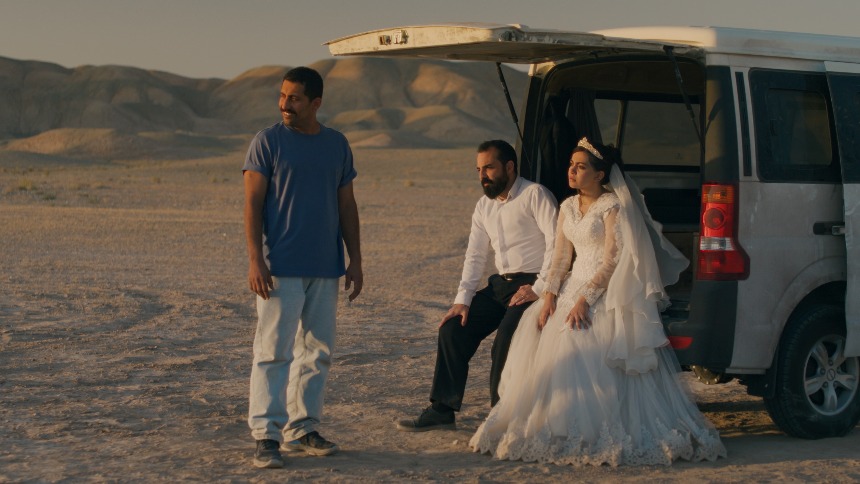
Panahi's latest film, It Was Just An Accident (2025), which won the Palme d'Or at Cannes earlier this year, arrives in theaters across the United States this week. The thriller follows Vahid (Vahid Mobasseri), a man who is convinced he's encountered the man who tortured him during his imprisonment by the Iranian government. But when doubt creeps in, he pulls together a ragtag band of those who claim to have endured the alleged torture. This vengeful thriller follows this group as their opinions on retribution splinter, inspired largely by Panahi's time detained by the Iranian government.
Filmmaking always played a part in Panahi's life. He started experimenting with film at 12 when he received an 8mm camera. When he was conscripted into the Iranian army during the Iran-Iraq War from 1980 to 1982, he worked as an army cinematographer, inspiring short documentary works. Then, more formally, Panahi was mentored by famed Iranian director Abbas Kiarostami, working as his assistant.
Panahi slipped subtle critiques of sexism and classism into his debut, The White Balloon (1995), where a young girl struggles to buy a goldfish on the eve of the Iranian New Year. His subversive streak escalated through The Mirror (1997), The Circle (2000), and Crimson Gold (2003). In his commentary, he often maintains some optimism, perhaps most directly in Offside (2006), a story about girls barred from entering a stadium to watch a World Cup qualifying match between Iran and Bahrain, based on his daughter's inability to join him at a game in Iran.
As his films drew increasing scrutiny from authorities, Panahi was arrested several times before 2010, when he was convicted and sentenced to six years in prison and a 20-year ban on filmmaking and travel. He served only two months, but was forbidden from leaving Iran or working openly as a director.
That didn't stop him. His clandestine films, from the iPhone-shot This Is Not a Film (2011) to No Bears (2022), a meta-drama about truth and fear at the border, are some of his most celebrated. Across his later films, Panahi turns this censorship into cinema, letting his political discontent play out in everyday life.
In 2022, after questioning the arrests of two filmmakers, Panahi was detained and ordered to complete his 2010 sentence, spending seven additional months under interrogation before his release in February 2023, when his bans were lifted. Never stopping for a moment, he began transforming his prison experiences and the stories of inmates into his first narrative feature since the 2010 ban, It Was Just an Accident.
For this edition of Playback, I'm rolling back the tape on Panahi's inimitable, subversive filmography.
The White Balloon (1995)
Panahi's debut, The White Balloon, begins with a child's simple wish: to buy a goldfish. This seemingly trivial search for a goldfish opens into a quietly radical vision of everyday Iran, where a child's pure intent collides with a culture of quiet refusals.
For 85 minutes, The White Balloon follows its seven-year-old protagonist, Razieh (Aida Mohammadkhani), as she tries to fulfill her goal. After some incessant persuasion, her mother gives her a 500-toman note. Along the way, she's stopped by a snake charmer, loses the money through a grate outside the candy shop, and frantically tries to retrieve it as time ticks down. Strangers -- a kindly soldier, an elderly woman, and a young Afghan boy selling balloons -- offer help or advice, revealing small hierarchies and city life.
This film was almost exclusively shown at children's theaters in Iran, but abroad, it earned Panahi a Camera d'Or at the Cannes Film Festival. The film itself isn't blatantly political. Instead, it reflects his eye for a human-driven, compassionate story.
Crimson Gold (2003)
A pizza deliveryman's slow disillusionment takes center stage in my favorite of Panahi's films, Crimson Gold. This scalpel-sharp indictment of class inequality in Tehran exposes the gulf between those with power and those struggling to reach it.
Panahi throws us into the height of the tension, where Hossein (Hossein Emadeddin), the aforementioned pizza deliveryman, is gripped by panic. Onlookers peer into the closed gate of a jewelry shop as he holds a gun to his head.
Suddenly, the film jumps to days before. Hossein, who we learn is a wounded veteran, navigates life with a muted intensity. He hopes to marry his friend's sister (Azita Rayeji), but increasingly feels the pressure of his economic standing. In fact, through his work as a delivery driver, he becomes a silent observer of Iran's social disparities. The simmering chagrin spurs a desperate bid for wealth--an attempt to pierce through a suffocating class hierarchy.
Crimson Gold is one of Panahi's most effective movies, allowing the audience to gaze at the world through its protagonist's eyes. That's what makes the moment Hossein's stoicism finally cracks so devastating.
Offside (2006)
There is perhaps no better place to start with Panahi's filmography than Offside. An umbrella of political urgency hovers over one of the director's most hopeful films. Offside follows a group of girls who disguise themselves to enter a soccer stadium, turning a national pastime into a parable of exclusion and defiance.
In Iran, women are barred from attending soccer matches. Panahi was inspired to make the film after his daughter defied the ban to see a game herself. Offside, filmed during the 2006 World Cup qualifying rounds, circles around a game between Iran and Bahrain.
It chronicles the roadblocks these girls (and many others) face in engaging in an event so often associated with national pride, underlining the absurdity of these rules. Most of all, the ending presents the hopeful contradiction at the heart of Panahi's cinema: the girls, punished for their patriotism, nevertheless join in celebrating the nation that excludes them.
This Is Not a Film (2011)
Shot in his apartment on an iPhone and some hidden cameras, Panahi's This Is Not A Film transforms his house arrest into the subject and set of this "non-film." This film kicks off the next decade of stealthy filmmaking, questioning what cinema can be when the act itself is forbidden.
Made the year after receiving his 20-year ban, This Is Not A Film strips the medium down to its bare essentials. This 75-minute film follows Panahi as he goes about his everyday life, all while appealing his sentence. This video diary is a statement of strength against a regime built behind the walls of censorship, a piece of resistance in the form of art.
What Panahi does here is distill his filmmaking ethos into a concise statement. Filmmaking (and art, more broadly) is an act of resistance, or better yet, an act of freedom.
Taxi (2015)
Panahi plays the part of a shared taxi driver in his Golden Bear-winning Taxi. From the driver's seat, the director ferries passengers across Tehran, declining money and collecting stories instead. One of Panahi's most engaging, approachable films presents a mosaic of Tehran life.
As with all his films in the 2010s, Panahi created this work without the Iranian government's permission. When the film was announced, he issued a statement that claimed the limitations made "the necessity to create becomes even more of an urge."
The film allows its audience to tap into the lives of its passengers, hearing their thoughts and experiencing a glimmer of their days. But the most compelling sequence involves Panahi's niece, Hana, who volleys with her uncle about filmmaking, particularly about how her teacher assigns his class to create a distributable movie, one that veers from "sordid realism."
It Was Just An Accident (2025)
Emerging from confinement, Panahi made his most self-examining film yet. This is an unlikely statement because it's his first fully fictional feature since 2006. It Was Just an Accident, filmed surreptitiously throughout Tehran, probes the guilt of surviving and the way vengeance can dissolve any clear sense of right and wrong.
Oppression endures when people are divided. That's how those in power win. During his own imprisonment, he was struck by how even those who shared a cause splintered under pressure, some retreating into survival and others consumed by vengeance.
It Was Just an Accident focuses on Vahid when the man he believes tortured him shows up on his doorstep. A frenzy devours him, kidnapping the man Eghbal (Ebrahim Azizi), whose prosthetic limb makes the same squeaking sound as Vahid's former government interrogator's leg.
As Vahid buries the man alive in the middle of the desert, doubt washes over him, as the man, shown to be a family man in the first moments of the film, pleads his innocence. This drives Vahid on a quest to authenticate his hunch, enlisting a bizarre crew of similarly traumatized people: a clear-headed wedding photographer (Mariam Afshari), a revenge-stricken man (Mohamad Ali Elyasmehr), and an affianced couple, Goli (Hadis Pakbaten) and Ali (Majid Panahi). Driving across Tehran, the unlikely group bickers about how to handle (or dispose of) their mutual torturer.
One of the film's greatest victories is that amid the severity of the film's subject -- political repression, torture, the trauma that lingers -- Panahi allows the narrative to teeter into the absurd humor of the situation. This rounds out the characters, giving the audience a chance to peer into their situation.
This interest in an individual's psyche, how a person's life changes under immense pressure, is the spine of Panahi's work. If a character experiences joy, or if their stomach drops like the final seconds of It Was Just an Accident, the bottom falls out for us, too.

More about It Was Just An Accident
- 98th Academy Awards Nominations: International Films
- ScreenAnarchy's Top 10 Films Of 2025
- IT WAS JUST AN ACCIDENT Review: Darkly Comic Social, Moral Examination
- Locarno 2025 Preview: Kechiche, Jude, Komljen, Koberidze and Rivers Lead the Competition
- Karlovy Vary 2025 Review: IT WAS JUST AN ACCIDENT Takes Justice for a Ride


