Locarno 2025 Review: THE FIN, Dystopian Sci-Fi Turns Environmental Collapse into Political Allegory
Syeyoung Park's sophomore film is a dystopian sci-fi grounded in political allegory, using environmental mutation and social exclusion to reflect on ideology, historical amnesia, and state control.

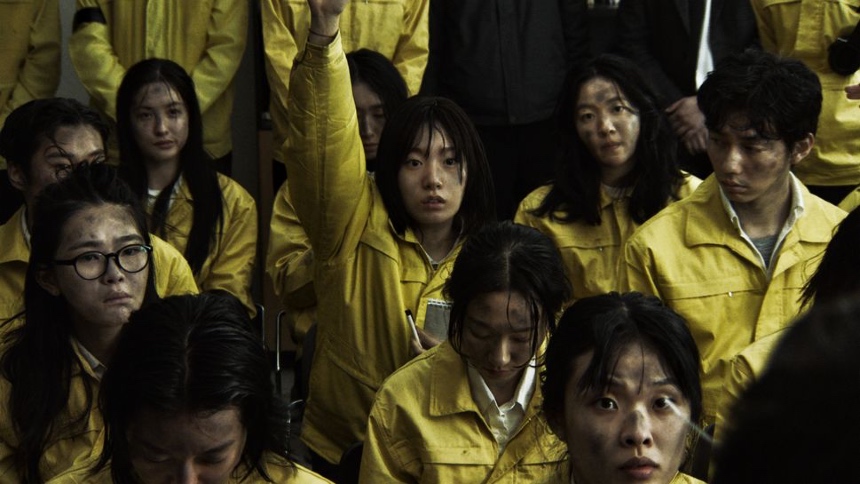
In a Korea unified only in name and surrounded by poisoned oceans, Syeyoung Park’s dystopian sci-fi The Fin imagines a near future where mutation becomes a marker of social exile.
The Omegas, once human, now altered by environmental catastrophe growing fins, are pushed to the fringes and hunted by a regime determined to uphold purity. In this world, an Omega (Goh-Woo) blends with the civilians in the East Colony 114 trying to find Mia (Yeji Yeon) to deliver a severed fin. Young government worker Sujin (Pureum Kim) gets entangled in the Omega´s mission, her assignment slowly turning into an unraveling of ideological certainty.
Park’s second feature follows The Fifth Thoracic Vertebra, a film equally invested in the consequences of ecological neglect rendered then through the allegory of a sentient mold growing inside abandoned mattresses. If Vertebra explored the traces people leave behind in physical matter, The Fin turns its attention to systemic residues. Those left by historical trauma, ideological compliance, and ecological collapse.
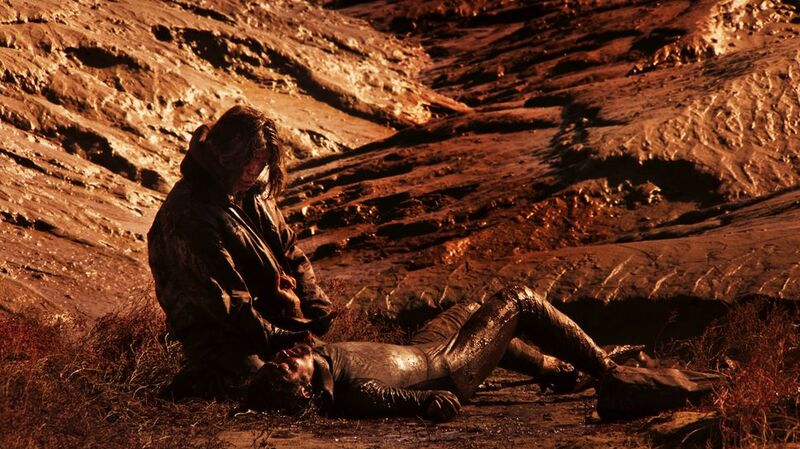
The director’s stated aversion to contemporary Korean iconography results in a speculative future that avoids capitalist realism in favor of abstraction. Park constructs an enclosed society governed by memory and myth. What is outside, the red sea, the Omegas, the history of the world before the ecological event, is never fully shown, only described in fragments.
Through this withholding, Park aligns The Fin more closely with post-apocalyptic minimalism than with science fiction spectacle. While the opening scenes outside the colony show a decaying wall separating the wasteland from dwellings in similar manner as in Judge Dredd´s Mega-City One, Park almost instantly switches to Children of Men realist minimalism and aesthetics of dirt as clean water becomes luxurious commodity.
This slippage between identity and ideology is where The Fin finds its most enduring effect. Park situates his film in a future already overgrown with historical amnesia. The apocalypse has happened, the oceans are red, the walls have been built, and no one quite remembers why.
The state thrives on this forgetting, on the instability of its own narratives. The Omegas function as both metaphor and materiality. They are environmental casualties and also the new subaltern class, bodies altered by contamination and then punished for it. Their otherness is both real and constructed, their rejection both a biopolitical maneuver and a ghost of older political divisions.
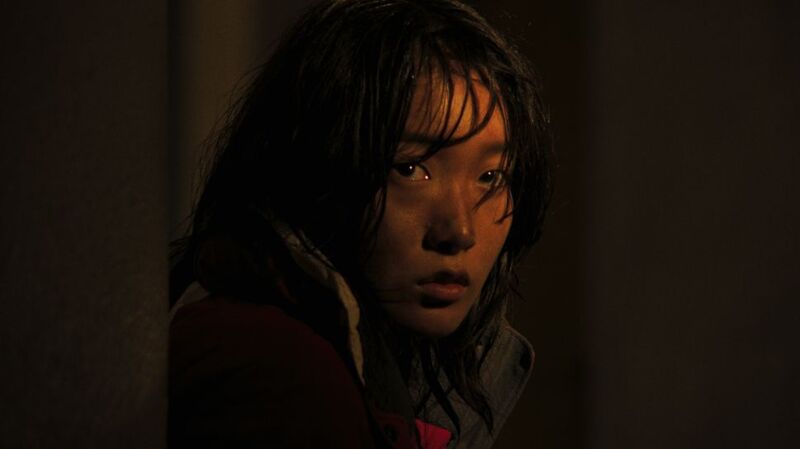
Where The Fifth Thoracic Vertebra leaned into metaphysical horror and body decay, The Fin operates more explicitly within political allegory. Park begins with dystopian tropes, implicitly touching upon zombie genre allusions, only the fully embrace a politically-laden statement in a genre film weaved around family drama. The polarization by government, radicalization, weaponization of disgust are showcased in The Fin´s world reflecting real-life politics of division and conquering, embedding conspiracy theories, ideological brainwashing, and altering narratives in a post-factual manner.
Park’s speculative yet minimalist sci-fi is based more on mood than overt drama. The Omega infiltrating the civilians that are radicalized against them proceeds in a stealth manner.
The center piece of the film is a fishing store, where Mia works, with inside pools, what, alongside tighter framing, underlines Park´s austere approach defined by shoestring budget. Despite low budget, The Fin is closer to Black Mirror than Squid Game as Park proves that dystopian sci-fi are not preoccupied with future but imminent presence.
The Fin
Director(s)
- Syeyoung Park
Writer(s)
- Syeyoung Park
Cast
- Yeji Yeon
- Pureum Kim
- Goh-woo