Locarno 2025 Review: LAKE Immerses the Audience in a Sensorial Drift Between Body and Landscape
Fabrice Aragno abandons conventional storytelling in favor of a meditative, sensory experience where the human body, light, and landscape become the film's primary narrative elements.

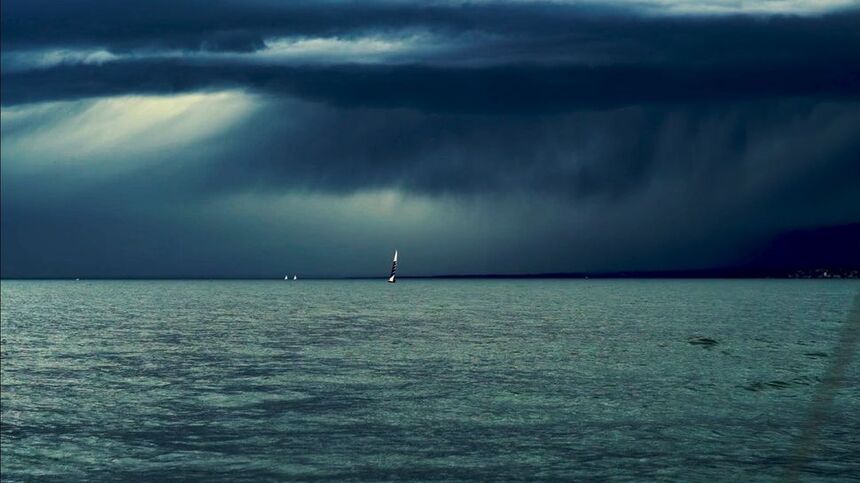
Swiss filmmaker Fabrice Aragno returns to the medium in Lake not as a storyteller in the traditional sense but as a sensorial intermediary, positioning the viewer between the flicker of light on water and the quiet insistence of presence.
A woman (Clotilde Courau) and a man (Bernard Stamm), alone on a boat, drift across Geneva Lake over five days. The dialogue is sparse. Their face, their bodies, and the fluctuating landscape become the film’s only narrative coordinates. The line between documentary and fiction blurs until it dissolves entirely.
Aragno’s work as cinematographer and collaborator on Jean-Luc Godard’s late films, most notably Film Socialisme and Image Book, offers a useful context for understanding his solo directorial approach. In those films, Aragno helped construct an audiovisual space marked by rupture, polyphony, and a refusal of narrative coherence. But where Godard’s late period often moved toward ideological montage, Aragno’s personal work leans toward the sensuous and material.
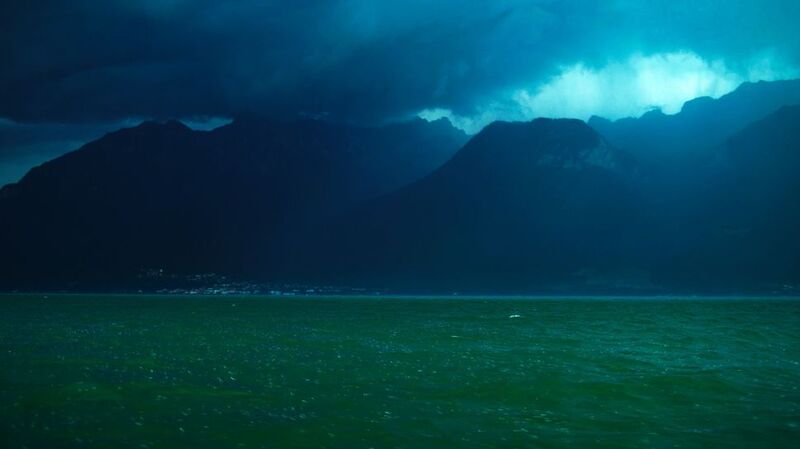
Shot aboard a small sailboat with a six-person crew, Lake eschews the usual narrative causality. The protagonists participate in the real-life Tour du Léman, a five-day endurance sailing race around Lake Geneva. This event becomes the film’s structural skeleton, an experience of temporal dilation and bodily exhaustion.
Aragno avoids framing the race as competition or spectacle. Instead, it functions as a physical constraint that renders the body vulnerable to the environment. Long takes, often handheld or shifting gently with the boat’s motion, observe the character as she eats, steers, or simply breathes. Her body becomes an instrument for registering the passage of time and the transformations of light.
The film’s form is resistant to segmentation. Scenes emerge like weather patterns: unpredictable, often without transition. A sudden shift from sun to fog, a moonlit surface breaking into ripples, these are not metaphors, but events in themselves. The image is not illustrative but reactive. Aragno’s background as a technician is evident in the film’s precise camera work. Rather, it is the filmmaker’s ability to surrender control and operate within the limitations of his environment.
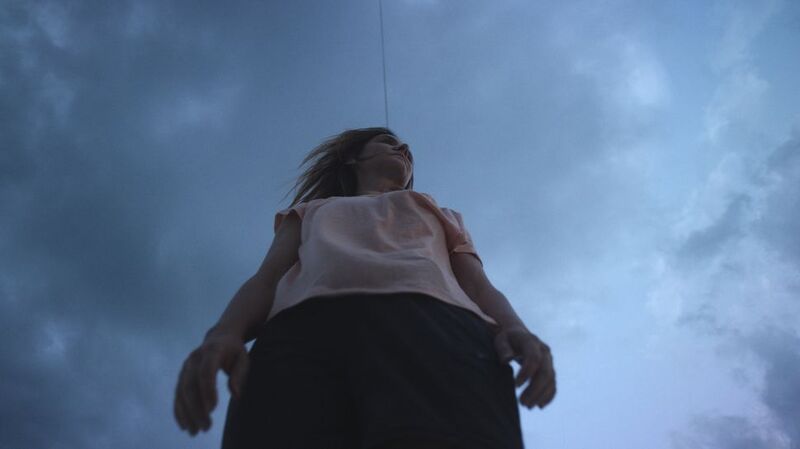
This method is not new in experimental cinema, but Aragno’s variation is distinguished by his consistent integration of the human figure into the landscape. Unlike structuralist filmmakers who often eliminate the body or reduce it to geometry, the director retains a figurative dimension. The woman is not a character in the dramatic sense, but neither is she anonymous. Her face, her body, her visible fatigue and small gestures introduce a human time into the natural world, a temporal scale marked by hunger, sleep, muscle strain, loneliness.
There are antecedents here: Duras’s Le Camion, Chantal Akerman’s La Captive, and even the landscape paintings Aragno cites, Caspar David Friedrich, Gustave Courbet, J. M. W. Turner. In all of these, the human figure mediates a confrontation with something larger than narrative: nature, time, or the ineffable. The filmmaker draws most directly from painting, treating the frame as a surface for light, motion, and texture in Lake.
The director has spoken of his desire to “be true to his own sensitivity,” and Lake is perhaps best understood in this light, not as a film made with intention, but as a vessel for intuition. The absence of a traditional script, the embrace of spontaneity, and the minimal crew all reflect a process of reduction. What remains is a cinematic gesture stripped to its essentials: one person, one environment, one duration.
There is a trace of mourning in Lake, particularly in light of Aragno’s close relationship with Jean-Luc Godard, whose death during the film’s development cast a shadow. In Lake, Aragno suggests a continuation, not of Godard’s aesthetics, but of his ethos.
Le Lac
Director(s)
- Fabrice Aragno
Writer(s)
- Fabrice Aragno
Cast
- Clotilde Courau
- Bernard Stamm