Locarno 2025 Review: Lyrical MARE'S NEST Maps a Post-Adult World Through the Eyes of a Child

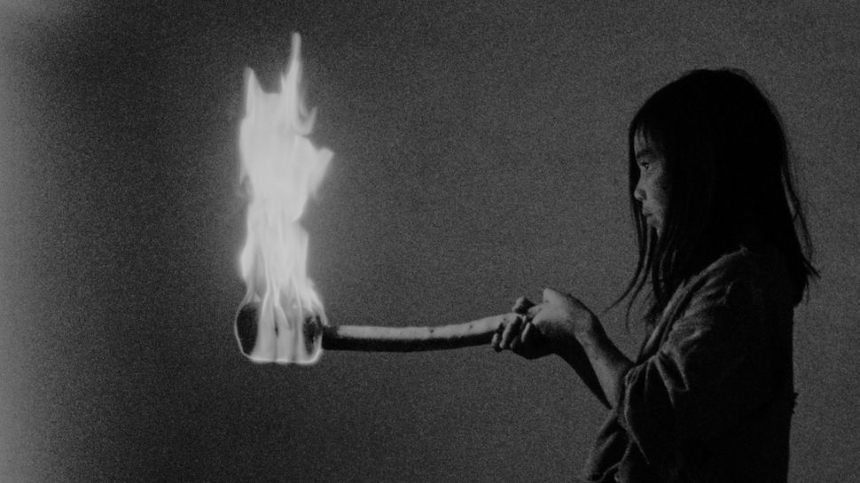
In Ben Rivers' latest film, Mare’s Nest, a young girl named Moon (Moon Guo Barker) wanders through a world emptied of adults, crossing paths with other children, a turtle, and the remnants of a civilization now overtaken by wilderness and entropy. Shot on a mix of black-and-white and color Super 16mm, the film avoids linear progression, instead unfolding as a series of encounters, digressions, and rituals.
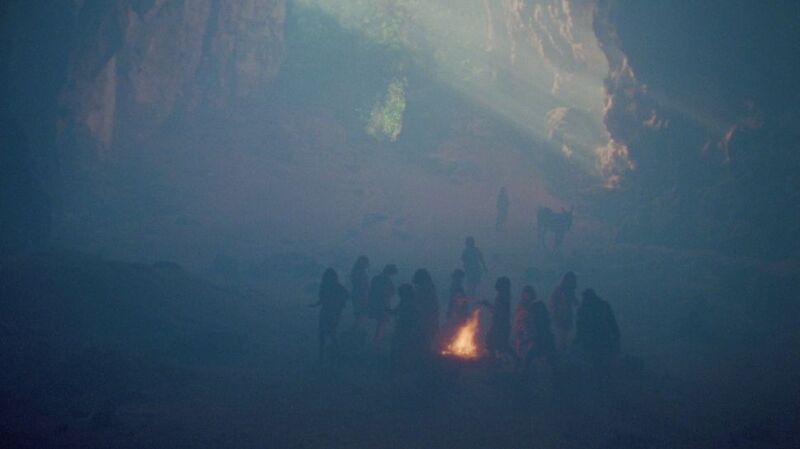
Based on Don DeLillo’s The Word for Snow, Rivers' film echoes a broader interest in language, myth, and transmission. The setting with car graveyards, cave chambers, and disused quarries form a terrain that is simultaneously post-human and animate.
Though speculative in nature, Mare’s Nest resists the aesthetics of dystopia. Instead, it lingers in ambiguity, asking what stories remain when the adult world vanishes, and who gets to tell them.
Ben Rivers has long moved along the margins of narrative cinema, building a body of work that defies easy categorization. From Two Years at Sea to The Sky Trembles and the Earth is Afraid and the Two Eyes Are Not Brothers, Rivers has consistently gravitated toward liminal figures and forgotten geographies. His cinema privileges texture over plot, duration over momentum.
In Bogancloch, a formal sequel to Two Years at Sea, he returned to Jake Williams, an off-grid Highlander, using monochrome Super 16mm to document a life structured by natural rhythms and isolation. That film, like much of Rivers’ work, blurred the lines between observation and construction.
Mare’s Nest departs from this earlier mode while remaining tethered to its spirit. Where Bogancloch was centered on a single, elderly protagonist entrenched in solitude, Mare’s Nest turns to children and community, albeit one unconstrained by adult authority.
Yet both films share a focus on characters situated outside societal structures, whose lives unfold according to idiosyncratic logics. The shift is generational rather than thematic, Rivers replaces ascetic individualism with a speculative ecology of collective play and emergent ritual.
This intergenerational pivot reframes Rivers’ enduring interest in non-normative lifeworlds. In Mare’s Nest, the world is not so much abandoned as re-inhabited, re-imagined through the agency of children. The film maintains a deliberate distance, offering no guiding voiceover, no didactic cues. Its children are not symbols of hope or innocence, they are subjects in their own right, performing texts, singing songs, making shelters, navigating ruins. Their world is neither utopia nor collapse, but an ambiguous aftermath.
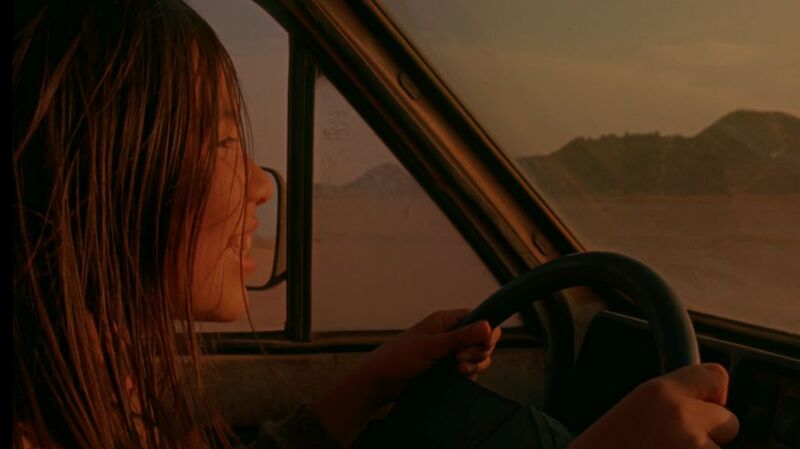
Mare’s Nest is defined by its fragmentation. It was shot in intervals over months and years, across different terrains and with varying film stocks, resulting in shifting visual registers. Some sequences are static and observational, others are stylized, even theatrical. Saturated colors cede to monochrome, natural light to artificial glow. A handheld camera tracks Moon as she walks, elsewhere, tableaux emerge in locked frames. Rather than seek continuity, Rivers embraces the disjuncture, reflecting the piecemeal nature of the film’s production and the episodic rhythm of childhood itself, less a linear arc than a series of perceptual thresholds.
This mutable form also marks a departure from Rivers’ earlier formal rigidity. In Bogancloch, the seasonal cycle provided a structural backbone, tying image and time in a closed system. Mare’s Nest feels deliberately looser. Scenes are added not to complete a structure but to introduce new tonal or thematic possibilities.
A boy performs an original song in a field. A group of children plays a ritual game by the sea. A monitor in a crumbling manor plays footage from another film. These insertions resist narrative integration, functioning instead as interruptions or pulses, temporal aberrations that shape the film’s rhythm.
Despite its speculative tone and an apparent absence of adult figures, Mare’s Nest does not seek to depict catastrophe. The absence of violence, breakdown, or overt conflict distinguishes it from typical dystopian imaginaries. Instead, Rivers focuses on the conditions of persistence and play. He is aware of post-apocalyptic tropes, as he noted he watches The Last of Us and The Walking Dead, but chooses to sidestep them. The result is not an alternate future but an alternate mode of imagining one, a world where time is spacious, where language is rediscovered rather than lost, and where survival is measured not in violence but in attention.
Mare’s Nest continues Rivers’ interest in the liminal, whether geographic, social, or existential, but shifts the locus of agency. If Bogancloch was a study in consistency and withdrawal, Mare’s Nest is a gesture toward re-entry, albeit through a child’s gaze. It invites reflection on the forms of knowledge, ritual, and communication that might endure when structures fall away.
In presenting a world shaped by children, Rivers does not propose a return to innocence or a new Eden. Instead, he sketches a landscape of fragments: broken objects, abandoned shelters, half-remembered words. From these, a different kind of story begins to form, one not of endings, but of possible re-beginnings.
Rivers’ Mare’s Nest offers a more hopeful take on post-apocalyptic storytelling and serves as an intriguing allegory for a generation growing up without the guidance of its predecessors. While it embraces an anarchic spirit, Mare’s Nest stands as the antithesis of Lord of the Flies.
Mare's Nest
Director(s)
- Ben Rivers
Writer(s)
- Ben Rivers
Cast
- Moon Guo Barker