Locarno 2025 Industry: Ed Guiney and Radu Jude on Trust, Conflict, and Resisting the Bigger-Is-Better Trap

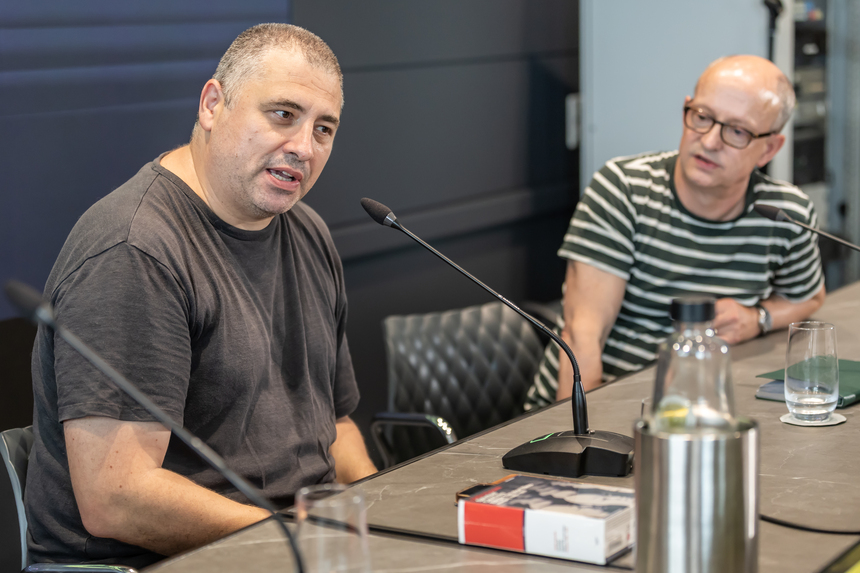
At the 78th edition of Locarno Film Festival, the Locarno Pro initiative hosted a conversation between producer Ed Guiney of Element Pictures (The Lobster, 11 Minutes, Poor Things, The Wonder, The Favourite) and Romanian auteur Radu Jude (Bad Luck Banging or Loony Porn, Do Not Expect Too Much from the End of the World, Kontinental ’25) who was also premiering his latest work Dracula in the main competition.
The discussion about the producer-director relationship offered a candid, occasionally irreverent, but highly instructive deep dive into one of filmmaking’s most crucial dynamics.
Every Relationship Is Different, and Human First
Guiney stressed that there’s no fixed “Element Pictures method” for working with directors. Instead, each collaboration takes shape according to the personalities and working habits involved. With long-time collaborator Lenny Abrahamson, the partnership is rooted in a friendship dating back to their teenage years.
“We used to talk about films at parties when we were in school,” Guiney recalled, describing how the pair set up a university film society before moving on to shorts and features. That early rapport created a foundation of mutual trust, with Guiney often feeling confident in Abrahamson’s instincts even before Abrahamson did himself.
By contrast, the relationship with Yorgos Lanthimos began at a more professional distance. Guiney saw Dogtooth and approached Lanthimos about what would eventually become The Favourite. At the time, the script resembled what Guiney called “a boring BBC heritage story.” Lanthimos, however, found something in the material and reshaped it into the idiosyncratic, ten-year collaboration that followed.
The lesson, Guiney suggested, was that every film is essentially one long conversation, a series of exchanges in which both sides must find reasons to continue. What sustains that process is not just admiration for the director’s talent but also the ability to enjoy being in each other’s company through the inevitable stress, conflict, and long timelines.
For Jude, the essential quality is creative daring, a willingness to test boundaries that must extend beyond the director. He pointed out that producers are often overlooked in this regard, yet their courage can be decisive. A bold producer may push for unconventional approaches to financing, scheduling, or even artistic choices. By contrast, risk-averse producing can flatten a project before it begins.
“Usually people speak about daring directors, rarely about daring producers,” Jude observed, reminding the audience that creativity can, and should, manifest in the production office as much as on set.
Constraints Can Be Catalysts
Both speakers championed resource limitations as unexpected engines of creativity. Jude recounted how, inspired by Roger Corman and Monte Hellman, he shot two films back-to-back to maximise a single budget. When Dracula’s script outgrew its resources, he and his production team cut costs with radical ingenuity, using cardboard cutouts for extras, AI-generated images, and iPhone footage.
The result, he insists, is “in a certain way much better because of these limitations.” What mattered most, he added, was the honesty of the exchange with his producers: compromises were reached transparently, without hidden agendas.
Guiney agreed that scarcity forces deeper conversation and sharper choices. “In the streamer boom, sometimes you had more money than you needed, and there’s a deadening effect,” he observed. Without the spur of necessity, crews and heads of department are less inventive, and discussions around priorities lose urgency.
He recalled The Favourite, which entered pre-production already over budget. The situation required painful script adjustments and intense negotiation between Lanthimos, the producers, and the studio. While stressful, Guiney argued that these moments sharpen focus: “The more conversation you have about things, the better,” and financial pressure accelerates those conversations.
Both men pointed out that limits are not merely obstacles to be endured but can become integral to a film’s aesthetic. Jude cited Orson Welles’ decision to stage Othello’s murder scene in a Turkish bath, born from the absence of costumes after a financier went bankrupt. What could have been a compromise became one of the film’s defining sequences.
Guiney noted similar dynamics with directors like Joanna Hogg, who actively builds her working method around contained budgets, small crews, and recurring collaborators. For Hogg, constraints are not a setback but a structure that preserves intimacy and artistic discipline.
Honesty Is Non-Negotiable
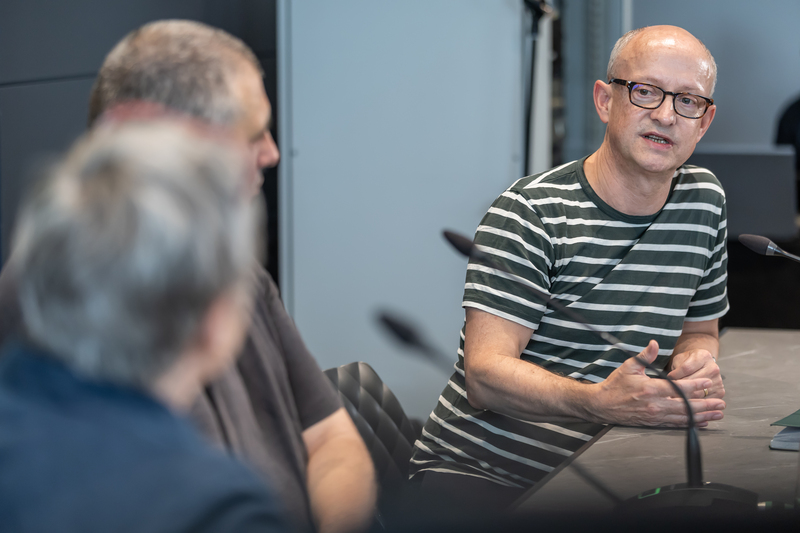
One recurring theme was the importance of transparent, early dialogue, especially when budgets and ambitions collide. Jude emphasised that he can adapt to almost any constraint if it’s communicated openly: “I never felt Alex [Teodorescu, producer] was hiding something… it was very honest, and that’s important.”
For him, this honesty is what transforms budget restrictions into creative opportunities rather than sources of frustration. The danger, he warned, lies in producers who obscure the financial reality or overstep into dictating artistic choices under the banner of being “creative producers.” Too often, he said, young filmmakers in Eastern Europe face producers who secure public funding and then impose themselves on the director in a manner he compared to “Harvey Weinstein without the money.”
For Guiney, transparency also means shielding directors from unnecessary noise. In development, he advocates for “circling the wagons” with trusted partners such as BBC Film or Film4 before presenting projects to a wider marketplace.
This controlled process ensures that script changes respond to genuine artistic or production needs rather than the shifting demands of multiple financiers. “It’s not about fulfilling every wish of a financier,” he explained, “but about engaging with the note, figuring out what it really means, and protecting the filmmaker from jumping through hoops for the sake of it.”
Both agreed that the producer’s role extends beyond logistics to managing the psychological climate of a project. Guiney described occasions where a producer must act as a firewall, absorbing external pressures, budget anxieties, or studio concerns before they reach the director and destabilise the creative process.
Jude, in turn, emphasised the reciprocal responsibility: a director must respect what has been agreed, delivering within schedule and budget to maintain the trust that underpins this firewall. His own formation in television and advertising, he said, taught him never to go over schedule or budget, even at the cost of sacrificing elements he considered artistically important.
Managing Conflict Without Derailment
Conflict, Jude argued, is an inevitable part of filmmaking, whether with actors resisting direction or crews testing boundaries. The key is to address it early and set the tone: “It’s like being a teacher, the first day you have to set the rules.”
He warned that perceived weakness can quickly spiral into crew resistance that’s hard to reverse, particularly in Romania where, he noted, production environments can be “brutal” and crews will quickly sense whether a director can be pushed. He admitted that early in his career he occasionally resorted to shouting simply because it was expected, “so people would say, oh, he’s got balls”, before realising that authority can be established in less destructive ways. What matters, he concluded, is finding a way to live through conflict without being consumed by it.
Guiney recalled more extreme cases where productions required HR and counselling support to manage on-set breakdowns, but for the most part, the strategy is “pushing through” while shielding the wider team from tension. As a producer, he sees part of his responsibility as maintaining morale by containing disputes rather than letting them spread.
Sometimes that means mediating between a director and an actor who won’t budge, or between heads of department with conflicting demands; other times, it simply means keeping the atmosphere steady so the crew doesn’t feel the weight of creative disagreements at the top.
Both men underlined that conflict does not automatically equal failure. Jude noted that even when clashes with actors remain unresolved, as in the case of a veteran performer who politely but firmly refused to alter his style, such frictions are part of the job. What matters is whether the production absorbs the shock and continues.
Guiney echoed that sentiment, likening film sets to “whack-a-mole,” where problems inevitably pop up in succession and must be managed without derailing momentum.
Resisting the Bigger-Is-Better Trap
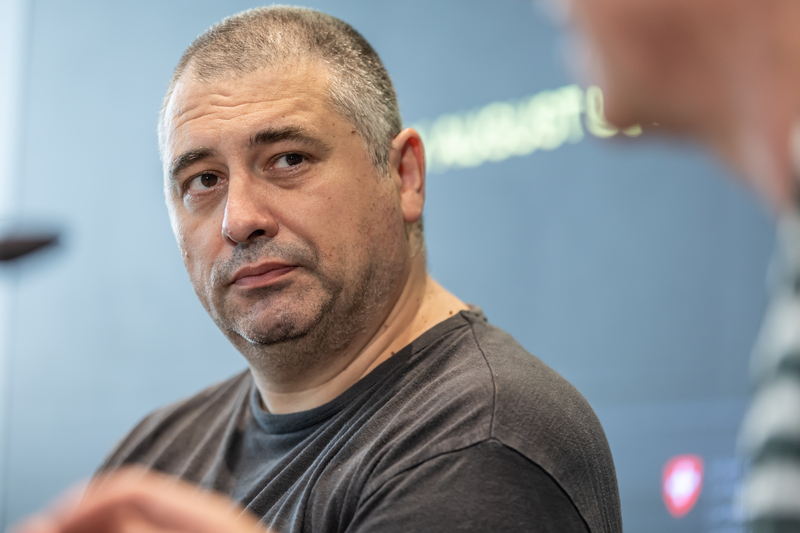
Both lamented the industry’s tendency to escalate budgets with each success. Jude rejected the implicit expectation, post–Golden Bear, to make a more expensive, English-language film: “Some films need more money, some can be short films… I feel the need to fight this model of bigger and bigger and bigger.”
He likened the pressure to a capitalist logic in which every acquisition must lead to a larger one, “if you have a villa, the next step is not a smaller apartment, it’s a bigger villa.” For him, cinema must retain the flexibility to adapt form to story, rather than treating every new project as a financial upgrade.
Guiney echoed the value of occasionally scaling down, citing Joanna Hogg’s disciplined approach and John Cassavetes’ enduringly modest productions as models for sustainability. Hogg, he noted, deliberately limits scope by working with a small, trusted team, improvising scripts, and keeping production choices close to the resources at hand.
Cassavetes, similarly, built a body of work around recurring collaborators and modest means, reinvesting his acting income rather than chasing ever-larger budgets. For Guiney, these examples show that intimacy and continuity often create stronger films than scale alone.
Both also linked this to the financing environment. Jude pointed out that despite the falling cost of digital production, the expectation of “production value” at major festivals and in sales markets keeps budgets artificially high.
Films with stars, elaborate visuals, and high-end packaging are often prioritised, while works shot cheaply, even on iPhones, struggle for visibility. Locarno, he said, remains one of the few major festivals willing to programme low-cost, formally daring work, citing this year’s inclusion of films assembled from found footage and phone-shot material. Without such platforms, the industry risks narrowing what counts as legitimate cinema.
Guiney agreed that the industry has become structurally biased toward escalation. During the streamer boom, he recalled, projects were sometimes overfinanced, creating an abundance that “deadened” creative debate.
Now, with that cycle waning, filmmakers are once again forced to work leaner, and many, he argued, find it refreshing. Stripped of excess, directors reconnect with the collaborative, problem-solving spirit that often animated their earliest work.