New York Asian 2025 Review: RAVENS Explores the Life of Japanese Photographer Masahisa Fukase

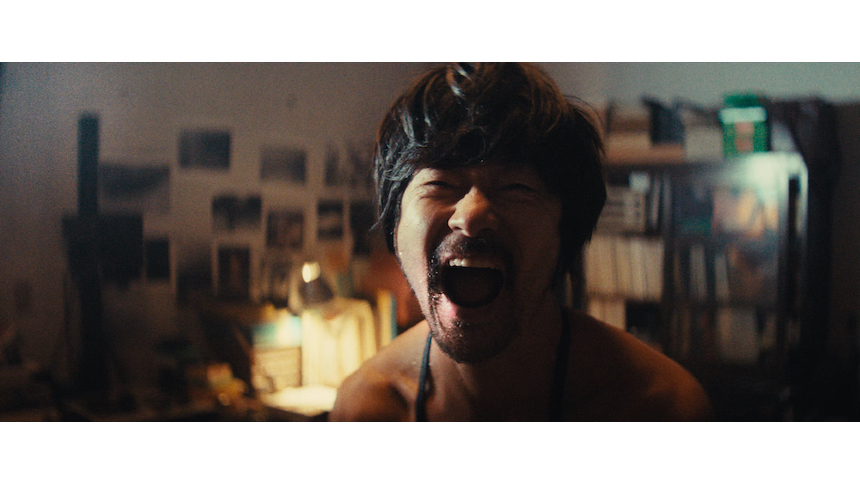
Largely unrecognized during his lifetime, Masahisa Fukase is now regarded as one of the key Japanese photographers of the past 60 years. Ravens presents a kaleidoscopic account of his life, anchored by a riveting performance by Tadanobu Asano.
The film's title refers to one of Fukase's most famous photobooks, many of whose images comment on the breakup of his marriage to Yōko Wanibe. Writer and director Mark Gill takes a literal approach to Fukase's symbolism, having the photographer interact with a giant, talking raven who acts as a hostile critic.
Gill also restages some of Fukase's photos, like disturbing family portraits of his parents and brother. Also, a long series of pictures of Yōko, from playful portraits to sadomasochistic cosplay.
Fukase built his reputation around these photos, while Yōko (played with heroic equanimity by Kumi Takiuchi) became a celebrity in her own right. They end up trapped together, neither able to succeed without the other, wallowing in poverty.
The film's fractured chronology starts with Fukase trying to hang himself, then dives back and forward in time to detail his childhood, first marriage, and growing dissolution.
Scenes with Fukase's father Sukezõ (Kanji Furutachi) depict shocking, inexplicable abuse, violence that would haunt the photographer through his life. Is Sukezõ to blame for Fukase's mental issues? Is that why the photographer sabotages all of his chances at success? Does his relentless pursuit of drugs and alcohol add to or dull his creativity?
"I'm the fool who clicks the shutter a thousand times and gets lucky once," Fukase says. Yōko is even more blunt: "Stop thinking you're an artist," she tells him. "There's no art in pressing a button."
Asano's ability to portray an artist crippled with self-loathing is extraordinary. Lurching and weaving through orgies, spitting back at corporate sponsors, mocking his commercial assignments, Fukase is a thoroughly dislikable personality. Asano still manages to find his humanity, to convince us there is something worthwhile in his struggle to break free from demons.
When Yōko leaves him, Fukase's life descends into drunken chaos. "Whatever I love, photography kills," he says while placing a noose around his neck. Fukase's suicide attempts are interrupted by his cat or a friend. But a fall down the stairs outside his favorite bar leaves him with significant brain damage. He dies in an asylum in 2012.
Gill's screenplay can feel heavy-handed, suggesting at times that Fukase is more madman than artist. But his direction, aided by Fernando Ruiz's sympathetic cinematography, keeps viewers involved in a very downbeat story.
Asano, last seen here winning an Emmy for Shōgun, adds to his repertoire of fascinating performances. He and Kumi Takiuchi elevate Ravens above typical biopics.
Ravens screened at the New York Asian Film Festival. (Stills ©Vestapol Films, Ark Entertainment, Minded Factory, Y house, Katsize Films.)