Karlovy Vary 2025 Interview: DREAMS, Michel Franco Talks Power, Privilege, Filming Without Safety Nets, and Why Revenge Is Never Clean

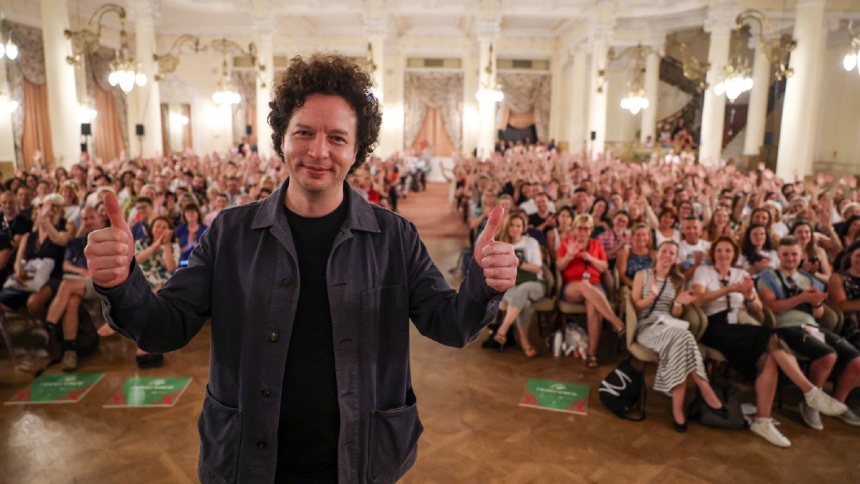
At a screening of his new film Dreams at the 59th edition of Karlovy Vary International Film Festival, Mexican filmmaker Michel Franco sat down with Screen Anarchy.
We discussed a recurring fascination that runs through his work from New Order to Memory, with fractured characters navigating the fallout of societal imbalances. With Dreams, Franco once again tackles the themes of power, identity, and human frailty, this time through an intimate yet politically charged lens.
The film follows the connection between a Mexican immigrant and an American woman, an encounter that unfolds as both a love story and a brutal study in power dynamics. “I’m interested in what lies beneath the surface,” Franco says. “When characters are stripped of comfort or power, we see who they really are. That’s when stories get interesting.”
Though Dreams operates on multiple levels, Franco insists that the emotional core takes precedence. “It’s both a love story and a social commentary, of course. But it had to work on an intimate level first. That’s what really matters.”
The duality evokes Rainer Werner Fassbinder’s Ali: Fear Eats the Soul, one of Franco’s key inspirations. “I love how Fassbinder expressed the political through the erotic. Pasolini did that too. Sex, like politics, reveals who we really are.”
Franco’s filmmaking has long dwelled in that uncomfortable space, where personal relationships become entangled with systems of control, repression, and institutional violence. In Dreams, this complexity plays out through characters who are both perpetrators and victims, lovers and adversaries.
Franco has never shied away from portraying sexuality as a critical element of human behavior. For him, sex is expressive, sometimes beautiful, sometimes brutal, but always revealing. “Sexual activities say a lot about who we are,” he says. “Fassbinder definitely explored that in a number of films. Pasolini too, of course. They’re both among my favorite filmmakers.”
But Franco rejects the idea of stylized eroticism. For him, sex on screen is a process of discovery, for the characters, and for the actors themselves.
In Dreams, he worked without an intimacy coordinator. “We did the same on Memory. I don’t use a coordinator. We work very respectfully, and it’s a very intimate process between me and the actors.”
This time, the physical choreography evolved from the performers. “Jessica came up with a lot of the ideas, understanding what I needed and translating that into action,” he says. “And I knew Isaac Hernández was a great partner for that, he’s a dancer, he understands physicality. That helped a lot.”
Revenge has often surfaced in Franco’s films, from After Lucia to New Order, and Dreams continues this thread, albeit with a more intimate form of retribution. “Revenge is seductive. We’ve all committed crimes in our minds,” Franco reflects. “But violence only leads to more violence. In cinema, I try to show the consequences. It’s rarely cathartic. It usually just brings more pain.”
Yet even as Franco critiques vengeance, he acknowledges its emotional pull. “When I saw In the Bedroom, that revenge somehow worked for the character. I was very seduced by that idea.”
Franco writes quickly and from instinct, avoiding formulaic structures. “Every time I start a new film, I try to forget who I am and what I’ve done before,” he says. “I let the characters show me what they would do. If they’re real, they’ll make mistakes.”
That unpredictability, however, is always grounded in a strong conceptual framework. “Before I write, I always know the beginning and the end. The middle is where the characters surprise me.”
As a producer-director, Franco also considers the logistical dimension of filmmaking. “I have many ideas, but I usually go with the one that won’t let me go. And sometimes practicalities shape the decision, like if an actor I want to work with is available.”
Dreams marks Franco’s second collaboration with Jessica Chastain after Memory. Their artistic bond was immediate. “The first conversation was enough. I knew she was the right fit. She doesn’t care about celebrity, she wants to be challenged and to challenge me.”
Chastain also serves as a producer, a role Franco finds invaluable. “She helps me understand what I want. And as an American, she grounds the realism of the story. I rely on her perspective.” Although Dreams was filmed before the Trump re-election campaign began, the film's themes, deportation, racial profiling, and systemic injustice, remain disturbingly relevant.
“When I first wrote the script, people said, ‘It’s not realistic. That’s not how deportations happen.’ But now reality has overtaken the fiction. People with clean records, who’ve lived 25 years in the U.S., are being deported overnight.”
Franco drew from real-life events, such as a deadly fire at a detention center in Ciudad Juárez. “That was based on a real tragedy, where guards showed no humanity. I didn’t present it as a true story, but it stayed with me. I had to put it in the film.”
Still, Franco resists being boxed in as a filmmaker of realism or political cinema. “The challenge isn’t making the film, it’s finding the audience. The system doesn’t always reward bold or uncomfortable stories.”
Franco is often grouped with filmmakers like Michael Haneke, a comparison he doesn’t shy away from. “Haneke is one of the last truly courageous directors. He wasn’t afraid to show the worst side of humanity. That’s rare.” He shares concerns with contemporaries like Nadav Lapid, who recently criticized the industry’s drift toward safety and comfort. “The world is brutal,” Franco says. “But cinema is getting polite. Flat. Fewer people are taking risks.”
Despite this, Franco remains committed to confronting darkness in his work, so long as it serves a purpose beyond provocation. “The goal is not to torture the audience,” he notes. “It’s to go into difficult places in an interesting, necessary way.”
As for future projects, another collaboration with Chastain is already on the table. “There’s a script she’s read and loves,” he reveals. “We’re both excited about it.”
Cover photo courtesy of Karlovy Vary Film Servis.