Uruguay 2025 Review: PUNKU Traverses Ritual, Trauma, and Time in an Eclectic Meditation
Juan Daniel Fernández Molero's latest feature navigates myth, memory, and identity through a fragmented visual language shaped by the Andean landscape and lo-fi surrealism.

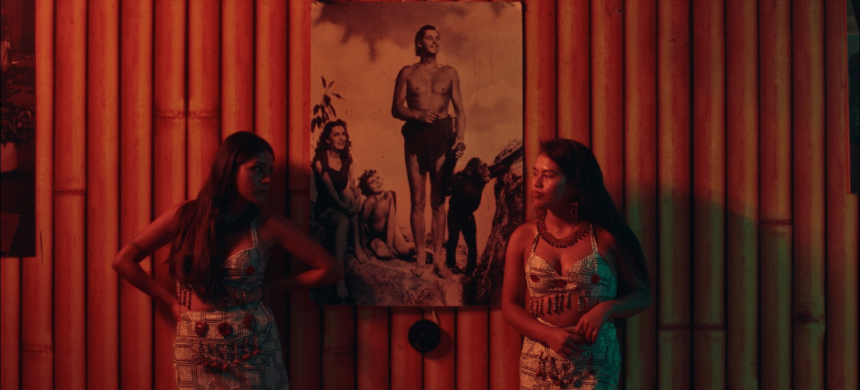
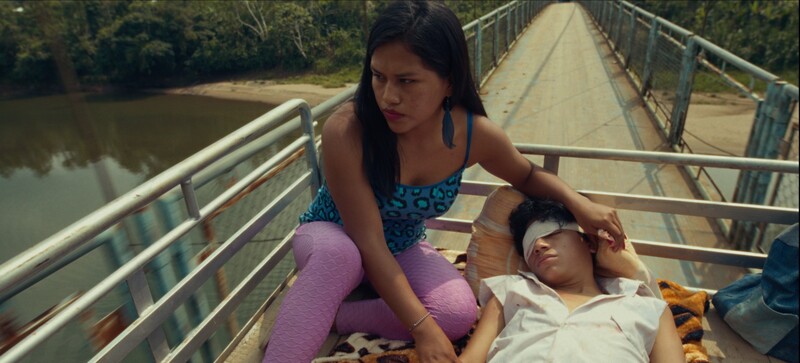
Set in the Peruvian Amazon and the Andean foothills, Punku, the second fiction feature by Peruvian filmmaker Juan Daniel Fernández Molero, follows Meshia (Maritza Kategari), a teenage girl from a Matsigenka community, as she encounters Ivan (Marcelo Quino), a withdrawn boy she discovers in the forest.
Believed to have died after disappearing two years earlier, Ivan’s reappearance prompts a journey to the city of Quillabamba, part medical evacuation, part coming-of-age passage. Rather than unfolding as a straightforward rescue narrative, the film traces a gradual unearthing of trauma, cultural dislocation, and psychological disintegration, with Meshia emerging as Ivan’s guide.
Director Juan Daniel Fernández Molero returns with his sophomore fiction feature and third film overall, extending a trajectory shaped as much by geographic immersion as by formal experimentation. Following the fragmented autoethnography of Reminiscences and the digital delirium of Videophilia (and Other Viral Syndromes), Punku marks a distinct shift.
For the first time, Molero worked without the severe financial limitations that informed his earlier projects, allowing for a more deliberate engagement with hybrid methodologies that were once both pragmatic and stylistic choices. Developed and produced over the span of a decade, Punku sustains his characteristic sensibility, nonlinear, exploratory, and formally fluid, moving seamlessly across 16mm, Super 8, digital formats, and an array of genres.
As in his earlier work, Molero forgoes conventional cinematic structures in favor of an intuitive, often discontinuous approach. Punku is divided into 21 chapters, each functioning as a symbolic or psychological threshold, the punku of the title, meaning “gateway” or “portal” in Quechua. These segments align more closely with tarot archetypes than with traditional narrative beats, charting internal states rather than driving external events. The film is less concerned with resolving Ivan’s trauma or Meshia’s trajectory than with observing how their identities shift across overlapping planes of experience: historical, social, mythopoetic, and digital.
This attention to layered perception extends to the film’s formal construction. Images shift between film stocks and color palettes, often abruptly. TikTok clips appear alongside shadow puppetry; the handheld realism of social drama contrasts with carefully staged oneiric tableaux. The film’s rhythm evokes the disordered cycles of a body under psychic duress, brief moments of clarity punctuated by extended sequences of hallucinatory memory or cultural haunting. Molero has described experiencing sleep paralysis as a child, a condition that informs the film’s fluid transitions between waking and dream states.
Punku anchors these interior dislocations within a broader critique of representation. Through the casting of local non-actors improvising their dialogue and the fluid integration of Quechua, Spanish, and Matsigenka, the film resists assigning fixed roles, either to its characters or to its audience. Meshia’s trajectory, which includes participating in a local beauty pageant and working in a night bar, is neither romanticized nor condemned.
It underscores the blurred line between personal agency and the subtle pressures of contemporary life. Ivan, largely silent, functions less as a fully articulated character than as a site of projection. His vacant gaze mirrors a collective impulse to suppress what continues to mark a landscape shaped by colonization, resource extraction, and disappearance. He remains opaque throughout, an unresolved presence, until a finale that gestures toward the metaphysical.
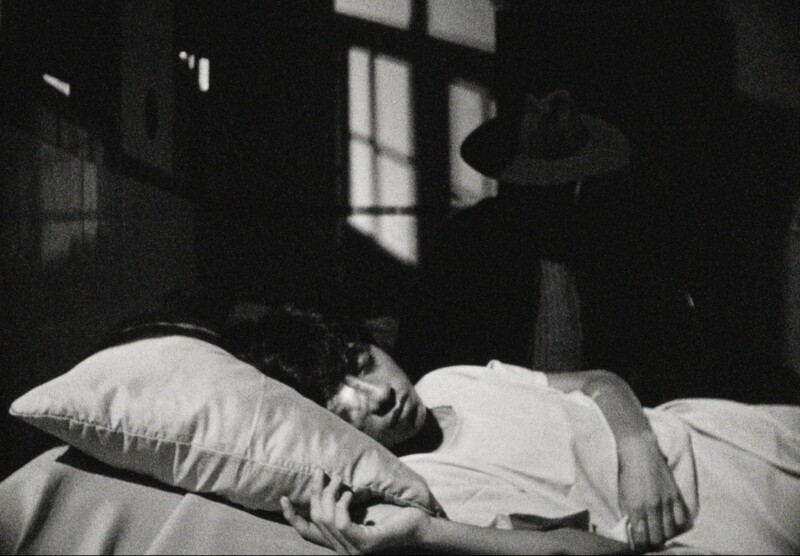
The film’s surreal style bypasses the magical realism usually associated with Latin American poetical supernaturalism with richly layered textures encompassing folklore, supernatural, coming-of-age, mystery or social realism among others. Punku offers a cosmology rooted in syncretic visual language with several plausible registers of reality and shifting styles including one particular episode that appears to be inspired by Czech surrealist maestro Jan Švankmajer.
Punku resists traditional plot-driven structure, unfolding instead as a series of stylistically varied vignettes loosely anchored by the character arcs of Meshia and Ivan. The narrative logic remains deliberately porous, as Molero draws the viewer into liminal environments where nature and overlapping realities merge through a lo-fi surrealism.
While Videophilia (and Other Viral Syndromes) explored a punk cyber coming-of-age shaped by the aesthetics of digital disruption and the dissolution of fixed hierarchies, Punku extends this sensibility into a more elemental register, where the merging of disparate modes becomes a means of navigating fractured identities and environments. This tendency toward eclecticism remains central to Punku, consistent with Molero’s established auteur approach. Yet while Videophilia (and Other Viral Syndromes) embraced internet aesthetics, glitch art and other forms of digital expression often alien to traditional cinematic language, Punku starts with the punk impulses.
A transgressive image of surgical eye extraction sets the initial tone, but soon moves toward a more metaphysical visual language. Rather than drawing from digital extravagances, Punku turns to nature as a conduit for myth, history, and Andean folk traditions, embedding its imagery in the physical and symbolic textures of the landscape.
Punku leans less toward provocation and more toward meditation, guided by the psychological and spiritual rhythms of memory, myth, and mourning. While both Punku and Videophilia revolve around a girl-meets-boy dynamic, each film approaches this premise through a distinct register and with differing intentions.
Molero´s latest unfolds as a more deliberate and immersive experience, shifting toward what author Kelly Link describes as “nighttime logic” or “dream logic,” in contrast to the “daytime logic” that structures Videophilia. The result is a psychogeographic work that feels less like a gonzo experiment and more like a sustained exploration of altered states, interior landscapes, and cultural hauntings.
Punku
Director(s)
- Juan Daniel Fernández Molero
Writer(s)
- Juan Daniel Fernández Molero
Cast
- Ricardo Delgado
- Maritza Kategari
- Marcelo Quino