
The Last Time I Saw ALIEN: RESURRECTION

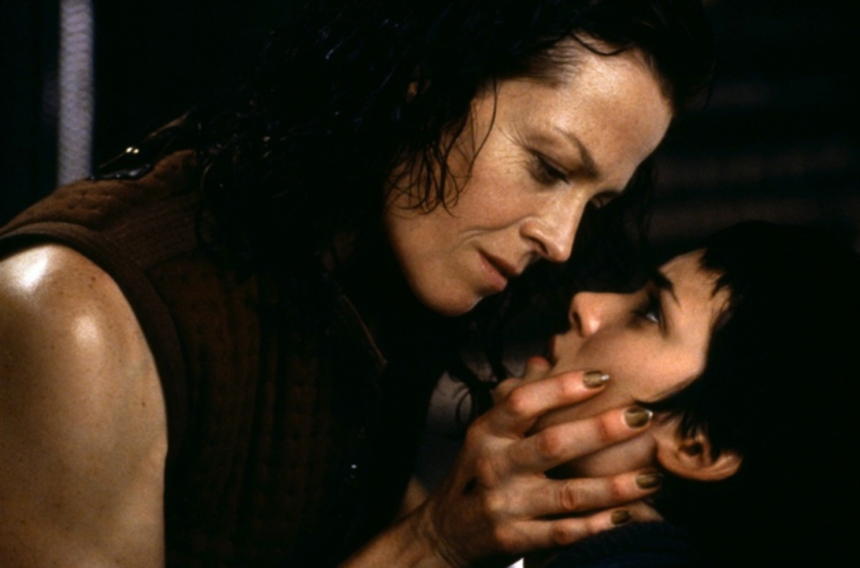
In preparation for Ridley Scott's upcoming Prometheus, I, like the rest of the science-fiction-loving world, judiciously put aside eight hours of my weekend to re-watch the four previous installments of the Alien franchise (no AVP nonsense here). This exercise confirmed a number of my pre-existing feelings about the quadrilogy: that Alien is the most beautifully crafted film of the series, not to mention one of the best sci-fi horror films ever made, while James Cameron's Aliens remains the most entertaining and my personal favourite. However, watching the four films back-to-back for the first time also revealed to me just how weak David Fincher's Alien 3 really is - how it lacks structure, characterisation, the strength to bring something new to the saga beyond a dog and a set of shears - and as a result, what an impressive job Alien: Resurrection does in putting the series back on track, while advancing it in the most daring and audacious ways yet.
I first saw Alien: Resurrection back in 1997, when it originally hit cinemas and I was a precocious and opinionated film student in the North West of England. My date and I ventured to the recently refurbished Arndale Centre in Manchester, for what proceeded to be an awkward, gooey and ultimately underwhelming encounter. But enough about the date. My initial impression of Alien: Resurrection was one of disappointment. I had long been a fan of both the series and French director Jean-Pierre Jeunet (Delicatessen, The City of Lost Children) and was anticipating this collaboration with some relish. What I witnessed that day was an uneven collision of poorly judged body horror and broad slapstick comedy that seemed completely at odds with the Alien series I knew and loved. Ripley appeared to be lampooning Snake Plissken rather than advancing her own character, while the addition of Winona Ryder (who had long before lost her Heathers-era charm) only further fuelled my ire. The rest of the performances seemed caricatured and lazy, the action lacked tension or excitement, and the film's spectacularly ridiculous finale was not only misjudged but took the alien itself to a place I was vehemently unwilling to embrace. In short, I disliked the film pretty strongly and shelved it, along with my opinions, until now.
If I'm honest I think I have revisited Alien: Resurrection once or twice in the 15 years that followed, both on VHS and DVD when the inevitable boxset purchases were made, but if I did sit through the whole thing again, it was with such a degree of disconnect and disdain that the film frankly never stood a chance of being fairly re-evaluated. Last Sunday, however, I rallied together a group of likeminded individuals for a daylong pre-Prometheus cramming session, barely pausing for toilet breaks between each film. In doing so, I was able to fully appreciate the experience of Alien: Resurrection, not only as an individual endeavour by Jeunet, scriptwriter Joss Whedon and their collected collaborators, but also as an ambitious attempt to reboot a franchise that had fallen from the upper echelons of genre classic status to the messy netherworlds of franchise fatigue. Alien 3 had killed off its heroine just as the series was beginning to investigate Ripley's relationship with the alien beyond them being simply enemies, but rather becoming some kind of mismatched partners in crime. Strike that, they're a family now.
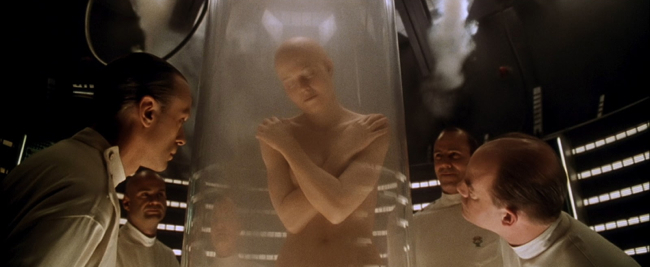
Faced with the challenge of bringing Ripley back to life, Whedon headed for the only logical solution, and has her cloned by the military. Exactly where they got a sample of her DNA from is not revealed - we can assume there wasn't much left of her in all that molten lead - but we can accept the possibility that Clemens (Charles Dance) may have taken a blood sample after she was rescued at the opening of the previous film. It is, after all, far from the biggest hurdle we are to be presented with. A secret military operation on board the USM Auriga has successfully cloned Ripley, but not primarily to bring her back to life 200 years after her suicide, but to extract the Alien queen embryo that was gestating inside her. Where the script really triumphs is by introducing the idea that there was no clean break between guest and host. Ripley is alive, but with trace elements of alien now in her DNA, and as the film goes on to reveal, the alien queen has received a little something in return - namely a massive, external human reproductive system.
Ripley must come to terms, not only with being brought back to life into yet another future world environment that is not her own, but also with the fact that she is no longer herself. The alien has won. It has a hold on her, at a molecular level, from which she can never hope to escape. Whedon ensures that Ripley has some fun with her predicament - giving her superhuman strength and dexterity, not to mention acid for blood and an uncanny sixth sense that can "feel" the other aliens. He even forces her to confront a roomful of less successful incarnations of herself, each displaying her new hideous cross-species identity in more monstrous, crippling detail. The film also makes Ripley deal with this new development in her relationship with the alien on a profoundly human level. Her foe is also her child now, her own flesh and blood, and in the film's grand finale this tangled relationship becomes even more complex, as Ripley and the queen consummate their 18-year courtship with the birth of their own incestuous offspring. By producing a monster of her own, she has become both the enemy and its protector.
But it's not all about Ripley in Alien: Resurrection. Whedon's script introduces a rich array of diverse characters, from soldiers and scientists to androids and space pirates, and Jeunet brings on board a host of impressive character actors to give them life. The film boasts delightfully full blown turns from Ron Perlman, Michael Wincott, Brad Douriff and Dominique Pinon, all of which are far broader than anything you will see in Ridley Scott's original, and more vivacious than the interchangeable shaven headed souls lost in Fincher's anonymous Alien 3. We must look to the hot-headed, wise-cracking ensemble of Cameron's Aliens to find such a diverse and extroverted collection of characters, and Whedon's smart dialogue coupled with Jeunet's larger-than-life aesthetic proves a successful formula for creating people that an audience can recognise, relate to and ultimately, care about.
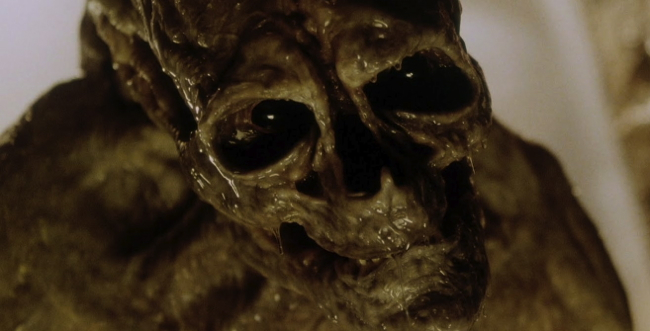
Even the aliens themselves are given more personality in Alien: Resurrection than we have witnessed in the past. Since the very beginning, the various crews have been warned of the creature's intelligence, but we have really only witnessed its hostility. Sure, in Cameron's film the queen grasps the concept of an elevator pretty quickly, while her minions see the benefits of short-circuiting the electrical mains - "How can they cut the power? They're animals!" - but never before have we really seen the aliens learn, or work together to this extent. Remember, in the interim between Alien 3 in 1992 and Alien: Resurrection in late 1997 we saw not one but two Jurassic Park movies, chock-full of those "clever girls", the velociraptors. The aliens in Jeunet's movie bear more than a passing resemblance to Spielberg's intuitive reptiles, and the way they work as a pack to escape their cells and hunt down their captors was a real step forward for the creatures' onscreen development.
As a final, parting note of appreciation for the much maligned Alien: Resurrection, it should be acknowledged that Jeunet and Whedon brought Ripley home. The film ends with our heroine gazing out of the window at clouds, oceans and terra firma - and yet filled with a greater sense of trepidation and dread than ever before. She acknowledges back in Alien 3 that she has been confined to the depths of space, incessantly pursued by murderous xenomorphs for so long that she no longer knows of anything else. She has no place on this Earth - no family, no home - and yet, this is where her journey must eventually end. It is a tantalising denouement, which obviously leaves the door wide open for further adventures for both Ripley and the alien - but ones that may very well prove too expensive to actually bring to the screen any time soon. While for some, the narrative closure at the end of Alien 3 gave the series a greater sense of finality, it was also somewhat defeatist and unsatisfying. Ripley lost. She gained her freedom, but only at the expense of her own life. Didn't she deserve more? As Alien: Resurrection ends, and Call asks, "So, what now?" Ripley must concede that for the first time in centuries she does not know. Even death cannot free her from the alien, and more importantly, cannot free the franchise from the commercial whims of its owners. While Ridley Scott is proving right now that there is a hunger for this universe that extends beyond the exploits of Lt. Ellen Ripley, the tantalising prospect of her coming home, and bringing at least a trace element of the species with her, has me confident that one day her story will be resurrected once again.

Do you feel this content is inappropriate or infringes upon your rights? Click here to report it, or see our DMCA policy.


