Kore-eda's First Ever NYC Retrospective!

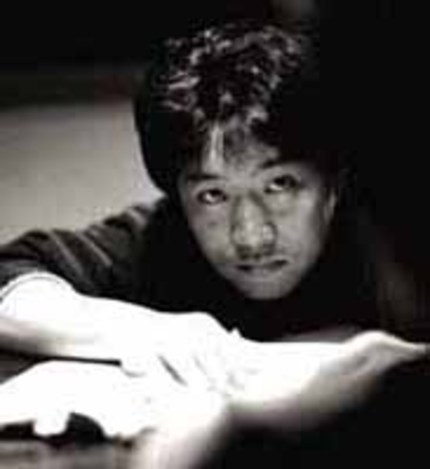
From August 21st to September 1st, The good people at Brooklyn Academy of Music's BAMcinématek will be hosting Japanese filmmaker Hirokazu Kore-eda's first New York retrospective with rare screenings of his TV and documentary work in addition to his latest (IE released) feature STILL WALKING.
Oh and the man himself will be there two nights in a row for some after screening Q&As. Not too shabby.
For interested local parties (or really obsessive Kore-eda fans from far off parts) tickets can be purchased at BAM's website, though I hear rumblings of a possible ticket giveaway at this here doorstep... Full details and schedule after the break.
From BAM's website:
The Films of Hirokazu Kore-eda, August 21—September 1 http://www.bam.org/view.aspx?pid=1427“I’m interested in the emotions that arise from the collision between
so-called real life and the artifice of film.” Hirokazu Kore-eda has built
an astounding body of fictional work by meshing the sensitive approach of
his early documentaries to his narratives, imbuing them with a humanism
unsurpassed in modern cinema. His lyrical films offer profound explorations
of memory and loss with an observational style devoid of sentimentality.
BAMcinématek is proud to present the director’s first New York
retrospective, including rare television work. All films in Japanese with
English subtitles.Still Walking (Aruitemo Aruitemo) (2008) 114min
Fri, Aug 21 at 7pm*
*Q&A with Hirokazu Kore-eda
With Hiroshi Abe, Yui Natsukawa, You
Kore-eda’s latest is an elegiac, bittersweet examination of family
dynamics. The film follows two middle-aged children who return home to visit
their parents on the 15th anniversary of their brother’s accidental death.
Infused with unexpected humor and a quiet, Ozu-like humaneness, Still
Walking illuminates universal truths about family, loss, and guilt. Sneak
preview courtesy of IFC Films.Nobody Knows (Dare Mo Shiranai) (2004) 141min
Sat, Aug 22 at 3, 6*, 9:30pm
*Q&A with Hirokazu Kore-eda
Yûya Yagira, Ayu Kitaura, Hiei Kimura
Kore-eda turns his attention to the endemic crisis of child abandoment,
zeroing in on one family of four children. While his humanism imbues his
characters with resiliency, his documentary background prevents any
sentimentality. Fourteen-year-old Yuya Yagira won Best Actor at Cannes for
his performance as the unflappable elder brother.Distance (2001) 135min
Sun, Aug 23 at 3, 6, 9pm
With Arata, Yusuke Iseya, Yui Natsukawa
Three years after a mass slaughter/suicide by an extremist religious sect,
four relatives of deceased cult members seek solace by journeying to the
remote lake where the cult began. When they encounter a man who witnessed
the atrocity, their pilgrimage takes an unexpected turn. Kore-eda considers
how events of the present determine how we view the past and whether time
really does heal all wounds.Hana (Hana Yori Mo Naho) (2006) 127min
Mon, Aug 24 at 6:50, 9:30pm
With Junichi Okada, Rie Miyazawa, Arata Furuta
Though Kore-eda breaks from his focus on contemporary Japan, his themes of
death and life, loss and rejuvenation remain. A samurai, sent to avenge the
death of his father, lacks passion for the sword and prefers to involve
himself in the lives of the townspeople. When he meets his father’s
killer, he must choose whether to bury the sword or follow the way of the
samurai.Maborosi (Maboroshi No Hikari) (1995) 110min
Tue, Aug 25 at 4:30, 6:50, 9:15pm
With Makiko Esumi, Takashi Naitô, Tadanobu Asano
A young woman’s husband dies by apparently committing suicide, leaving
her to question his reasons and to care for their newborn child. Exquisitely
shot, the film maintains an unflinching eye on her and her lonely world.
Kore-eda’s first foray into fiction reveals the influence of Hou
Hsiao-hsien and garnered international acclaim, winning jury prizes in
Venice and Chicago.After Life (Wandäfuru Raifu) (1998) 118min
Fri, Aug 28 at 2, 4:30, 7, 9:30pm
With Arata, Erika Oda, Susumu Terajima, Takashi Natô
After Life proposes a way station between life and death. The deceased have
a week to choose one memory to take with them to the great beyond—once
selected, the memory is dramatized and filmed by the employees of this
limbo. Kore-eda turns high concept into a sublime masterpiece in this
beautiful rumination on memory and love letter to film and its power to
recreate life.August Without Him (Kare No Ina Hachigatsu Ga) (1994) 77min
Mon, Aug 31 at 7pm
This is Kore-eda’s heartfelt lament for Hirata Yukata, the first Japanese
citizen to publicly acknowledge that he contracted HIV through homosexual
sex. The film is not a document of a dying man’s final days, but the story
of the relationship that develops between filmmaker and subject, and how
this crystallized Kore-eda’s attitude toward objectivity in nonfiction
filmmaking.Without Memory (1996) 84min
Mon, Aug 31 at 9:15pm*
*Free screening
Kore-eda turns the camera on his own family as a botched medical procedure
gives his father Wernicke’s Encephalopathy, causing him to lose his
short-term memory. While revealing themes of memory and loss that remain
important in Kore-eda’s work, the film is also an intensely personal
protest against inadequate health care.Lessons From a Calf (Mou Hitotsu No Kyouiku – Ina Shogakkou Haru Gumi No
Kiroku) (1991) 47min
Tue, Sept 1 at 7pm
Kore-eda’s first film follows an elementary school class as they raise a
dairy cow named Laura. This documentary captures their curiosity and
enthusiasm as they care for her over the course of a year and become
increasingly attached to their bovine specimen. When it is time to send
Laura back to the farm, the film ends with a resonant final evocation of
loss.
With However (Shikashi – Fukushi Kirisute No Jidainni) (1991) 47min
Originally meant to document the government’s policy toward health
compensation, However… became an exploration of the life of Yamanouchi
Toyonori. The head of Japan’s Social Welfare Bureau, Yamanouchi
compensated victims poisoned by polluted drinking water. As the Japanese
government became increasingly reluctant to compensate victims, Yamanouchi
became increasingly frustrated, eventually committing suicide over the
issue.