TIFF Report: ERIK NIETZSCHE, THE EARLY YEARS Review

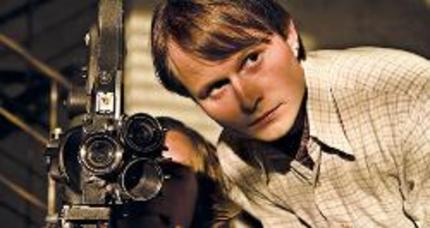
What's happened to Lars? Written and narrated by Danish maverick Lars Von Trier under the pseudonym of Erik Nietzsche, The Early Years sees the iconic director in a bit of an unexpected mood. Having built his international reputation with a restless need to reinvent himself and, more recently, a string of caustic pieces of satire Von Trier does a full on about face here, trading in his vitriol and raw cinematography for a beautifully - and very conventionally - shot piece of nostalgia. Though directed by Jacob Thuesen rather than Von Trier himself the film is a surprisingly gentle comedy, a reminiscence of Von Trier's time in film school and the transformation of a young man into a coldly opportunistic businessman.
Erik Nietzsche is a gentle, mostly honest boy. An artistic soul already rejected from painting and drama schools Erik manages to get himself accepted to the Danish National Film School where he hopes to channel his artistic impulses. He didn't get in because his submission film was very good - mostly just shots of leaves, it earned nothing but derision from the admissions board - but because the school principal got his papers all mixed up during a desk-top sexual adventure. But in by merit or not Erik is in and it's time to make art! Or not. The best equipment is off limits, his teacher is a washed out has been who never was much to begin with, his fellow students are an odd lot and his best ideas are met with mockery. Most students dream of women, Erik dreams of the day he'll be allowed to use the expensive dolly but use of that is reserved for graduation films and it will be a difficult road for him to even get that far.
Given Von Trier's outspoken criticisms of his own industry and repeated attempts to shake it up commercially and artistically, plus his willingness to criticize himself and put his own issues on display, you might expect that Erik Nietzsche would be a fairly dark comedy, a barb-laced satiric look at the artistic process and the inevitable concessions that must be made to commerce. And while those observations are indeed there this is by far a more gentle film than expected. The anger that fuels Von Trier's sharpest satire has been by a sort of quiet bemusement and it's hard to know whether this is because his script is being interpreted by another behind the camera, whether he's realized that the way film school works isn't really worth getting all upset about in the first place, or whether this film is itself an example of commerce triumphing over art. Von Trier has, after all, commented a few times since Manderlay on how he really needs to make a film or two that makes money before wrapping up his hard edged, experimental trilogy.
Whatever the reasons for the change the tone of Erik Nietzsche is certainly effective enough, the gentle pokes at student naivite and the absurdity of enclosed college life drawing appreciative laughs from the audience. If the goal was to create an audience pleaser than consider that goal met. If the goal was to create any sort of lasting satire of the artistic process, however, than the film is entirely too toothless to be really effective. The jabs are all obvious ones, the good natured tone resulting in a film that is a pleasant diversion and a rare trip through Von Trier's psyche meant to evoke chuckles rather than outrage and the result is a film that will be enjoyed while viewing but likely slip away quickly once the lights come up. Von Trier has always been at his provocative best when angry about something, whether that be global politics (as with Dogville and Manderlay) or the safe and easy way film itself is made (hence the hard restrictions of the Dogme movement, the 100 cameras experiment, etc) and there's just no real anger here. He's playing it safe, a right he's certainly earned at this point and something he does well enough, but safe isn't what Von Trier does best.