Venice 2026 Review: ARRESTED MEMORY, Screwball Cop Caper Brings Melancholy to the Police-Action Formula
Japanese cult filmmaker Sabu refreshes the police-action formula with screwball comedy and melancholic undertones.

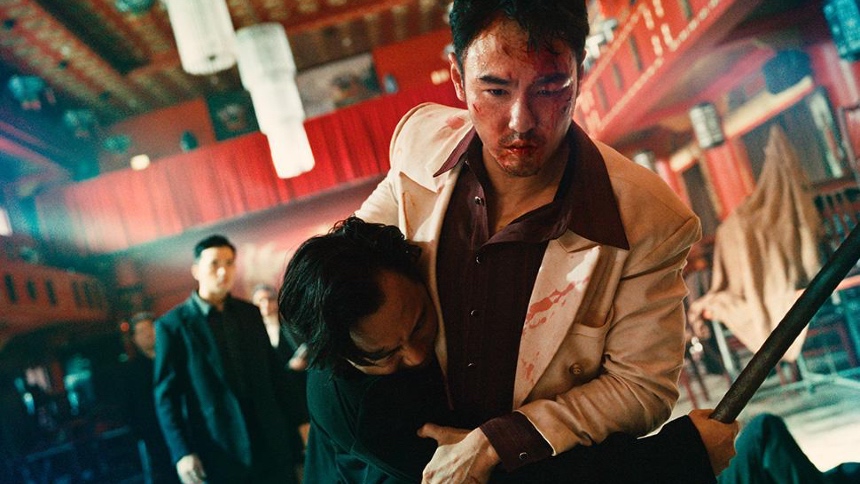
Japanese director Sabu takes the overused narrative device of memory loss for a fresh spin in his action comedy Arrested Memory, some 20 years in the making.
Sabu bends the device toward his perennial concerns: The absurdity of circumstance, the comedy of panic and the possibility that catastrophe might shake loose a more authentic human being. Lee (Ethan Juan) is a celebrated Taipei police detective diagnosed with early-onset dementia, just as he is transferred to a rural precinct. The dementia is paired with severe PTSD.
In the opening scene, his entire team is massacred in a bar after a volatile situation goes haywire, while Lee appears more confused than present-minded during the pressure-cooker confrontation.
At his new precinct, and carrying a stellar reputation, Lee is assigned to investigate the kidnapping of the young son of an influential Japanese businessman, whose captors are demanding an enormous ransom. In another tense situation, Lee appears fully in command and proposes disguising himself in the businessman’s clothes to deliver the money, confront the kidnappers and rescue the boy.
During the mission, however, Lee suffers memory blackouts and wanders off with the cash. He is soon pursued not only by the kidnappers, but also by the businessman and the police, all of whom suspect that he used the operation as a diversion to disappear with a suitcase full of money.
Sabu scrambles the familiar conventions of the police action movie. Since Dangan Runner, Postman Blues and Monday, the filmmaker has treated genre less as a stable category than as a volatile apparatus. Crime, coincidence and bodily momentum collide until suspense tips into farce, then circles unexpectedly toward melancholy.
Arrested Memory combines disparate elements. At one moment, it plays like a classic action film influenced by the Hong Kong cinema of the 1980s and 90s, only to slide in the next into an almost sitcom-like situation, with Lee stumbling upon yet another clue in an investigation he is not really pursuing.
Arrested Memory thus becomes an action comedy of errors. Nobody around Lee understands his cognitive decline, to them, he simply becomes an enigma who appears to remain several steps ahead.
Improbable coincidences lead him into the heart of the kidnapping gang and several other criminal cases, which converge in the obligatory climactic shootout. The collision of trauma, melancholia and confusion produces increasingly farcical situations, particularly because the kidnapping gang consists of individuals who are neither especially bright nor quite as bloodthirsty as the other criminals who cross Lee’s path.
The entire ordeal unfolds in a Forrest Gump-like manner, as Lee dives deeper into an investigation he is not consciously pursuing, propelled by bizarre accidents and occasional flashes of lucidity. Sabu makes an audacious proposition to the audience, and its degree of success depends upon their tolerance for coincidence and capacity to suspend disbelief. Lee not only navigates a succession of life-or-death situations almost unwittingly, but is also guided to the heart of the case by a sheer accumulation of improbable circumstances, as if fate itself were directing the investigation.
Arrested Memory refreshes the police-action formula with a screwball spin and melancholic undertow, allowing bursts of choreographed violence to collide with farce. Yet Lee’s condition occasionally arrests the film’s forward momentum, the repeated blackouts and detours interrupt the action’s flow, making an 86-minute running time feel longer than it is. Even so, Sabu’s eccentric genre hybrid remains a welcome variation on familiar material.