
Toronto 2026 Interview: DIARY OF A MAD OLD MAN Director Wayne Wang on Adapting Junichiro Tanizaki, Bringing Chinese and Japanese Stars Together

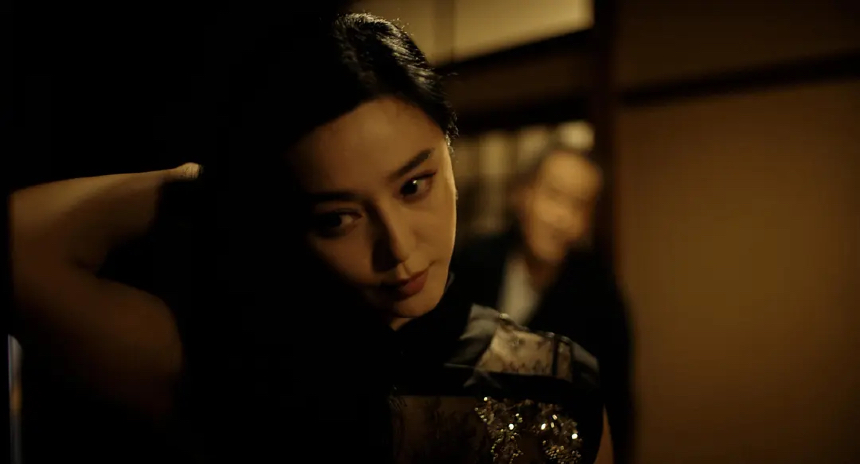
Multidisciplinary Hong Kong-American filmmaker Wayne Wang, known for films such as Dim Sum: A Little Bit of Heart and Eat a Bowl of Tea, returns with what might be his last feature, Diary of a Mad Old Man.
Starring Chinese powerhouse Fan Bingbing and Japanese actor Lily Franky, the film adapts the late work of Nobel-nominated writer Junichiro Tanizaki. Rather than offering a straightforward interpretation of the novel, Wang brings his own feelings about ageing and complicated desire into the story, intertwining the lives of an old man and his daughter-in-law living under the same roof.
This is not the first time Wang has worked on a novel adaptation set in a Japanese context, but Diary of a Mad Old Man feels almost like a timely work, reflecting his own pondering on how anxiety can trigger eros in an ageing body. Wang does not try to depict the unconventional bond between the two characters in a perverted way, or at least not in the same manner as it is shaped in the original novel. Instead, working with amateur screenwriter Kelvin Wyles, he relocates the story to a more contemporary and international context, avoiding the extensive descriptions of medical treatment and the innermost fears of growing old that occupy much of the source material.
The participation of Fan Bingbing, meanwhile, adds an exotic layer to this otherwise erotic adaptation, bringing out a notably distinct version of Susu (Satsuko), who comes across as more seductive than manipulative.
Before Wang, now in his mid-seventies, travelled to Toronto for the film’s world premiere, I spoke with him about the necessity of adapting this decades-old work after two previous screen versions, his reasons for casting Fan Bingbing and Lily Franky specifically and how he worked with the two actors, as well as the film’s peculiar setting in modern Japanese society. We also discussed his plans for the future after the film’s festival tour, including his wish to make something more unrestrained, experimental and free from the pressures of conventional filmmaking.
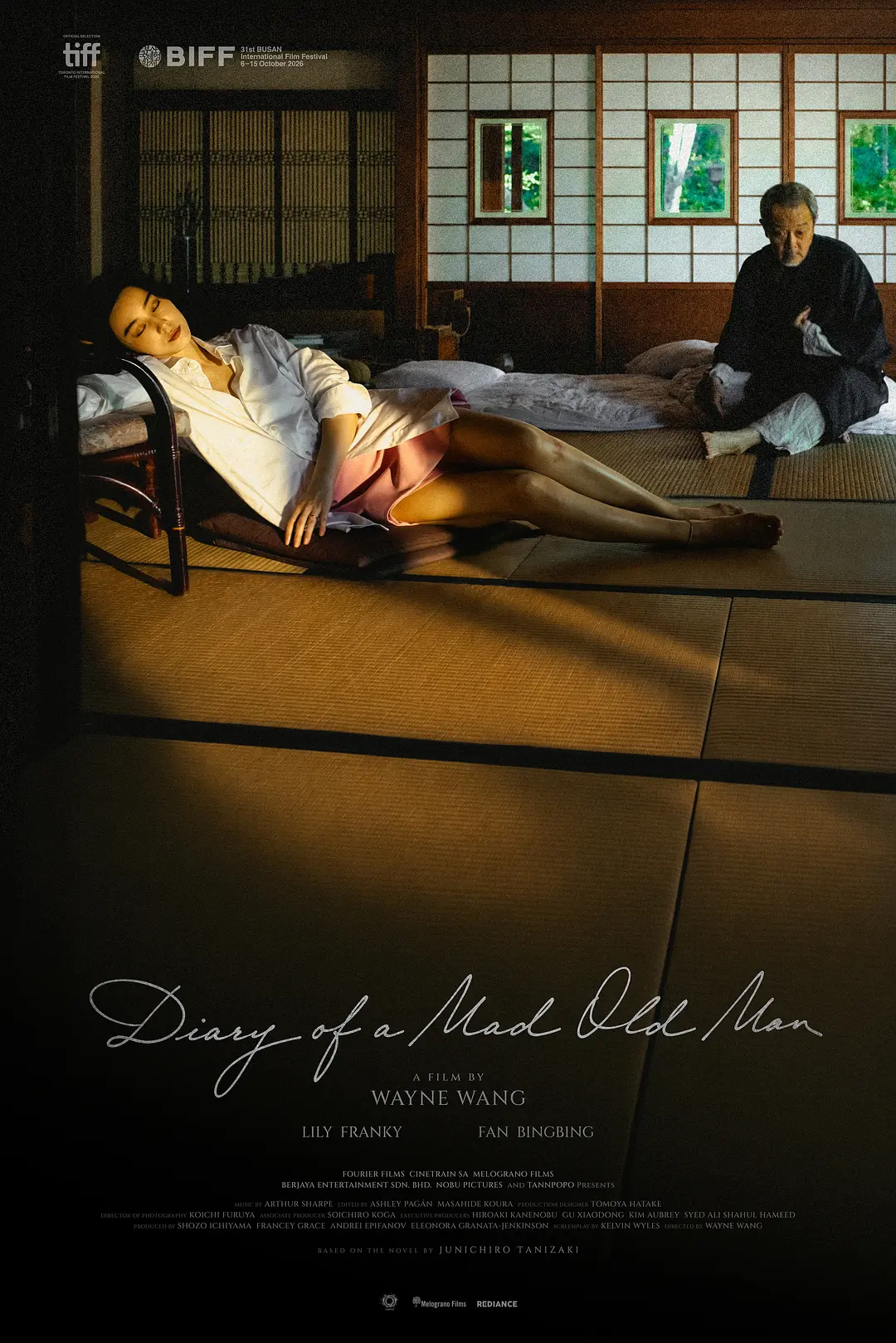
ScreenAnarchy: What made you decide to bring Junichiro Tanizaki's original novel to the big screen? I noticed that this novel had been adapted twice before, but those versions were made a long time ago. So what made you want to adapt it again at this particular moment, in the era we're living in?
Wayne Wang: I read the novel and was very intrigued by it, especially the whole idea of an older man who has just had a stroke and yet still has a strong sexual desire. I was interested in dealing with that aspect of the story.
I was actually taken to the place where Tanizaki wrote the novel when he was in his sixties or even seventies. I sat in the chair where he wrote the novel, and I just felt a strong urge to make it into a film. I had seen the other two versions, and I thought they were kind of badly done and over the top.
So I wanted to make my own version. Not necessarily to be really faithful to the book, but to use it as an inspiration.
What, for you, is the biggest difference between your film and those two versions? What kinds of changes did you make?
For example, in the first two films, the female character was really dramatic and over the top, very manipulative, and constantly trying to get things from the old man. I thought that was just way over the top. The old man was also very slimy and sleazy.
So I wanted the two characters to be more authentic, rather than so over the top. That was mainly what I tried to do. That's why I cast very carefully and chose Fan Bingbing and Lily Franky. Both of them play characters closer to themselves, and they don't over-dramatise them.
I read the original novel after watching the film, and I found that it relies pretty heavily on the diary form and extensive inner monologue to unfold the story. By contrast, your film feels much more restrained. It relies more on expressions, the body, and physical space. Why did you choose this approach? And what was the biggest challenge for you in adapting the novel?
I didn't want to use too much of the diary from the book, especially because, in the book, there is a lot about his physical health and medical condition. Seeing the doctor and all those things were kind of boring. I didn't want to have a lot of words describing things.
I wanted to actually see what's going on with the characters and within the house, with his family. So I really focused on showing the interaction and the action in the story more than anything else. That was a very conscious choice.
Basically, day by day, we set things up in a way that was less wordy, less about the diary, and more about the interaction between the characters.
Do you think that presented an obstacle when adapting the story? How did you approach the old man's medical condition as it is described in the novel?
Well, it's a pretty common situation. You're always confronted with people who have just gone through a stroke.
Coincidentally, one of the producers, an older Japanese man who was a big Tanizaki fan, actually died of a stroke very suddenly during the production — not during filming, but during pre-production.
Then another producer, the American producer, had a father who had a stroke and went through a lot. So I heard quite a bit about what he was going through, and I found it rather interesting.
There were some things that I wanted to use, but they would have diverted the story into something else. One interesting thing was that the producer's father completely lost his memory when it happened. But on the third night or so, his memory all came back. Then, after maybe 24 hours, it was gone again. Apparently that happens. I found that really interesting — the inability to hold on to your memory that way.
But anyway, it would have been a kind of sidetrack, so I didn't use it. I know quite a bit about it from people around me having gone through things like that.
I also noticed that although the film was directed by you, the screenplay was adapted and written by another screenwriter, Kelvin Wyles. I tried to research him online, but I couldn't find much information about him. Could you talk a little about how you collaborated with him, and what made you feel he was the right person for this project?
He's not a professional screenwriter, but he loves writing screenplays. He's actually a lawyer, and I've known him for many years.
We talked about this, and we seemed to have a similar conception of the story and the script. So we worked together on and off over the years. There were many, many different versions. As I said, we used the main character, Utsugi, as an inspiration rather than following him too specifically or too faithfully. We wanted to create different characters.
In the beginning, actually, Christopher Walken was going to play the character. That was quite a few years back, but that's sort of how it all got started.
As a non-professional screenwriter, did he bring something unexpected to the project?
He's really a structuralist in many ways, and he was very clear about providing a narrative structure to the script. I used that as a framework.
Once we had the actors and we understood the characters they wanted to play, we got on set and actually changed a lot of things.
I really wanted to make every day and every scene more organic and more alive in that sense. The actors really became those characters that we had agreed on.
We see Fan Bingbing playing Susu in the film, but the original character is Japanese. Why did you want to cast her for this role rather than casting a Japanese actor?
I'll talk about the process a little bit. Her manager came to us and said she would be very interested in playing this character. At first, I wasn't quite sure. One, because I didn't know her films that well. And two, as you said, she's Chinese, not Japanese.
But I started watching her films, especially the more independent films she's done. I found them very impressive. She did a Korean film where she played a somewhat lesbian character. She played it very low-key and very real. So I spoke to her on the phone, and through our discussion I really felt that she would be right for this role.
I also liked the idea of a Chinese woman being the daughter-in-law rather than Japanese. First of all, there are a lot of Chinese people who have immigrated to Tokyo, or at least are living in Tokyo. I've heard of many Japanese people marrying Chinese people. So I kind of liked the idea of crossing the two cultures a little bit within this relationship.
To what extent do you think Fan Bingbing really embodies Susu? Is there anything different from the original character that she brought to the role once she came onto the set?
Even as we discussed the character over quite a long period—maybe at least six months—we were going back and forth over Zoom. She talked about the character and was creating her own character on many different levels.
First of all, she's quite familiar with this idea of a hostess character, and with people who have, as I said, immigrated to Japan. She also started to learn Japanese because she wanted to speak it. Even if it might not be perfect or completely correct, she wanted to speak Japanese.
So she really created this character, and she didn't want to play her as a totally manipulative woman. She played her more in the sense of the Japanese hostesses — people who accompany you for drinks and have interesting conversations with you. There's no sex involved. There might be a little touching and kissing, but as she explains in the movie, it's almost all from the shoulders up.
She's very aware of all those things. And she wanted to play a very strong character who was more controlling than the character in the book and in the other two films. I really liked that, because I didn't want to have a manipulative kind of character.
I also noticed that she could have spoken entirely in Japanese throughout the film, but in some of her more impulsive or instinctive moments, she naturally speaks Chinese. Was that something you intentionally decided together? For me, the two different languages also create a very interesting dimension. There are moments when the old man doesn't fully understand her, but he understands her through her gestures and through the mystery and sensuality of the foreign language.
Yeah, I actually talked to her quite a bit about speaking Japanese when it's more casual, and then when it's more personal or emotional, we would have her speak Chinese. She's much more expressive and could do it better that way. So that's the main principle we used.
Even though it's maybe less explicit in the film’s final edit, originally, there was a scene where we introduced Utsugi as actually understanding Chinese and speaking some Chinese.
So here we see that he understands her on simple things and maybe even answers in simple Chinese. And that's about it. I didn't go into explaining too much of that. I just let it happen more organically.
Lily Franky, who plays the old man consumed by desire, ageing, and the limitations of his body, is very different from the character in Shoplifters, where he plays a father figure so much more gentle and restrained. What made you feel that he was the right fit for Utsugi? And what particular quality in him interested you most?
I worked with Lily-san once before. Actually, I made a film called While the Women Are Sleeping, and he was an important side character in it.
I found him to have a lot of different layers, and he's also quite interesting at improvising and telling really funny stories.
For example, the whole scene where he talks about his son masturbating was a story that he made up on the set at the very last moment. He's very good at telling his own kind of stories.
I liked the fact that he was a gentler version than the one in the book. Because I knew people would have trouble with his character. In the other two films, or like Tanizaki himself, it's sometimes a little offensive and a little too perverse, so to speak.
So I thought Lily-san would bring a different layer and version to it.
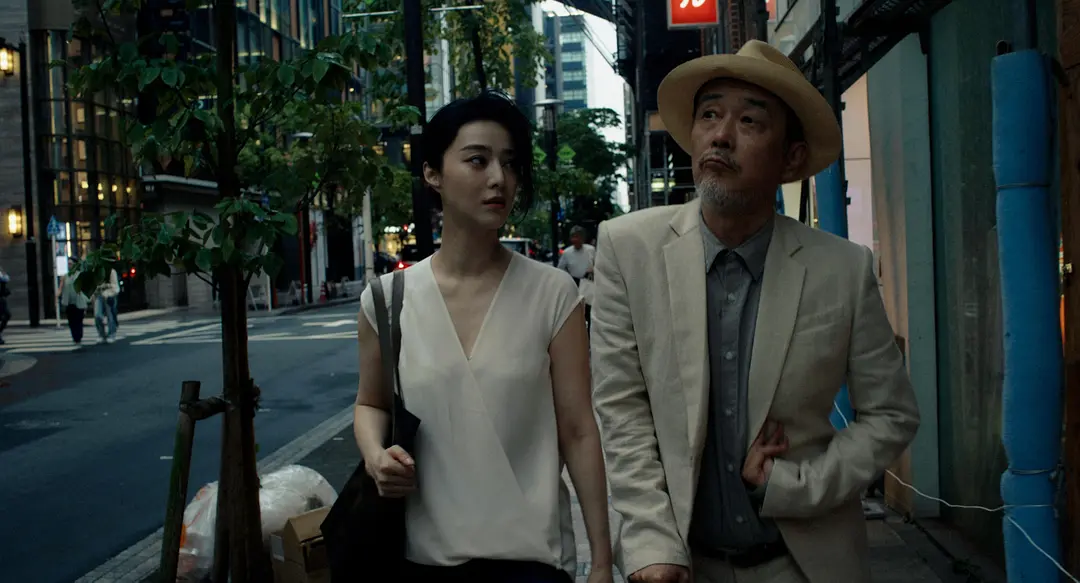
I think his performance is definitely stunning, along with Fan Bingbing's. They create such interesting chemistry around desire and the distance between them, and that distance changes the relationship bit by bit.
I took the things that I liked from the book about the Utsugi character, and I also mixed them with Lily-san himself.
I'm sure my own personality is mixed in with it as well. So every day on the set, something was created, and the moments were very real.
When you were approaching the material, how did you define the boundary between eroticism and psychological exploration?
I was mostly interested in the psychological exploration. I always see my films as being about characters who, in a deeper sense, are all lonely characters. They're trying to find a connection in the world.
Usually in my films, they do find some kind of connection. It may not be the one they ultimately want, but that's important to me. If you look at all my films, they're all kind of about characters who need to find something about themselves or about someone close to them. That's the drama that I like.
And in this day and age, given all the things that are going on with AI, with wars, with everything, people are pretty brutal to each other. I think it's even more important to understand these two characters who are caught up in the present world but are, at the same time, trying to make connections, even though they have no reason for that. He's the older patriarch of the family, and she's the daughter-in-law. But through the day-to-day rituals and details, there is a connection.
I think the connection at the end, with him asking to print her feet and then put the footprint on his grave so she can dance on his grave all the time, is quite an interesting and heartwarming way of showing that connection.
I think that's also one of the most exciting parts of the novel. You tried to maintain that part as it is. Why did you decide to keep it, and how did you think it worked as the ending of the whole story and of their relationship?
When I read the book, that was the most important thing about how the two characters connected in that way.
They don't really have sex, so to speak, but they have this connection, which is, in a way, deeper and very spiritual for me.
If you look at the scene where he's painting her feet, he also explains that in the old days people actually painted the feet of Buddha on graves. In that way, they thought they could spiritually follow Buddha.
I like that idea. The whole connection between them is actually quite spiritual for me.
You also touched on the very contemporary setting, which I noticed from the beginning. Why did you choose to relocate this story into a modern social and cultural environment?
Mostly for practical reasons — we had a very small budget.
I was very careful to be able to make the film without having to deal with the budget. I wanted the film to have a generally more universal, timeless look.
But at the same time, there were small details like the vaping and the clothes and whatnot. In that sense, I didn't want the period or the time to become an issue. I just wanted everything to be naturally part of the story.
Have you ever thought about creating a deeper reflection on what's going on nowadays, or did you prefer to focus more on the intimate relationship between these two individuals?
I didn't have a broader interpretation or implication. I wanted it to be more about the psychology and emotions between the two of them, even though there are little moments, for instance, where Utsugi also asks about the kimono business, which is dying pretty fast. And I like the way he explains that it's a culture, not a business.
Then there are little things that come up about Susu's character. They give you little details about the world today. But nothing really dramatic or anything really big, because I'm usually not that interested in that.
The world is so complicated and so disgusting, really. To get into it, I think it takes a lot to talk about it. So I always go back to the source, which is between human beings.
Especially even between two human beings, how they deal with each other is really the key to how you live and who you are. And to me, that's more important than anything else. If we can deal with the other person, then we might have a chance with the rest of the world.
I mean, if you look at — I'm not a Buddhist. I respect the religion a lot. But the Dalai Lama always has a saying that impresses me. The world is awful. You get up every day, and if you feel good about yourself and physically feel that you are in good shape, you should go out and do something for someone else.
I've always liked that saying, and I've kept that in my heart. Like I said, in the end, for me, if I can see what's going on between two people, especially when they really don't have a reason to be together but can find a way to connect, that to me is more important in this world right now.
You’ve mentioned that Diary of a Mad Old Man might be your swan song. Do you have any ideas about what to do at the next stage? For example, are there any unfinished projects that you would still like to make?
There are many unfinished projects, but they will probably remain unfinished. I’m pretty old.
I really made this film partly as a way to physically test myself.
But you survived it. And you still look very dynamic and energised. I think you could still make another ten films.
Maybe I’d like to do something more playful and simpler. That might be interesting.
Making a film is really stressful. That’s what I’m doing now—making a small film with a small crew like this.
I came out of an art school and a really experimental film department. I might just take a phone camera and film things that are really abstract and experimental, without trying to make too much of a narrative out of them. I might do things like that. Maybe make a diary. I don’t know.
But even making this small film, with a small budget and a small crew, there were a lot of young students who had just graduated from school working on it. I really appreciated that. They contributed a lot to the film, and I have to give them a lot of credit.
It feels like this could be a time when you can really embrace that freedom and enjoy yourself, without having to think so much about limited budgets or the pressures that come with filmmaking.
Every time I go to the Pacific Film Archive, which is near where I live, I sometimes watch collections of experimental films. And I get so jealous of those directors who can just make these pieces of film without feeling all the pressure and stress. So that’s what I’d like to do.
You could even have something like that exhibited in museums or galleries, or potentially seek funding from NGOs.
I think Tsai Ming-liang has made a lot of films like that — basically, the one about the Buddha, where he’s just walking for hours.
Would that be something you may like to try?
Not that long! That could really test the patience of the audience.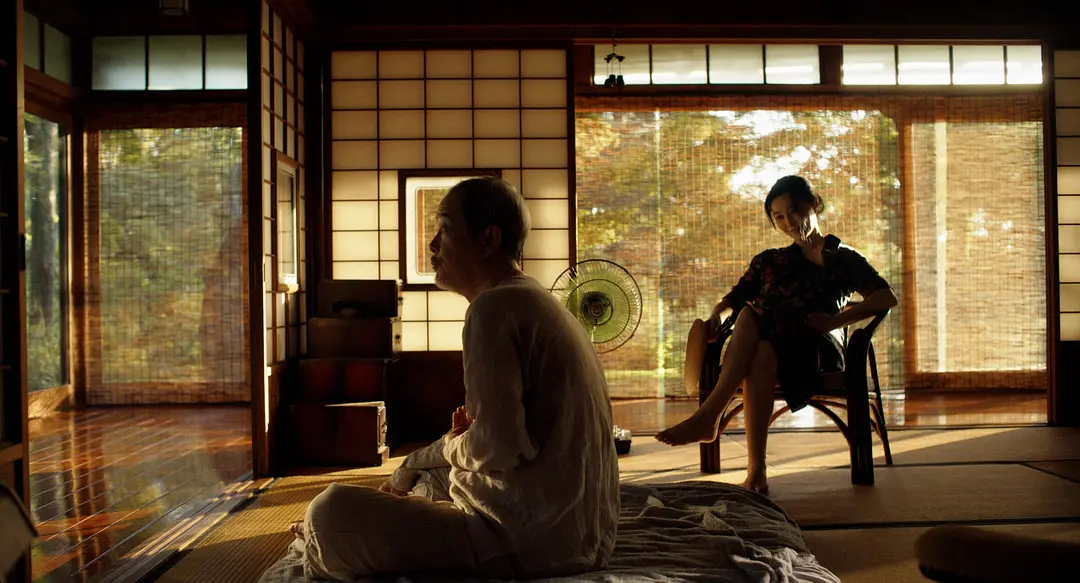

Do you feel this content is inappropriate or infringes upon your rights? Click here to report it, or see our DMCA policy.


