
Echoes: The Pakistani Films We Need But That Haven't Been Made Yet

Not every Pakistani film needs a larger-than-life hero or a damsel in distress to be successful. Pakistan is culturally diverse, and a plethora of films still have not been able to see the light of day. A wish list of stories, genres, and ideas that could broaden the horizons of Pakistani cinema is long overdue.
What do I mean by "films we need"? These stories could include overlooked Pakistani communities, addressing social issues without becoming preachy, revisiting history from fresh perspectives, showcasing different regions of Pakistan, experimenting with genres, telling ordinary stories, giving new filmmakers and actors opportunities, and moving beyond predictable romance, comedy, action, or family drama.
Hundan-An Echo of a Dirge (2025) is the first-ever feature film in the endangered Burushaski language, focusing on environmental conservation, ingenious folklore, and the relationship between humans and nature in Gilgit-Baltistan. The film has a special place in Lollywood, as it was selected as Pakistan's official submission for the 2026 Academy Awards but unfortunately couldn't make it due to several reasons.
The film highlights an overlooked community in Pakistan and is made in an ancient language spoken in a region recognized by UNESCO as endangered. It is reported to have captivated audiences and earned widespread praise, as well as deep emotional reactions, according to the Associated Press of Pakistan (APP).
More such films are needed in the diaspora so that stories from under-explored regions of Pakistan could come to the forefront. Balochistan, Khyber Pakhtunkhwa, Sindh, Kashmir, and other smaller towns and communities need more representation, as their stories may prove to be mesmerizing, as evidenced by Hundan.
Moreover, Pakistan has plenty of extraordinary stories from ordinary lives. Lala Begum (2016) is a short drama film that follows two estranged sisters who reunite at their family home after 20 years, uncovering buried family secrets and long-held discussions. Directed by Mehreen Jabbar, this ordinary story is a highlight for every woman here who has spent decades living with decisions made in her name by others.
Short films need a big-screen breakthrough, since there are plenty of stories that have not reached the masses as yet. The stories that deserve to reach segments of Pakistan that might be yearning for their own narratives to be told to the nation, and to the world. For example, a full-length animated feature, like the short film Sher-e-Tabassum (2020), has not been made in Pakistan. It is a dystopian sci-fi film set in futuristic Pakistan in 2071, where citizens are legally required to smile constantly under threat of death.
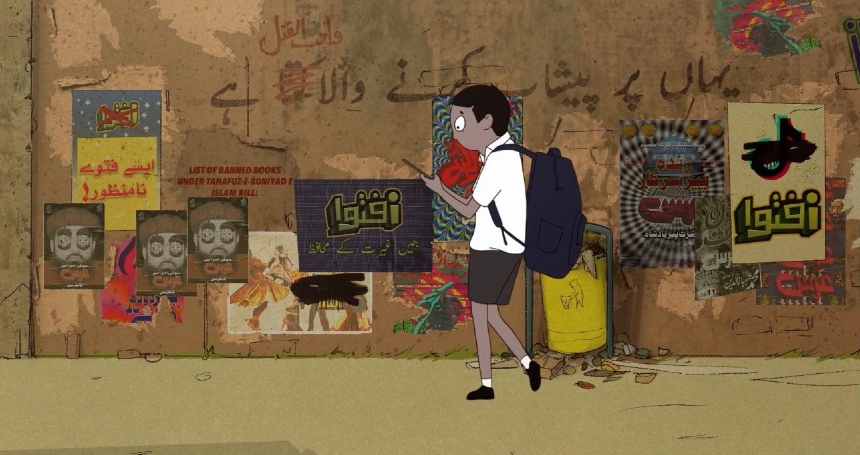
Such stories are in dire need of the revival of Pakistani animated cinema, since animated features like The Donkey King (2018), 3 Bahadur (2015-2018), and Allahyar and the Legend of Markhor (2018) are primarily made for children. Animation can be explored on vast horizons, which is an assignment understood by short filmmakers at the moment. Arafat Mazhar's Swipe (2020), backed by Puffball Studios, bagged several international awards for the same reason.
The same idea has now been pursued by an upcoming film based on the famous Pakistani detective series, Inspector Jamshed. The first trailer was released in August 2026, titled IJ: The Secret Parchment, which is scheduled for a theatrical release in 2027. What makes this project stand out is not only the nostalgia attached to the familiar character but also the possibility of giving Pakistani audiences genres and cinematic worlds that remain rare in local filmmaking. A homegrown detective adventure emerging out of the pages has the potential to appeal to both younger and older viewers equally.
Another genre that deserves attention is revisiting history from fresh perspectives. A similar attempt has been made with a short film titled Intezar Farmaiye (aka Stay Tuned) (2020). Directed, written, and executive produced by Ali Mehdi, it is a drama-comedy that follows three generations of a family, exploring decades of Pakistan's history viewed through their television screen.
The main emphasis is not only on "history-based" films but rather on using history as cinematic material. Stories could combine drama, politics, and relationships. Films could highlight Pakistan's forgotten heroes and their struggles, as the country has a rich heritage of scientists, athletes, artists, activists, soldiers, and entrepreneurs whose lives could become compelling cinema. Instead of making fictional heroes, these stories ask for a theatrical release so the mainstream audience can know more about them.
Why haven't these films been made as of yet? The risk-averse mindset of the producers and directors, and financial as well as infrastructure constraints, limit the production capacity of Lollywood. Also, experimental filmmaking is not as expansive as projected, but baby steps are now being taken in the form of Zombeid (2026), which needs further work.
Historical epics and science fiction movies require massive budgets, and with the current cinematic landscape, filmmakers worry whether audiences would support unconventional stories. Stronger scripts and extensive research require time, and fresh ideas are somewhere in the pipeline, waiting to get recognition and find their way into the spotlight. New filmmakers might be able to bring novelty in this regard but struggle to obtain their first chance, funding, or even a mere opportunity.
Still, with limited resources, Pakistani cinema can flourish by using streaming platforms to gain maximum exposure. Smaller-budget films don't necessarily need to have theatrical screenings. Regional stories, unconventional genres, and first-time filmmakers could at least get a chance to showcase their talent and shouldn't be held back for years just for the sake of designing them to be blockbusters.
Pakistan has the stories, but the willingness and daring to tell them is missing.
Echoes is an opinion column on film and television from the perspective of a writer based in Pakistan.

More about Echoes
- Echoes: HANGING BY A WIRE, Pakistan's First Academy Award Documentary Entry, Was Shot Entirely on a Phone
- Echoes: Pakistan Wants A Film Industry. Does It Have the Crew to Build One?
- Echoes: The Changing Art of Pakistani Film Posters
- Echoes: Pakistan Has An Indie Film Movement. Why Aren't We Talking About It?
- Echoes: 10 Pakistani Performances That Deserved Far More Attention


