Locarno 2026: Asia Argento on Failure, Scandal, and Choosing the Road "That Had a Heart"

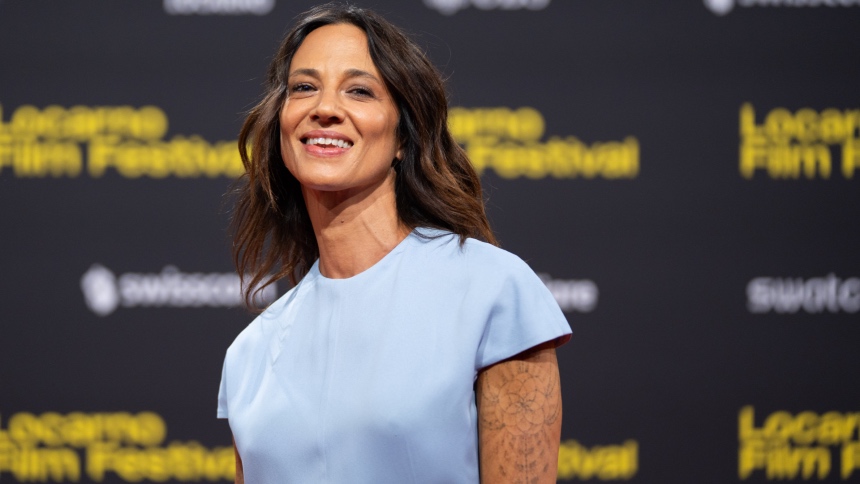
When Asia Argento received a Lifetime Achievement Award at the 79th Locarno Film Festival, the honor arrived at a moment when she had begun to question whether her career still had a future.
Presenting two markedly different new films, she spoke with unusual candor about professional exile, childhood stardom, directing as self-preservation and the artistic choices that cost her mainstream success. The award therefore felt like more than a retrospective celebration.
Argento described it as a moment in which she saw herself as a child, an adult, and an old woman simultaneously. “It was almost mystical,” she said. “I saw my whole life, and I saw that it had meaning.”
For an artist whose career has rarely followed a stable or socially approved route, that recognition carried a particularly intimate message. “I have always chosen a road that had a heart,” she said. “However winding, however difficult, however many times I stumbled, I continued along that road.”
Through the audience’s response, she felt as if the universe were finally telling her: “You are not wrong. You are fine as you are.” That reassurance followed a long period of uncertainty. Argento admitted that, only a few years earlier, she had come to regard herself as a failure. Interesting projects had stopped arriving and stretches without work made her wonder whether she possessed any identity outside cinema.
“I felt like zero, a failure,” she said. “I thought: my whole life has come to this, and I’m a failure. What can I do? I don’t know how to do anything. I have only made cinema since I was a child.” The experience taught her humility, but it also exposed the brutal instability of the profession. Careers rise, disappear and unexpectedly return. “There are highs, there are lows, and then there are very low lows,” she said.
Argento was born into cinema across several generations, but she resisted describing filmmaking as a pleasant family vocation. Her father, Dario Argento, gave her an obsession that proved more durable than love or enthusiasm.
“To do it for many, many years, you need more than love,” she said. “You need an obsession, and you have to learn to live with that obsession. It isn’t always easy. Making cinema is not pleasant.”
She compared filmmaking to entering a trench. The artist fights to bring a film into existence while also fighting the negative voices surrounding the work, and the harsher voices that become internalized. What kept her returning was the supernatural silence that descends on a set before an actor speaks.
She remembers delivering her first line as a child and immediately understanding that she would spend her life searching for that sensation. “It is a deafening silence, the silence of cinema,” she said. “You become addicted to it.”
Yet working as a child was never play. At the age of 11, the responsibility of a production caused her insomnia. That seriousness may also have helped her survive the dangerous illusion of childhood fame, the belief that public attention can fill every private absence.
“I searched for the love of the audience,” she said. “It filled all the empty spaces. And when I didn’t have it, I longed for it.” The harder question came later: How does an actor survive when that recognition is withdrawn?
Her relationship with her father combined creative support, anxiety and material drawn from family trauma. She wanted his approval so badly that working with him produced enormous performance pressure.
Looking back, she is unsparing about moments when she believes she failed to give enough. “I haven’t always applied myself,” she said. “There were many years and too many films when I felt my commitment wasn’t required, but I should have committed myself anyway.”
At the same time, Dario Argento and her uncle Claudio gave her the support to make her first feature as a director, Scarlet Diva, when few people would have trusted such confrontational material to a young woman. The film emerged during a period of depression in which Argento could barely leave her home. Writing became a way to describe experiences she could not yet fully understand, such as violence, sexual humiliation, and the objectification expected of a young actress.
“At the time, I thought everything that happened was my fault,” she said. “Today, 25 or 26 years later, I can say no, it wasn’t my fault. Society, and my environment, was very sick. That sickness infected me, but I came out of it almost unharmed.”
Scarlet Diva also turned economic limitation into form. Shot on the alienating early Digital Betacam format to reduce costs, it initially looked inferior to the celluloid Argento knew. She eventually recognized that the smaller cameras offered a new intimacy, allowing her to move closer to actors and bodies with fewer people present. “I made that limitation into my strength,” she said.
The film also allowed her to seize control of the sexualized image the media was manufacturing for her. Argento had been encouraged to perform the role of the glamorous young sex symbol and initially thought she could master the game. She gradually understood that the game had already defined its boundaries. “I took the wheel,” she said. She wanted to use sexuality in a manner that was unsettling, to make spectators confront their own appetite instead of consuming her image without discomfort.
After the Hollywood success of xXx, agents offered her more action films, including 2 Fast 2 Furious. She could have pursued a lucrative career as what she called “the kick-ass chick,” but the image felt estranging. Instead, she chose to direct another personal film.
“Everyone around me said, ‘Now we’ll make millions,’” she recalled. “But I didn’t see myself that way.”
Living in Los Angeles intensified her loneliness and isolation. Directing, she believes, saved her and returned her to filmmakers closer to her sensibility, including Gus Van Sant and Sofia Coppola.
Other decisions brought harsher consequences. Argento said the notorious scene in Abel Ferrara’s Go Go Tales, in which she kisses a dog, disrupted her career for years. Extracted from the film and replayed without context, the moment became a public spectacle. Contracts disappeared immediately, including a planned Disney dubbing job.
“I paid for that for 20 years,” she said. “They mocked me, they humiliated me.” She remains proud of taking the risk, although she admitted that she could never have anticipated the reaction. “If I had known, there is no way I would have done it.”
Ferrara nevertheless remains one of her defining teachers. He drew out darker and more valuable parts of her that she had feared expressing. His influence was destructive and regenerative in turn. “As he had taken me toward darkness, he later helped me move toward the light,” she said. “That is why I call him my master.”
Argento’s concern about contemporary cinema is that such accidents, risks and transformations are increasingly being engineered out of the process. She mourned the disappearance of craftspeople who could create light and effects by hand, and criticized a system governed by marketing calculations, excessive oversight and images designed on computers.
“There is very little room for mistakes,” she said. “But mistakes have always been the way I created something new.”
For Argento, handmade effects retain an organic life that the eye recognizes, even when the illusion is obvious. CGI and artificial intelligence may produce smoother images, but technical plausibility is not the same as emotional presence. The danger is a cinema in which every element has been selected according to market logic and the finished films nevertheless look identical.
Her final principle is equally resistant to calculation. Asked what message audiences should take from one of her violent new films, she borrowed Fellini’s famous answer: “If you want a message, go to the post office.”
Cinema, she argued, does not owe the audience a predetermined lesson. It can study people, violence and a country without reducing them to a statement. Her own approach is instinctive, “Rather than understanding the film, I felt it.” That distinction also defines her preference for images over explanatory dialogue. “When too much is explained, it means the story isn’t working,” she said. “I always prefer to understand less and feel more.”
Image courtesy of Locarno Film Festival/Ti-Press.