
CHRONOVISOR Official Trailer: What if we Could Reproduce Visuals From Any Point in History on a TV Screen?

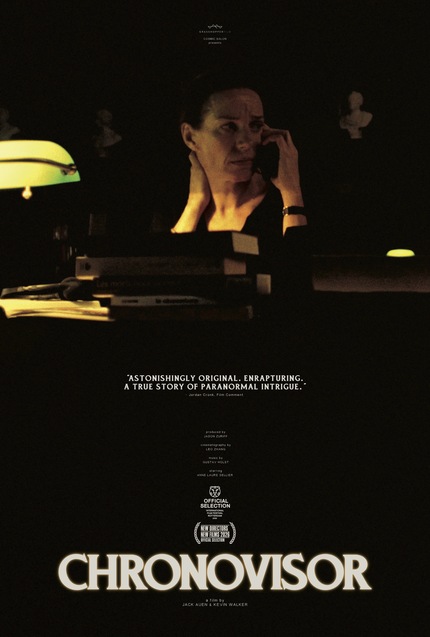
You come across films and stories that while they appear to be looking from the outside in, should still firmly occupy a space within the realm of genre filmmaking and storytelling. For instance, watch this trailer for Kevin Walker and Jack Auen debut film, Chronovisor, and tell us it doesn't belong there.
What if there were a device, "... an occult device said to reproduce visuals from any point in history on a TV screen"? We would suggest that this occupies the same space as the films of Johannes Grenzfurthner (Masking Threshold, Razzennest, Solvent) but thoroughly narrative in form. In something that is perhaps akin to an occultish type of mystery movie, this labyrinth, this maze of ideas and information proposed by Kevin Walker and Jack Auen's film just seem to amazing to pass up.
Written and directed by Walker and Auen, founding members of the filmmaking collective and production company COSMIC SALON, Chronovisor had its world premiere at International Film Festival Rotterdam then went on to win Best Film Prize, Jeonju International Film Festival in 2026.
There are going to be a lot of notes that follow that may just suck you in to this mystery as well.
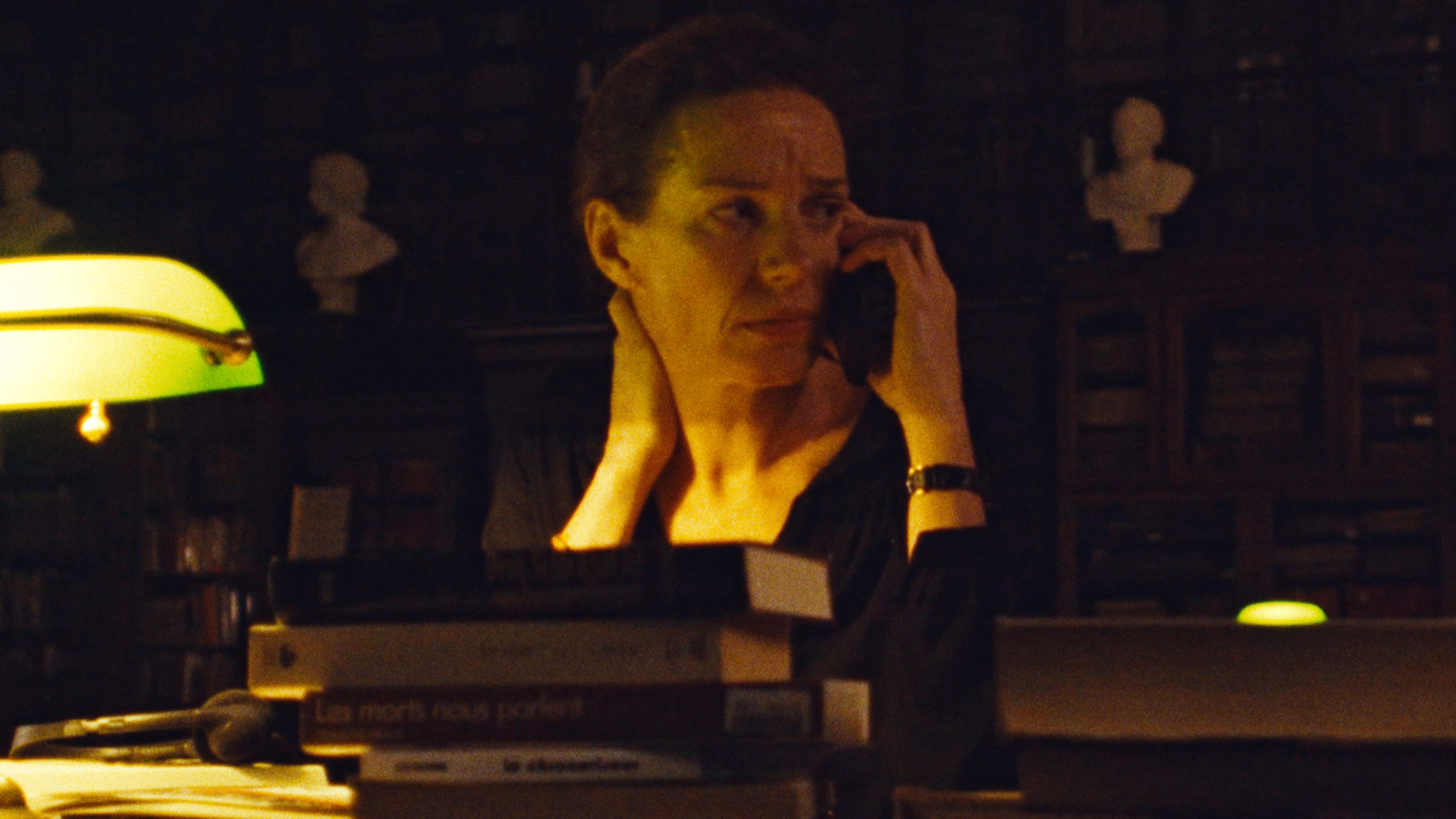
CHRONOVISORWritten and Directed by Kevin Walker and Jack AuenStarring Anne Laure Sellier– IN THEATERS SEPTEMBER 4 –Opens in New York at Film at Lincoln CenterWhile writing a monograph on historical theories of memory, Béatrice (Anne-Laure Sellier), a respected academic, becomes beguiled by the allegedly true story of the Chronovisor, an occult device said to reproduce visuals from any point in history on a TV screen. Her obsession with the mysterious machine drags her from her Upper East Side apartment through the depths of New York City’s hidden libraries, to the edge of a breakthrough.
Director's Statement
The facets of CHRONOVISOR that first revealed themselves to us were primarily atmospheric and aesthetic: cozy, gothic libraries, interminable stacks of books, bloodshot eyes, spending all night reading, forgetting to sleep, questioning everything - including your own sense of reality all set against the wintry backdrop of timeless Manhattan institutions. Early discussions helped outline the contours of our central character. Béatrice, whose fundamental devotion to the intellect is as pure as it is uncompromising.But it took two key discoveries for the film to really take shape. The first is the story of the chronovisor itself. After Kevin stumbled across a passing reference to the device in Ambrose Andreano's "Angels, Archons, and Aliens," we found ourselves spending the better part of a year digging towards the bottom of what would turn out to be an infinitely deep well of possibility. This painstaking research consumed us long before it ever began to consume Beatrice, and the tantalizing temptation of such a machine's existence became a touchstone for our writing.The second was the discovery of Anne Laure, our lead actor. We did not properly appreciate how difficult it would be to find someone capable of embodying Béatrice. Her tendency towards long, multi-lingual monologues and esoteric vocabulary would prove a challenge for any performer, and it became clear to us very early on that these qualities would be most naturally inhabited by an actual scholar, as opposed to a trained actor. We often wonder why Anne Laure would bother to respond to an email from first-time directors asking her to be the lead in their film, but we pinch ourselves with gratitude that she did. The film rests entirely on her shoulders, and she carried it farther than we could have ever hoped.The ultimate intention of the film is to instrumentalize Beatrice as a sort of reductio ad absurdum of a certain kind of human being—the human being ostensibly preoccupied by worldly affairs and the 'life of the mind", while in truth motivated by a grander spiritual longing that undergirds its every waking movement. The hypocrisy generated by this human duality—the nature and grace that exist within us, the spirit and flesh at war within our minds—is the film's central irony.
The Archives
Nearly all of the information available online about the chronovisor originates from a single article: "A Machine Has Been Invented That Photographs the Past," written for the Italian publication Domenica del Corriere in May of 1972. This article—which constitutes the entirety of the public's current knowledge about the device and of Ernetti's biography—is helpfully synoptic, but represents only a small fraction of the chronovisor's bizarre and labyrinthine history.For six months prior to principal photography, we dragged a net across the internet, investigating an inexorable series of bread crumbs and paper trails (seemingly leading to nowhere) in an effort to collect every bit of archival material available about the device and its puzzling peregrinations. The hunt was arduous and often fruitless; trolling the web for a subject not catalogued or indexed in any legitimate institution, spread out across three continents and five languages, required a herculean effort of patience and numerous leaps of faith. In the end, we recovered a considerable treasure trove of documents (magazines, books, memoirs,newspapers, VHS tapes, cassettes, photographs), eventually consolidating what is, probably, the most comprehensive repository of information about Father Pellegrino Ernetti and his chronovisor in the entire world.Originally tucked away in forgotten corners of the internet, now lying in our possession, this cache of material made it possible to entertain the idea that the device could have actually existed; we were able to build a legitimate case for the invention's historicity, with evidence both major and minor (though never truly conclusive. It quickly became clear to us that incorporating these sources directly into the film would be essential for conveying the same sense of authenticity on screen. The vast majority of archival elements that appear in the film are genuine, sourced from public and private libraries, video archives, hobbyist collectors, and obscure antiquarian booksellers. We hope that these documents contribute substantially to the film's sense of credibility, and to Pellegrino Ernetti's, as well—a man of enormous erudition, kindness, and wisdom, notwithstanding a few well-publicized peccadilloes.


Do you feel this content is inappropriate or infringes upon your rights? Click here to report it, or see our DMCA policy.

-thumb-80x80-107109.jpg)


