
Chattanooga 2026 Review: NIGHT AFTER NIGHT, Atmospheric Sci-Fi Horror Suffers from Narrative Ambiguity
Josh Lobo directs this paranoid, slow burn sci-fi horror movie.

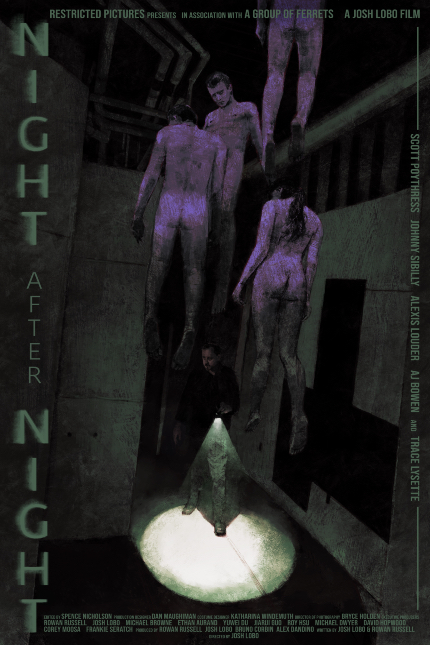
In 2019, filmmaker Josh Lobo made his feature directorial debut with I Trapped the Devil, a slow-burn psychological horror movie that drew inspiration from an iconic episode of The Twilight Zone to tell an unsettling and contained story.
Seven years later, Lobo does almost the exact same thing, albeit his efforts result in a rather different film this time around.
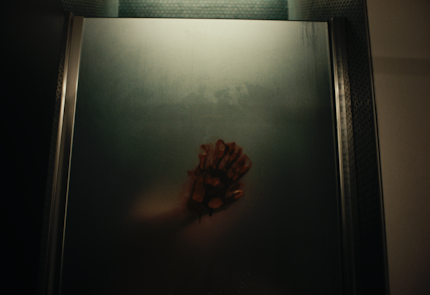
Night After Night follows Andy (Scott Poythress), one of two security guards who works at a mysterious university. Andy and his fellow guard Willis (Jonathan Sibilly) are unsure what exactly is being taught at the university but go about their monotonous jobs with ease until Willis suddenly disappears. Shortly after, Andy uncovers a sealed room in the university, inside which a naked stranger appears each night in a newly formed body. Rather than respond to this recurring oddity with alarm, Andy is unusually calm and unfazed as he’s drawn into a mystery he struggles to comprehend.
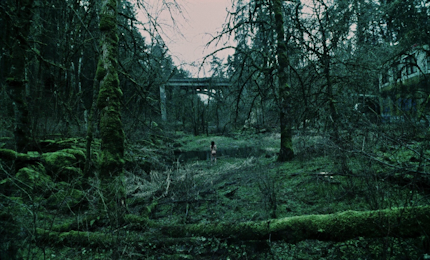
As evidenced by the craft underlying the taut, claustrophobic I Trapped the Devil, Lobo is a filmmaker with a penchant for cultivating an unnerving atmosphere. His newest film takes place almost entirely within the walls of The University, a gorgeous and somewhat futuristic looking building, led by the school’s secretive founder.
The University is a character unto itself, such is the prominent role it plays in both the narrative and horror that unfolds. There is clearly something off about the school, something Willis seems to detect before Andy does, and yet it is difficult to put one’s finger on what feels so disconcerting.
The sense of disconcertment only heightens when Andy is asked to take on the night shift, which requires him to be the only person in the massive building for all the hours of the night. Lobo takes advantage of how strange and off-putting it is to occupy public spaces at vacant hours and, in turn, imbues his film with a chilling disquiet.
Night After Night also leans into sci-fi-tinged conspiracy thrillers of the 1970s, namely Invasion of the Body Snatchers. Both Lobo’s film and Philip Kaufman’s 1978 classic incorporate beings that take on different shapes and appearances and evoke a certain paranoia in both its protagonists and audience.
Lobo’s movie proves most captivating throughout an ominous and foreboding first act. Scott Poythress’ Andy is a strangely stoic lead character, clearly troubled by some unknown fracture in his family life. Poythress carries such torment in his largely dialogue-less turn that his performance alone would be enough to unnerve viewers. But coupling Poythress’ performance with intrigue surrounding a mysterious university and a palpable atmosphere thriving on isolation and paranoia, Lobo quickly hooks the audience in.
As its runtime progresses, however, Night After Night proves increasingly challenging. The slow burn pacing that contributes so significantly to how atmospheric the film initially feels eventually wears on you and tests your patience. At some point, it becomes clear that Lobo is disinterested in developing the mystery at the core of his film and is, instead, content to take a page out of David Lynch’s playbook and flourish in the ambiguous.
But for even the most fervent of Lynch fans, Night After Night may unfold too cryptically. Lynch always excelled in deftly towing the line between incomprehensible and just barely comprehensible. He always ensured that he gave the audience just enough to theorize over, even if he deprived viewers of typical answers. And, throughout all this theorization, Lynch treated his audience with visuals, themes, and ideas that burrowed themselves under your skin and left a lingering impression. Lobo doesn’t quite achieve that feat here.
His film lacks both the tantalizing material to ponder over and the remarkable depths of horror that made Lynch’s works so compelling. To compare anyone, let alone a filmmaker overseeing his second feature, to a great like David Lynch may seem harsh, but Night After Night occupies a similar space as the likes of Inland Empire and Eraserhead do and, as such, opens itself up for comparison simply due to how Lynchian its ambiguities are.
A more favorable point of comparison for Lobo’s film is The Twilight Zone episode “Miniature” from 1963. In I Trapped the Devil, Lobo took the premise of a classic episode of The Twilight Zone (i.e., "The Howling Man") and extrapolated it to create a contemporary feature film around it. Lobo doesn’t quite one-to-one translate “Miniature” to Night After Night, although both dabble in the suspicions of a security guard and evoke similar unsettlement in its viewers.
Night After Night may lose its way due to an overwillingness to pose questions that never receive answers, but it nonetheless affirms Josh Lobo as a rising filmmaker unique in his ability to cultivate atmosphere and lean on established tropes and themes to create something original.
The film enjoys its world premiere at the 2026 Chattanooga Film Festival. It currently does not have a public release date.

Do you feel this content is inappropriate or infringes upon your rights? Click here to report it, or see our DMCA policy.


