Cannes 2026 Interview: TITANIC OCEAN Director Konstantina Kotzamani on How Personal Experience Inspired Her Dreamlike Debut

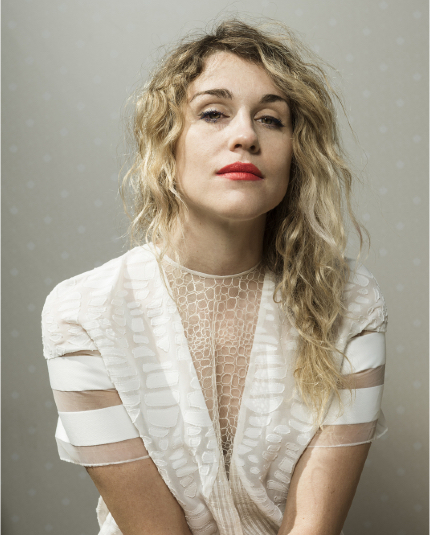
Bringing a flash of neon colour to the 79th Cannes Film Festival this year, Greek director Konstantina Kotzamani’s feature debut Titanic Ocean premiered in Un Certain Regard at the festival.
Inspired by the Japanese aquarium industry and the Greek myth of the sirens, Kotzamani builds a romantic yet melancholy world of beautiful mermaids, exploring feminine power and girlhood through a modern fairy tale.
At Cannes, I had the privilege of speaking with Konstantina Kotzamani about her latest film that was ten years in the making.
ScreenAnarchy: How did the film come about?
Konstantina Kotzamani: I was in Argentina writing a script for another feature film. While I was drinking my morning coffee, an article about five Japanese girls with silicon mermaid tails popped up on my computer.
Since then I got completely struck by the idea. I started doing more research online and found out that it’s a trend in Asia. There is a big aquatic show industry, young girls are trained to work for aquatic shows. Some of these girls are like celebrities and have millions of followers.
I was very excited by all the things they do, how they train, how they learn to have the breath capacity under the water, which is something these girls can do for five minutes and even more. Then, I discovered that all of them are very committed to the fantasy part of the show. They believe that they are mermaids. They choose another name and a colour to represent themselves. Every girl has their own persona that they identify with.
What are you trying to explore and convey in this film?
When I was writing the script, I thought of the Greek myths of the sirens and also the story of the little mermaid that I love. So I think the mermaid story is a good vessel to talk about how women can speak up and speak loudly today.
In The Little Mermaid, it explores how Ariel feels underwater and above the outside world. And in the Greek myth, the sirens’ voices are monstrous yet also convey pure happiness. I found both stories very interesting and inspiring.
While I was doing the film, it became a very daring and personal project for me. There was a dream that I had as a little child of a huge wave that was coming towards me, and I was waking up with an anxious feeling.
When I started writing Titanic Ocean, this dream kept coming back to me. I am a spiritual person, so I decided to do hypnosis with my therapist to find out the meaning of this dream. I don't know if it's true or not, but the conclusion is that it may come from a past life of mine that I suffered as a Japanese woman, and lost my life in this dream. And this comes as a recurring suffering that I need to resolve now. Making this film has been a healing process for me.
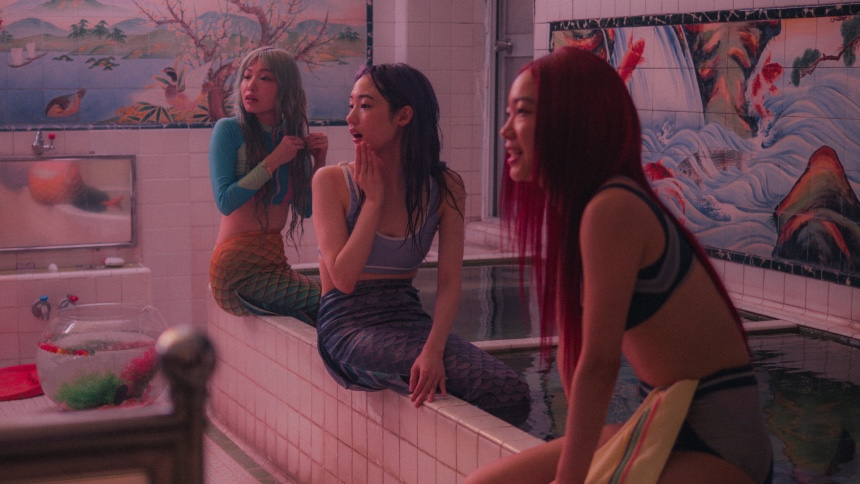
The concept of the mermaid competition feels a bit bizarre in some way, and all the girls are treated very harshly during the training at school. Do you intend to make any criticism of the mermaid academy or the competition? What’s your attitude toward it?
Maybe because I was always a very good student back at school. I did swimming, I also played the piano and other stuff. Every time you get into something that requires you to perform, there will always be competition. Especially in adolescent years, competition is something that you cannot avoid. So I wanted to show the strict discipline in my film. It was part of my intentions.
At the same time, I wanted to have moments of tremendous softness and tenderness among the girls. There is antagonism among them, but there are also moments when you feel that they're very soft and tender to each other. Especially the relationship between Deep Sea and Yokohama Blue, and later, the relationship between Eternal Sunset and Deep Sea. They start as a weird antagonism but end up in the ocean together, and it feels really like a part of unity. So I wanted to portray soft moments and harsh moments at the same time.
My best friend came to watch the film with me yesterday. I studied pharmacy for five years with her. She really wanted to become a pharmacist, but I did it because my mother was one before. We were best friends, but we were always competing the whole time.
Yesterday, she told me that when we were in high school, she was always jealous of me because I was the best student. She said, " It's so crazy that you talk about this kind of friendship in the film, and I had the same feeling. Now I'm a pharmacist, you're a director. We both found our way. I loved you, and I feel jealous of you at the same time.” All these emotions can coexist, so I think it is important to show them.
Are you familiar with any Japanese teenage romance movies? There are a lot of similar patterns in the story and the characters in your film. Did you get any inspiration from them?
Well, I had a lot of inspiration from anime. Especially the anime I watched as a child. I really loved Candy Candy, I grew up with it. I also liked Neon Genesis Evangelion when I got a bit older. I think this film carries a lot of things from Candy Candy.
The influences that I had from Japanese cinema are those from the 80s to the 90s. I like films by Kiyoshi Kurosawa, and I also like Typhoon Club and August in the Water. They are much more hypnotic and different from the ordinary Japanese melodrama.
Do you try to differentiate your film from the Japanese films you’ve watched?
No, I never had an intention to be different or not to be different.
----------
The film enjoyed its world premiere in the Un Certain Regard section at the 2026 Cannes Film Festival. Visit the film's page at the official site for more information.