
Camerimage 2025 Interview: SPRINGSTEEN: DELIVER ME FROM NOWHERE Director Scott Cooper and DP Masanobu Takayanagi Talk Defying Expectations

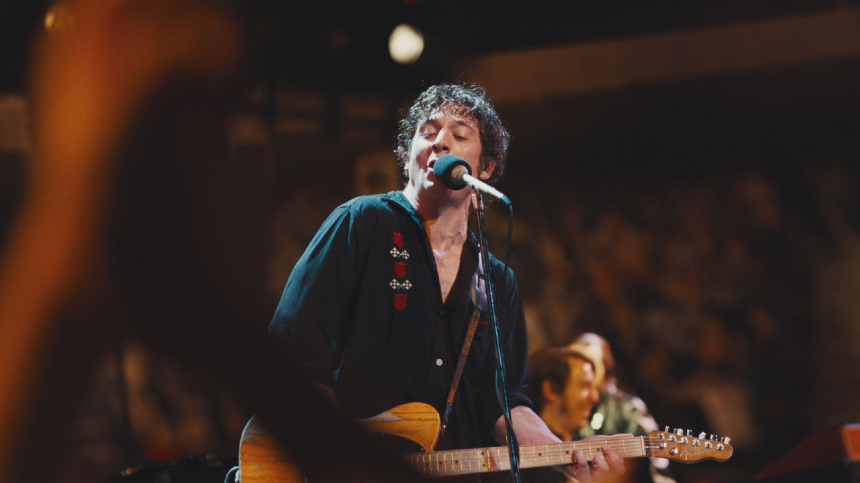
A biopic about one of the most famous musicians in rock, Springsteen: Deliver Me from Nowhere avoids the standard life story formula to focus on the trauma of creating the album Nebraska.
With Jeremy Allen White as Bruce Springsteen, and Jeremy Strong as his manager Jon Landau, the movie pins Nebraska to the singer's troubled childhood relationship with his father Douglas (Stephen Graham).
Writer and director Scott Cooper and cinematographer Masanobu Takayanagi brought the film for a special screening to the EnergaCAMERIMAGE film festival in Toruń, Poland. The two have collaborated on five features, including Hostiles and The Pale Blue Eye. Cooper also wrote and directed the music-themed Crazy Heat, while Takayanagi shot such films as Silver Linings Playbook and the Oscar-winning Spotlight.
ScreenAnarchy: What was your visual approach to telling Bruce Springsteen's story?
Scott Cooper: The story takes place in the 1950s and later in 1982. Bruce said to Masa and me that he remembered his childhood only in black and white. All the images that Bruce gave me of when he was seven or eight were black and white. That's how he remembered his dad. So even though we discussed shooting this in color, it felt like black and white was right.
We also wanted to shoot the past in a very formalist style, usually on a dolly, as opposed to Bruce's later disequilibrium. There's a restlessness in the eighties, when he was very unsettled, so we accentuated that with a lot of handheld camera to show his fractured emotional state. Bruce sent us a lot of images from that era, and we studied images from the late seventies and early eighties. The vivid neon colors in them felt like a perfect contrast to his childhood.
When did you shoot the concert footage?
At the very end of production. Most of Bruce's life, in particular his concerts, were well documented. We had a lot of material from "The River" tour, including footage from the Tempe shows in 1981, just before the Cincinnati concert where our film takes place.
So you could emulate the concert lighting.
We used it for reference, for sure. We wanted to make it feel like you were in Cincinnati. Where Masa placed the cameras made you feel like a fan.
How much time did you have for the concert?
Masanobu Takayanagi: Was it two days?
SC: No, I can tell you specifically because it was the day I got the call that my house at Pacific Palisades was burning.
MT: Right, so not even one day actually.
SC: We had a half day to shoot "Born to Run." The rest of the day was the last scene in the movie, Bruce sitting on his father's lap.
We had a lot of prep for the concert. We knew exactly what we needed to film. I had rehearsed with the band, so we knew where the cameras would go.
MT: We had four cameras on stage. Then we used one to go up and get the high shot.
How do you make sure that Jeremy Allen White, who's not a musician, is comfortable on stage?
SC: I knew he would be able to do it, because it was towards the end of shooting. I knew that he had the physicality. I knew that he knew how to sing the song. We had professional musicians for the band that supports him. The drummer playing Max Weinberg is Brian Chase, the drummer for the Yeah Yeah Yeahs. Max recommended him. Steve Van Zandt recommended Johnny Cannizzaro, the actor portraying him.
I don't like to rehearse my actors. I like to put them on the high wire. We find the scene on camera, not in rehearsals. That brings an intensity to everybody's performance.
How free flowing is your camera? Because you know White's not going to repeat the same moves each take.
MT: He was pretty good. He might not be repeating every single step exactly.
SC: But he's pretty close. Then we find it in editorial. We knew that we had to capture that as perfectly as we could because that tells the audience that Bruce Springsteen is a musician. It's the only concert sequence in the film other than a few numbers at the Stone Pony.
Were you anxious to get everything in a day?
I'd describe the pressure as extreme. Bruce was sitting right next to me. He kept saying, "Jesus Christ, this kid's amazing." I'd ask, "Bruce, how does Max feel?" or about the other musicians on stage. And he'd answer, "Amazing." He never had any notes when it came to performance. He was just there to soak it up and to relive this very painful chapter of his life.
Everybody had to step up because we're shooting in the Meadowlands arena, which Bruce Springsteen christened. So there's an extreme amount of pressure, but I think the more pressure for me personally, the better.
What are you trying to say about Springsteen?
Whether you're an ardent or a casual fan, if you understand this most challenging and personal chapter of his life, then you'll understand who Springsteen is. Because everything else in his career emanates from this point. It's a challenging moment to get right.
In a way, it's easier to tell the "Born in the USA" story or the "Born to Run" story because that's the kind of song that the public expected from him. He defied expectations with the album Nebraska.
I'm also trying to defy expectations by not giving you the spectacle you expect to see, but to give you really a psychological drama about the art of creation. That's what the film is. It just happens to have music in it. And it just happens to be about Bruce Springsteen.
What are you trying to say about creativity?
To be able to write as honestly as Bruce does, you have to face the most difficult times in your life. I think for Bruce—I don't think, I know, he told me that it was incredibly therapeutic to come to the set every day and relive this time in his life. Reliving it with the hindsight of wisdom and age.
It was personal for me as well because the album meant so much to me. Mental illness touches most people, it certainly has touched my family. That's in Nebraska.
As an artist, you have to always be as honest and courageous in your work as possible. For me, this film was about how honest could I be in my work. Making this film was a creative risk. Biopics about rock stars have had great success at the box office, but they're playing the jukebox hits that leave you on a high. This is a very searing and honest portrayal of a man who resisted all of those overtures to make "hit" records.
You include some unfavorable scenes about the music industry.
I felt that material was critical. They just wanted hits, like movie studios. You're balancing creative risks with commercial success. Jon Landau, Bruce's longtime manager, shielded him from that.
Thankfully, I made a film with a studio who loved this film, who supported me in every way. Would we have liked the movie to be as successful as Bohemian Rhapsody? Yes. But moviegoing has changed. People don't come to the movies anymore.
That's a bad message for our readers. I mean, BOHEMIAN RHAPSODY was not a good movie just because a lot of people saw it.
I'm not saying whether it's a good or bad movie. I'm just saying that's a movie that made a billion dollars.
When you're making a film about a very famous musician, whether it be Freddie Mercury or Bruce Springsteen, you face expectations. We defied those expectations, much like Springsteen did by writing about his most personal and darkest chapter. "Born in the USA" would come later.
You did something similar in CRAZY HEART by showing the apparatus surrounding musicians. That business structure can keep a musician from being the artist he wants to be.
Musicians who have seen both films have been incredibly complimentary with our approach. Most musicians do not like music biopics.
Masanobu, is there an advantage to working frequently with a director?
MT: It's quicker. Faster, too, in terms of communication. We probably communicate less and less on set because we spend so much time in prep. On set, it's almost like we communicate with baseball signs.
SC: When we get to the set, I can spend my time working with the actors because we know exactly how the scene's going to be photographed. That comes from spending an inordinate amount of time in prep.
Do you like to prelight the sets?
MT: It depends on what the set is. For "Born to Run," of course, yes.
So an actor can move around the set.
SC: We allow actors a lot of latitude. in terms of lighting, I don't think we ever use marks. It's about being very fluid, very naturalistic, making the actors feel incredibly safe and comfortable.
They expect the director and cinematographer to be as prepared as they are. Which is why I work with a lot of the same actors over and over. I generally try to work with the same crew too, as much as we can. It's hard because Masa is in high demand. Same for my production designer Stefania Cella, or Kasia Walicka Maimone, my costume designer. It's hard for our schedules to align.
What was your camera package?
MT: For the 1980s, we shot on an Alexa Mini LF camera. Nikon AI-S lenses, still photo lenses rehoused for cinema. So those for the color portion of it. Black and white, we shot on an Alexa 35 with Atlas Orion Anamorphic lenses.
I have to say how impressed I was by SPOTLIGHT, a difficult film to shoot. Large ensemble cast, lots of locations to cover, so many details to get right in the Boston Globe scenes.
MT: The Boston Globe was still there when we were shooting. They've moved since then, and that building doesn't exist anymore. The Globe was so welcoming. We spent so much time just experiencing the flow of work in the building. We built our newsroom in Toronto, but we had access to so much research material to dress the set.
Did CRAZY HEART help prepare you for this production?
SC: That was my first film, Crazy Heart. I only had 24 days to shoot that. At the time I thought, wow, I get that many days? Now with 24 days I'd say, "Are you out of your mind?"
I recognized very quickly as an actor with an unremarkable career that I'm much more suited to the other side of the camera. When you're filming Jeff Bridges and Robert Duvall, you learn very quickly that there are very few actors who can do what they do. At that point I decided to hang up the spurs.
That was an incredible learning experience. If I'm being honest, that film changed my life. Jeff Bridges saying yes to a film that I wrote for him, without even knowing him, changed my life.
Was it intimidating working with Duvall?
Robert Duvall has been a mentor of mine since we were actors together. I was married on his farm. He's almost like a father figure to me. He's someone who only strives for the truth. He's probably taught me more about acting, about how to direct actors, how to operate a set, than anyone. He produced Crazy Heart.
His last screen role was in The Pale Blue Eye, a film that we made with Christian Bale. Duvall's 94 years old. I still speak to him two or three times a week. He sees everything, still reads my scripts. I cannot express how much Robert Duvall has meant to me. But that's a man who is as no nonsense as they come.
He would always say to me, "Scott, don't do too many closeups. That's TV. Don't do too many closeups, don't use music too much." He has a very European sensibility, which has I think influenced my work. Legendarily tough on directors. Thankfully, on Crazy Heart, he was very kind.
What specifically did he teach you about operating a set?
Never give an actor a note in front of other people. If other people can hear it, the actor might clinch up. You want actors to feel free and safe. I do a lot of investigative text work with actors well before we get to the set, so they know specifically what I'm looking for.
How can you give an actor a helpful note? Francis Coppola told Duvall that actors make the best directors of performance. I don't know if that's true, but for Coppola to say that is very meaningful.
Duvall told me to make sure you're listening to everybody on set. You may learn something from catering that you can use. Treat people with respect, but make sure that everybody knows that you expect their best. Work incredibly hard and be very focused in the story you want to tell and understand why you're telling it. And most importantly, it should be very personal.
Is this your first time at Camerimage?
Yes. I mean, it's a legendary festival. I've wanted to come for a long time. I heard the stories about how much David Lynch loved it here. What I've experienced so far is that you don't feel competitive, even though there is the Golden Frog award.
The people here, whether they're students or cinematographers or directors, they all just love movies. People are here for the right reasons.
The film recently screened at EnergaCAMERIMAGE Film Festival in Torun, Poland. Visit the official festival site for more information. Photo coutesy of 20th Century Studios. Copyright 20th Century Studios. All rights reserved.



