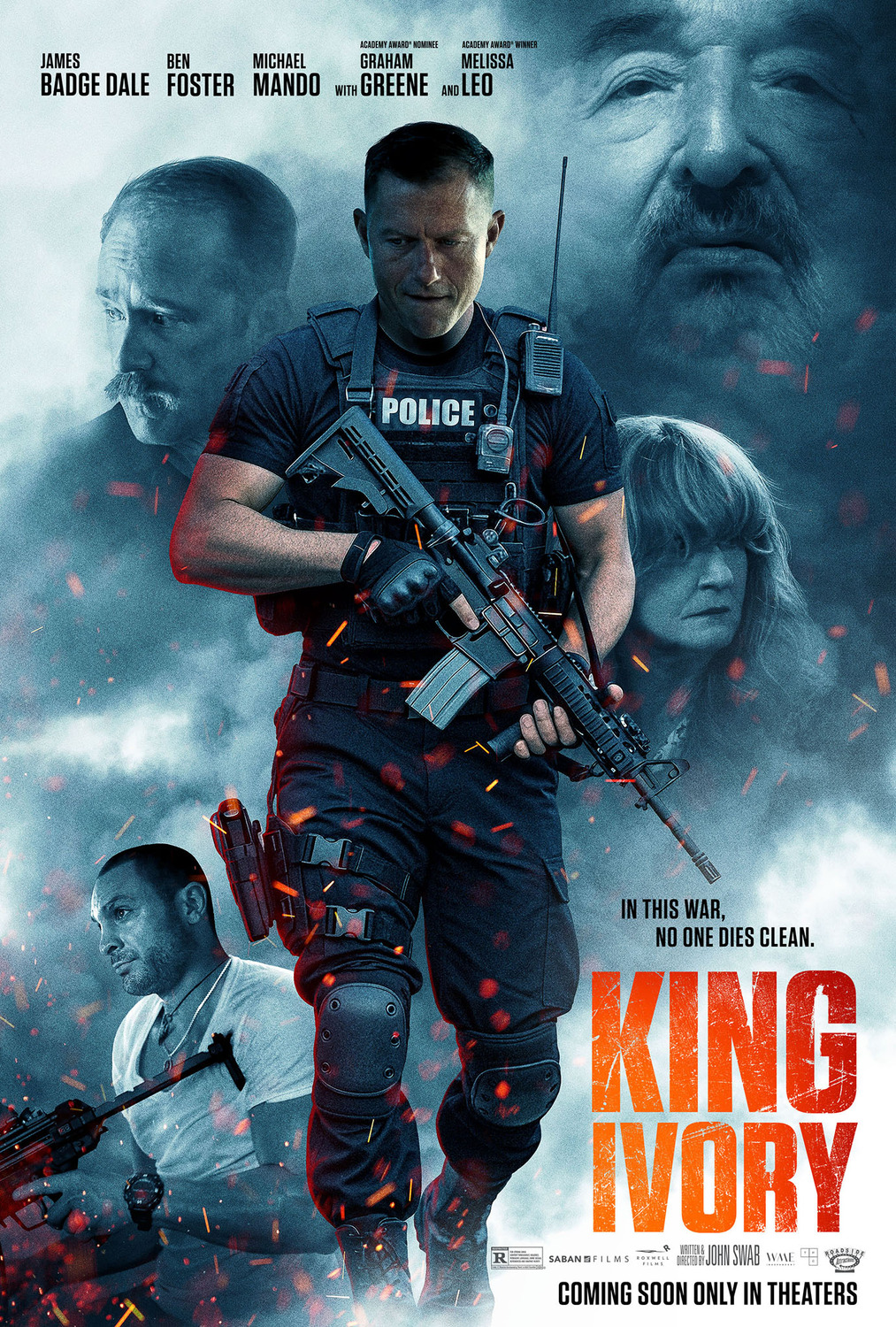
KING IVORY Interview: Ben Foster, James Badge Dale, and Michael Mando on Neo-Westerns, Playing Family, and Graham Greene

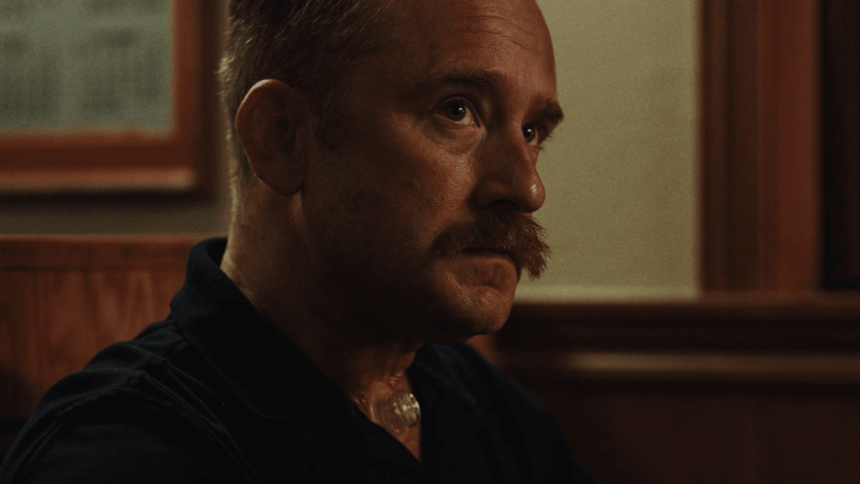
Peter Martin put it perfectly when he summed up King Ivory with a focus on its three leads in his article on this weekend's new releases: "James Badge Dale, who brings simmering intensity to every role, Ben Foster, who has a great swaggering sneer, and Michael Mando, who was absolutely fantastic in Better Call Saul, lead a crime picture that promises a little something extra."
I had the opportunity to talk with those three incredibly talented actors and ask some broad questions about genre and thematic interests, and some more specific questions about King Ivory, which tackles the fentanyl trade's impact on some very different families.
You can read our conversation, which has been edited for length and clarity. below.
ScreenAnarchy: So I know that James has a Misfits tattoo and as someone who mostly drinks out of a Misfits mug, I have to ask: have you seen the tweet that says "the Misfits skull is just 'live, laugh, love' for punks"?
James Badge Dale: [laughs] No, I haven't seen that, but I believe in that. It's part of my youth.
I've had this mug for 15 years now and someone tweeted that in like 2023 and I was like, "great, I feel both seen and attacked."
Ben Foster: Kyle, can you make a bumper sticker that says coexist but with the anarchy sign?
Does it not already have the anarchy symbol in it? Oh, it doesn't have an A in it. I'll figure it out. I'll do some linguistic finagling.
[laughter]
So I am a fan of all of y'all's work and part of that is because I am a huge fan of westerns and neo-westerns and y'all have all done and continue to do amazing work in that area. What draws you to these stories that combine socially conscious drama, genre thrills, and this interrogation of American myth? I'm most curious about you, Michael, since you are not from the US and have lived all around the world. What draws you to these stories?
Michael Mando: Well, first of all, I mean, I'm looking at two of them, two of the reasons, Ben Foster and James Badge Dale. I'm such a fan of both of those guys' work and every time anybody asks me like, what are you doing? I say, "I'm doing this movie with James Badge Dale and Ben Foster!" and everyone's eyes just light up. So there's obviously these two actors. Melissa Leo, who I think as incredible as she is, is always underrated. She can't be lauded enough. Ritchie Coster, Will Stone, Graham Greene, George Carroll, Rory Cochrane, so many of these incredible actors. And then of course, writer-director, John Swab, who's a trailblazer and a real force in Hollywood right now. He's someone to look out for. And our great producer, Jeremy Rosen, who was very generous. I think it starts with the team. And once you've got a team like that and a great script, you're very tempted to say yes before you even know what role you're playing, you know?
Thanks, Michael. I love that answer. I'm more curious, though, what, broadly speaking, makes neo-westerns appealing to you guys? Because this is absolutely one, I mean, James's character even says "it's the Wild West out there." It feels of a larger piece with other work y'all have done, and Michael, especially on BETTER CALL SAUL for you.
Michael Mando: I understand what you mean. Okay, so I think it's for me personally, it's that it's a projection, it's an exaggeration of what we're all living through singularly. We don't live in the Wild West right now. But we are a little bit in a place in the world where we go, "who's really making the rules? Who's really in charge?" We all have this desire, I think, as human beings to want to be authentic to who we are, to our own voice, to walk at the beat of our own drums. And I think neo-westerns allow us to exaggerate and project these archetypes. And hopefully in doing so you create conversation.
So you've got a character like Ramon Garza, who is like a modern day pirate, an ex-military dude who does what he wants, who is authentic to himself. And you're curious to know, why are you okay - having a conscience - why are you selling drugs? Why are you okay with people dying? And you see it in his eyes, you see it in his aura, that he sees the world a specific way. And that draws us in and makes us want to start a conversation. Did that answer your question, Kyle?
That was incredible. Yeah, thank you so much, Michael. Now I get both the specific and the broad.
Ben, since you have worked in both "classical" westerns - I'm a huge HOSTILES fan - and a lot of more contemporary stuff, what's your answer here?
Ben Foster: We're a young country and there's a lot of land. You could call it the "United Countries of America." And human against the elements, keeping your own code - whatever that code is - I think is part of the very nature, the fabric of what the best of America can stand for: "make it your own, do the best you can." And sometimes there's a lot of gray in that. I think it's endlessly entertaining. You start as a fan first of be it a western, a neo-western, or of cinema, but seeing people pitted against a landscape, be it downtown or desert, you're still having to contend with your own value system. And I think King Ivory is asking similar questions.
Fantastic. Thank you. And James?
James Badge Dale: I think both these gentlemen said it very well. I'm just going to grab onto something that you said of it being a continuation. You know what I mean? But what is that continuation? I get bored really quickly. I'm struggling out here. I'm always looking for something new and I'm always looking for something exciting so I think you have to approach your work in the same way. "What is the continuation? What if I'm taking this theme and I'm bringing it over here?" I'm allowed to look at it from a different direction. I'm a human being. I can change my mind. I can change my opinion. So what are you building upon and what are you deconstructing?
That perfectly leads to my next question: KING IVORY has this great interest in the intergenerational effects of this drug trade. So I'm going to stick with you, James, because you spend a lot of time with Jasper Jones as your son. And you're playing this anti-drug warrior and he's playing an addict or at the very least an experimenter. How do you bring that relationship to the screen, especially given the different relationships that you have to this thing that's bigger than us all? As the movie says towards the end, this is going to keep going forever and we're going to keep fighting forever.
James Badge Dale: Yeah, I would be careful of labeling him an "anti-drug warrior." It's more complicated than that. There's a moment I'm going back and forth with a Sureños 13 trap house manager and I'm like, "Yo man, I'm a gangster too." You know what I mean? We're all playing in these gray areas.
I have a history and we brought that into that relationship with my son, who's played by Jasper Jones. I wasn't a good guy growing up. We all make mistakes but I think our mistakes are being amplified right now when you have a chemical drug that's dropping people like this [snaps]. It's different now. Building that relationship, I'll just say right now, Jasper was a very young, smart young actor who came to work and listened, and you try to develop a relationship as quickly as you can. You're playing father and son but we're meeting for the first time an hour before you're in a scene together. So what are you going to talk about? Well, we can talk about acting. That's what we can talk about. We can talk about those life experiences. We can talk about the way we approach work or don't approach work. And I'm proud of him, man. I think he knocked it out of the park.
Yeah, he's fantastic. And not to undersell the criminality of your character, I just meant "anti-drug warrior" in terms of that's the side you're on, even if as an individual it gets more complicated.
Continuing on this intergenerational line, Michael, you have a scene with the girl who plays your daughter early on and then with David Barcena as this teen who you kind of mentor in a very loose way. How did working with those younger actors let you lend nuance to Garza and make him more human and not just, "oh, that's the bad guy"?
Michael Mando: Well, thank you. I think youth is everything. Our youth is our future. I look at every young person, whether it's someone in a family of mine or someone else's children, and I always look at them as the future of our species. So working with young actors is always a treat because they educate you just as much as you inform them, you know? In the case of the little girl and a lot of the actors that we played with in this film, John Schwab, our incredible writer-director, was pulling these people out of nowhere at the very last second. They were not actors. I mean, we waited on set for someone to show up. We didn't know who was going to show up. Sometimes someone who didn't even understand we were shooting a film. And that experience was incredible.
As for David, he's a wonderful young actor. Very, very, very smart. Made a lot of really intelligent choices that I resonated with and I was quite impressed with. I hope he has a very long career. It was a lot of fun working with him. I hope he does a lot of great things. I know he will.
Ben, your character has the intergenerational relationship backwards we can say, with Ritchie Coster as your uncle and Melissa Leo as your mom. And I'm curious about what it was like working with them and then also how you bring that into your character, sort of this legacy of the trade, or "the work," or whatever you want to call it.
Ben Foster: Well, sometimes you don't get to choose your own family. In George's case, he's close with his mom, who Melissa Leo plays with great joy as ever and exuberance. And she's a thrill to work with. She's a firecracker. So getting to play with her and ask familial questions, I mean, we were laughing a lot. It's not a particularly funny film, but she's a riot. And we like mischief. And lord knows [laughs] Ritchie's no joke either. So we had a good time.
You know, family's complicated. And I hope that this film asked those questions in many different ways. And as these two gentlemen have mentioned, it affects family, children, parents in so many different ways.
I also wanted to ask about working with the late great Graham Greene, especially because he has such little screen time, but his presence in the film feels so significant. And since Ben, you are the first one to speak with him early on, who sort of introduces him to the film. If you want to talk about working with this incredible, legendary actor? And how do you as a scene partner help build up that character who's not going to show up so much, but needs to be felt throughout the movie?
Ben Foster: Well, you can look at life in hindsight. We didn't know this was going to be his last film. To your words, "presence." He has a presence. He broke down boundaries. He leaves an indelible mark in cinema. And it's an honor to share space, time and question with a man like that, a human like that.
That's beautiful.
James, what was it like having that finale conversation? We get the action finale, but then we also get this sort of thematic and emotional finale with that conversation that y'all share.
James Badge Dale: I consider the space that we share to be sacred. And it's a very special, intimate thing to do a scene with someone else. And the man has presence. And I am in awe of it. I am in a state of gratitude and just to be able to share those moments with him for that brief moment in time. You know, I don't know what I'll take with me when I'm older and things aren't working as well. And I hope I remember those moments when the cameras are rolling, because it is hyper intense and it is true and it's just pure and I'm grateful for that little time I had with him.