Jihlava 2025 Interview: MR. NOBODY AGAINST PUTIN, David Borenstein Talks Covert Filmmaking, Collaboration Under Surveillance, and Documenting Russia's Propaganda From the Inside

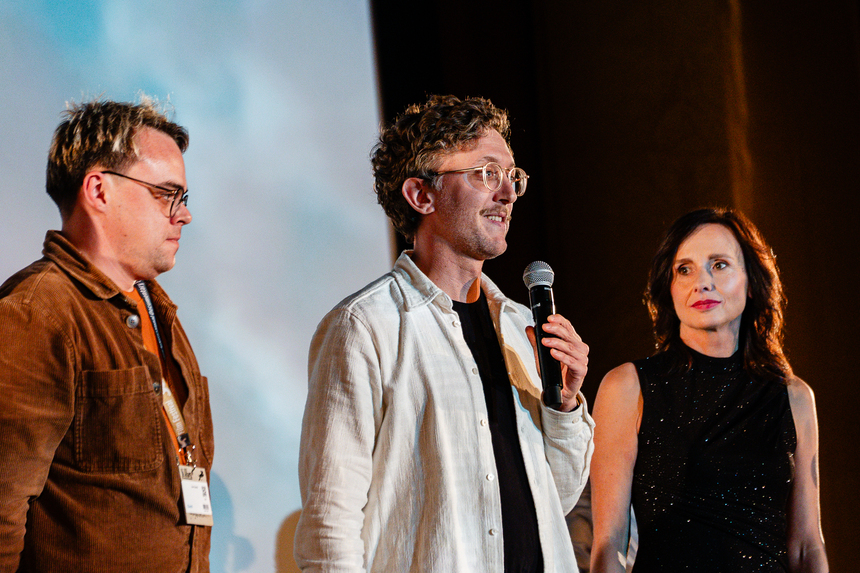
After winning Special Jury Prize at this year´s Sundance Film Festival, David Borenstein’s Mr. Nobody Against Putin netted the Audience Award at the 29th edition of Ji.hlava International Documentary Film Festival. The film offers a rare, on-the-ground account of how state ideology has permeated everyday life in Russia since the invasion of Ukraine.
Filmed largely by Pavel “Pasha” Talankin, a teacher from a small industrial town Karabash in the Ural Mountains, the documentary observes the gradual transformation of a local school from an educational institution into an instrument of state propaganda. Through Talankin’s footage, the film documents how patriotic instruction, surveillance, and militarised rituals increasingly define the lives of students and teachers alike.
Developed and shot under strict security conditions, Mr. Nobody Against Putin was produced as a collaboration between Borenstein and Talankin, with editorial support from the BBC and Danish producers. The result is a rare insider’s perspective on how ideology is disseminated at the local level, where loyalty to the state is both expected and enforced.
In the interview with Screen Anarchy, Borenstein discusses the film’s unusual origins, its ethical and logistical challenges, and the process of building trust with a collaborator working under growing political pressure.
Screen Anarchy: How did the project come about? Did you work with found footage, or were you already involved while Pasha was shooting?
David Borenstein: I was involved with Pasha during the shooting, in fact, I encouraged him to start filming in the first place. What happened, and you can see this hinted at in the film, though it’s not completely clear, is that there was an ad posted on Instagram by a Russian web content company. The ad was calling for stories from around Russia about how the “special military operation” was affecting people’s work.
What they were looking for, I think, were upbeat, patriotic stories from a Russian perspective, things like “we’re writing letters to soldiers” or “we’re donating food.” But Pasha saw that casting call and, instead of playing along, he sent in an angry letter. He wrote something like: “Let me tell you what’s actually happening in my school. I’ve been turned into a propagandist, and every day I’m filled with despair.”
That was a reckless and risky thing to do, who knows who might have received it? But as it turned out, that message ended up in my hands and the rest is history.
So did he just shoot material over a few days and send it to you for feedback, or how did it work?
In the very beginning, you can see in the film that there’s someone else shooting him. I arranged for someone from his city, another Russian, not an outsider, to do that. But Pasha helped out during those first shoots. When he sent me the footage, uploaded to an encrypted FTP server, by the way, I also noticed material that he had filmed himself. And I liked that footage the most.
So early on, I spoke with Pasha and asked if he wanted to be something of a co-director, to work on the film together. And that’s what we did. Over the next few years, it became a very simple system: he shot and uploaded; I edited and wrote. I’d give him some guidance, but increasingly I realized the best material came from what he chose to film himself, the things that happened naturally in the flow of his life.
Every morning, I’d wake up to new footage on the server. Sometimes it was completely wild, and I couldn’t immediately see how it fit, like a short “rap video” he made with his students. He sent everything. Sometimes it was just an hour of him walking around town holding the camera which, as you can see, features heavily in the film.
Other times, it was footage of propaganda classes, or Wagner soldiers teaching at school, or conversations with students and teachers about how the war and political changes were affecting their lives. So every morning felt like rolling the dice, new footage, always surprising, always chaotic, but each time in a different way.
From your first contact with Pasha, did you already know you wanted to make a film about propaganda? Or did the subject evolve organically as the project developed?
I think I always knew I wanted to make a film about propaganda. My dirty secret is that all of my films have been about propaganda in one way or another. I’ve always been drawn to it. It’s something I’m deeply interested in, I even wrote my thesis on it in university. So no, from the very beginning I knew that was the focus.
And Pasha was completely aligned with that, too. When he responded to the casting call, what he wrote was essentially about propaganda, that’s what he was angry about, what he wanted to expose.
But how could you tell he was genuine, that he was really this young, angry man who wanted to show the truth, and not, say, part of some setup or bait operation? Because you know, Russian operatives can pull crazy stuff.
I didn’t know for sure. Honestly, neither of us was entirely sure that this project was legitimate until he left Russia. When Pasha watched the film for the first time, the rough cut, he told me he’d been about 50% convinced the whole thing was a scam up until the moment he finally met me, after he had already left the country.
And on my side, a big part of me doubted whether he would actually go through with leaving Russia. I didn’t fully understand how committed he was. I mean, it’s a huge sacrifice, to give up your life for a film, for any kind of project. But when I finally met him in person, I realized he really is that committed. He’s serious about his ideals, and he takes the truth incredibly seriously. It’s just who he is. I underestimated him at first.
So he left Russia because of the project? I got the impression from the film that he wanted to leave anyway.
That’s not really the case. He still lives in Russia in a way, on his phone, in his heart. He misses it deeply. It’s definitely his home. He’s not someone who hates Russia, he loves it. For him, leaving was a massive sacrifice. He’s a classic patriot in that sense. He loves his country, and that’s exactly why he’s so upset about what’s happening to it.
When we were communicating remotely, it was difficult. There was always this tension, I never felt completely free in our conversations. I was nervous someone might be with him, or that his phone could be bugged. Rationally, I knew it probably wasn’t, but when there’s such a wall between you and the person you’re working with, and you don’t fully understand their surroundings, you start worrying about irrational things.
So our communication wasn’t as open as it could have been. I didn’t really get to know him, truly know him, until after he left Russia. Luckily, we still had time to finish the film together.
Do you speak Russian yourself?
Not very well, but I picked up a bit during the process. Honestly, most of our communication happened through Google Translate and ChatGPT Translate. Eventually, an assistant director joined the project and helped with translation and interpretation, especially once we were working in Copenhagen.
In the film, there are hints that Pasha is being followed, or that his rebellion is attracting attention from the secret police. Was that really happening? Was he under surveillance?
It’s hard to say. Russia was changing so quickly while he was filming that the security situation was constantly shifting. When we first started, neither of us realized what we were doing could be dangerous. Back then, people were still protesting openly, and they thought they’d be okay. For a long time, it was okay to protest things like the war.
But then came the full-scale invasion of Ukraine, and that’s when repression in Russia reached the level we see now. At first, we thought: we’ll just make the film, no problem. Then came the updated Foreign Agent Law, which suddenly made it illegal for him to collaborate with a foreigner. Then came the new treason law, which effectively criminalized almost everything about the project.
People who had gone out to protest early on, their lives were basically over. Many were arrested, blacklisted from jobs, or forced to leave the country. Things that once seemed harmless suddenly became crimes.
So our sense of safety kept shifting. The ground was always moving under our feet. What began as, “we’ll just make a film,” gradually became, “Pasha will have to leave to make this film safely.”
He understood the local situation in his hometown better than anyone, he’d grown up with the police, the mayor, the community. But by the end, things were changing so rapidly that even he couldn’t gauge how much danger he was in.
And yes, as you see in the film, there were signs, moments that suggested someone might be onto him. But in Russia, you never really know what’s happening until it actually happens. In the end, he got out. But even if you put the film aside, I can’t help but wonder how much longer he could have continued living a relatively peaceful life there, given how fast everything was deteriorating.
As the film is produced by Denmark, why would Denmark care about this topic?
Oh, plenty of reasons. First of all, Denmark is one of Europe’s great film capitals. It has an outstanding documentary scene, and this story, Pasha’s story, is a powerful documentary story. You have a character living a kind of Kafkaesque life, working within a system he fundamentally disagrees with.
He’s someone who ends up sacrificing his entire life to follow his ideals, and you get to witness that transformation on camera. That’s already an extraordinary narrative. But beyond the character, the system he’s part of, this machinery of propaganda, is deeply relevant to Denmark and to Europe in general. Denmark, like many European countries, is under hybrid attack from Russia. That’s not an abstract idea, just last month there were new examples of that.
So when I looked at this story, I didn’t see just a personal character study. I saw a window into how propaganda is being taught, how ideology is being manufactured at the heart of a militarizing system that has ripple effects across Europe. That’s why it mattered, and that’s how I pitched it in Denmark. And people there understood that immediately; they supported the film from early on.
When you were pitching the film, did you already have footage and an established connection with Pasha?
Yes. I already had some footage, and we started working together within a month of the full-scale invasion. We got started extremely quickly.
Were there any ethical challenges you faced throughout the process?
Loads. So many. And honestly, the main way I handled those dilemmas was by not handling them alone, because I’m not someone with encyclopedic knowledge about how to navigate the ethical or security landscape in Russia.
One of the first things we did was get the support of BBC Storyville. That was absolutely crucial. I don’t think this project could have existed without strong backing from a public broadcaster like the BBC, which has deep editorial experience and extensive security expertise when it comes to filming in Russia.
We leaned heavily on their editorial policy team and on their past experience. There were constant questions, for example: could there be reprisals against Pasha’s family, especially his mother, after he left? We were able to look at similar BBC-supported projects made around the same time and see how they had handled those issues.
We also consulted their security experts about precedent cases, people like Ilya Yashin or Navalny, and asked, “What happened to their parents? Were they targeted?” Those were the kinds of questions that guided us.
Then there were other ethical concerns, like filming children.
Right, the students. How did you handle that?
That was a big one. I developed a fairly careful system for that. You might not notice it immediately when you watch the film, but no one under the age of 18 actually speaks in it.
If there are students shown, they appear in group settings, in classrooms, in group activities, but not as individual talking subjects. The one strict direction I gave Pasha was: if you’re filming someone speaking, make sure they’re over 18 by the time the film comes out.
So we focused mainly on the graduating class, 17- and 18-year-olds, who would all be legal adults by release.
What difference did that make?
It meant they weren’t legally considered children, which is significant for consent and ethics.
But were they aware that they were being filmed for a documentary? Did you get signed releases?
Well, imagine you’re me, and you’re trying to secure signed consent forms from people in Russia...
What does it actually mean to have consent in a case like this?
Well, that’s the question, what is consent?
Let’s say we define consent as agreeing to be in this documentary, with a clear understanding of what it is. Now imagine that you have that consent from people in Karabash, from these students, the characters in the film. If you had it, could you say that you had it?
The answer is no.
And that’s something the BBC made very clear to us. Even if you have consent, you can’t say you have consent.
Because saying so would put them at risk?
Exactly. Think about it, some of these students speak on camera in the context of Pasha’s classroom. And yes, all of those students are still in Russia.
So even if you do have their consent, publicly acknowledging it could endanger them. Saying, “these kids agreed to be in the film,” would immediately associate them with Pasha’s political stance, and that could have serious consequences.
I imagine you kept the project very discreet, without publicizing the process while it was happening.
That’s something I can’t really comment on. But what I can say is that a big part of the security plan was making sure the students were not presented as supporting the project or Pasha’s political views in any way.
The BBC’s editorial policy team went through the entire film frame by frame to ensure that. They removed anything that could be interpreted as support for Pasha’s position, and they removed a lot.
It was a huge effort to make sure the film clearly showed that these were Pasha’s opinions, his risks, and no one else’s. That was essential. And of course, Pasha had to leave Russia before the film was released.
Still, when you show that girl whose brothers or friends have gone to war, one of them doesn’t return, and you see her sad face… even without words, the meaning is powerful. The image speaks volumes. Could those kids really understand the potential consequences of being filmed?
That’s a fair question. But again, the people I trust most to make those calls are the BBC’s editorial policy experts. They are one of the most experienced organizations in the world when it comes to assessing the risks of working in sensitive environments like Russia.
They went through the film literally frame by frame, flagging anything that might endanger someone. Take that out. Remove this shot. Cut that line. All of it was about ensuring safety, precisely for the reasons you’re mentioning.
We had countless discussions about how to protect people in the film. We knew we couldn’t make it unless we were absolutely sure everyone would be safe.
And now that the film is out, has Pasha been in contact with people back in Karabash? Have they seen it?
Yes. Pasha is in touch with everyone there. And everyone in Karabash has seen the film.
Illegally or legally?
Illegally.
And what does his mother think about it?
Pasha probably wouldn’t want me to go into that too much, you should really ask him.
And how did the students react?
What I can say is that we did extensive research into what the Russian authorities could potentially do in terms of reprisals. We looked into the experiences of dissidents, of their families, and we examined similar documentary projects.
But could you really trust that research? Russia’s the kind of place where people mysteriously fall out of windows…
Yeah, that’s true, there’s no law against “falling out of a window,” as they say. But if we take that logic all the way, then there would be no TV Rain, no Mediazona, no Meduza, no independent journalism left at all.
The reality is that there’s still a huge community of Russian dissident filmmakers, journalists, and activists, both inside and outside the country. Many of them have families still back home. They’re taking the same risks because they believe in what they’re doing.
Pasha is part of that wider community now. The entire opposition has essentially relocated to Europe, so he’s surrounded by people in similar situations. There’s a lot of shared experience, a lot of mutual support, people exchange security knowledge, advice, information. There’s precedent for everything.
And, actually, one of the people we got some advice from was Christo Grozev, one of the protagonists from Navalny.
Really? What did he think of the film?
He was at our premiere at Sundance. We had breakfast together the next morning. He’s incredibly knowledgeable about security risks and potential reprisals, and our conversation helped us feel more at ease e regarding Pasha’s safety.
You mentioned earlier that one of your biggest challenges was building trust with Pasha. What were some of the other major challenges you faced?
Yeah, I’d say the biggest challenge, apart from safety, was definitely trust.
Because of the strict security measures in place, I wasn’t able to share the edits with Pasha while we were working. He was constantly sending me footage through this encrypted FTP server, and I was continuously editing as it came in.
By the time he left Russia, I already had a version of the film, not the final cut, but something quite close in tone and structure.
At one point, the security team asked me, “Are you sure that if you show this to Pasha, he won’t get too excited and share it with others?” Because in a small town like Karabash, word spreads fast. The moment people found out he was involved in something like this, it could have become dangerous for him.
Ironically, what worked in his favor was that nobody believed him. You actually hear it in the film, he says he’s working on a BBC documentary, and people just laugh. “Sure you are, Pasha.”
That disbelief became his protection. So we made the decision not to send any proof of the production back to Karabash. No cuts, no stills, nothing. If he talked about the film, people would think he was joking, and that kept him safe.
But it also created a strange dynamic between us. He was sending footage into what felt like a void. From his perspective, it must have felt like dropping images into a black hole, never seeing anything in return, no evidence that a film was even being made.
So when we finally met abroad, and he told me he’d been fifty percent sure the whole project was a scam, I completely understood. It made sense.
It had been an emotionally difficult process for both of us, full of uncertainty. Imagine filming your life for years, uploading everything, and getting no proof that anything’s happening with it.
That’s why, even when he left Russia, part of him still believed he was coming back. He bought a return ticket, for safety reasons, but also because he wasn’t fully convinced any of this was real. He left home ready to return home.
It was only later that the reality, and the film, became tangible.
And his extraction, or “rescue,” from Russia, that was coordinated with Czech co-producer, Radovan Síbrt, right? When did he get involved in the project?
He came on board sometime before Pasha left Russia. I didn’t know him personally before that, but my producer in Denmark did. Radovan got involved and helped develop this whole plan for Pasha to come to Prague, which, remarkably, worked.
It was a huge logistical challenge. You have to understand: this is a teacher in Karabash, earning just a few hundred euros a month. Getting someone like that a visa to Europe is not straightforward. He doesn’t fit the profile of someone who easily gets travel clearance.
And this was still during the height of the full-scale invasion, right? When mobilization was happening in Russia? How was he even allowed to leave?
Yes, it was during that period. But by the time Pasha left, in the summer of 2024, that first wave of mobilization hysteria had already passed. The big rush of men trying to leave Russia was over, and, in fact, people had even started returning.
That said, it was never quite like Ukraine’s situation. Even during mobilization, many Russian men were still able to travel abroad.
When he finally left for Europe, his colleagues were texting him things like, “We can’t do this without you, please come back.” That tells you a lot about how respected he was there. And that position, being valuable to the school, to the local community, was part of his own quiet security strategy. It gave him some protection and flexibility.
You mentioned earlier that you were editing the film continuously, as the footage came in. Why work that way? Why not just wait until you had everything and then start cutting?
Good question. Honestly, that’s just how I work. I’m an editor by nature, and a lot of my ideas come through editing. I’m not great at explaining what I want in abstract terms, I have to get my hands on the material and work with it to discover what I’m trying to say.
So my process was to build the film as we went. As Pasha was shooting and uploading new footage, I was already editing. It was how I thought my way through the story.
But the final cut feels so cohesive, with a clear character arc, almost like a scripted story. It’s hard to imagine that evolving piece by piece.
It felt natural because I was living the story alongside him.
From the beginning, I saw Pasha being tested, struggling with his values, being forced into propaganda work. It was clear that whatever this film would become, that was the beginning of a journey. That was Act One.z
And that first act, the section you see in the finished film, is actually very similar to a development cut I made back in the summer of 2022. The structure, the tone, the emotional beats, all of that was already there.
I could tell from early on that his values were shifting, that he was descending into this nightmare of ideological pressure, and that at some point he’d have to act, to make a decision. I didn’t know what form that decision would take, but I knew the emotional trajectory.
Then he started filming more intensely. He got more deliberate, more systematic. Act Two began when he started documenting things methodically, the propaganda lessons, the atmosphere in the school, the pressure he was under.
While that was happening, we were also having more and more security discussions, and it became clear he would eventually have to leave Russia. I could sense how difficult that was for him, emotionally, and I began to feel that would become the ending.
So by the time he started preparing to leave, I knew that was the climax. I focused heavily on his last days in Karabash. We talked about how to film them, what to preserve, and what those moments would mean. As you’ve seen, the ending is very thoroughly documented.
So you didn’t edit from a big archive afterward, it was really evolving in real time.
Exactly. I never had a mountain of footage to sort through later. It was a living process. And, for example, I never planned to make Masha a character. She was just one of maybe forty people Pasha filmed. He didn’t shoot with specific “characters” in mind, he just filmed his world. But when I reviewed the footage, I saw her story, the loss she experiences near the end, and it stood out emotionally.
Once I realized that, I worked backward. I looked for earlier moments that could build or foreshadow her storyline, like her writing letters to her brother, or talking to Pasha after her brother’s mobilization. I built a small narrative thread from that and wove it into the film.
That’s how the film grew, through discovery in the edit.
So that was one of the main things you changed after receiving the final footage?
One of them, yes. But there was more. After Pasha left, he brought several hard drives with him, material that hadn’t been uploaded to the encrypted server. There was footage on those drives that I’d never seen before.
But they didn’t check his hard drives when he was leaving the country?
No, they didn’t. He managed to bring them out.
And there were a few things on those drives that I hadn’t seen before. One of them was the Wagner footage, he had never uploaded that to the FTP server.
Was there a reason he kept that separate?
I’m not entirely sure. What’s interesting about that footage is the timing, it was shot near the very end, after Prigozhin’s assassination. Around that time, Wagner soldiers were still visiting schools and giving these so-called “patriotic workshops,” which I still don’t fully understand. The timing of it all is strange. But that footage came from his last period in Karabash, and I think that’s probably why it stayed on his hard drives.
So he brought out the drives, and you then did the final check and edit?
Exactly. He often sent me folders through the FTP server with what he considered his best five clips, but sometimes the footage I liked most wasn’t among those. So once I had the full material, I swapped in some other shots. The overall structure didn’t change, but a lot of individual scenes did.
How did your collaboration work in that final phase? You’re both credited as co-directors, so once he was in Europe and saw the film, did he have veto power, or was he giving notes?
He gave notes.
In terms of shaping the final cut, the editing, the writing, the overall structure, that was mostly me. But I was very conscious that Pasha needed to recognize himself in the film. We needed to do justice to the incredible footage he created. Most importantly the character on screen had to feel authentic to him.
So we worked together closely on his voiceover to make sure it was something he genuinely believed in. What I had written was my best interpretation, I’d been listening to him for years, taking notes, really paying attention to how he spoke and what he cared about. We’d been talking every week for several years, and I’d quietly been cataloguing those conversations.
So when he finally saw the film, it contained so many things he had said to me over time, perhaps things he forgot he’d ever told me.
You became his diarist.
Definitely. I’d been documenting everything he said, trying to be as true to him as possible. Of course, there are moments where my interpretation might fall short, where my best guess wasn’t good enough. But overall, he didn’t challenge the film’s main storytelling.
We refined his voiceover together, made sure his tone felt right, and he had a few specific requests, moments he thought were important to include. Whenever he said, “You need this scene in there,” I always found a way to make it work, even if it meant rearranging the edit like a puzzle.
How many versions of the film did you go through?
Just one main version, the one we finished. But, like any film, it was constantly evolving. I went through a rough cut, feedback sessions, and several test screenings.
You did test screenings? Like focus groups?
Yes, I did. I always do that with my films.
That’s interesting, focus groups are something we associate with marketing, not art. Usually filmmakers say, “This is my work, it stands on its own, people can interpret it however they want.”
Right, and I get that. But I don’t really think of them as focus groups in the marketing sense. For me, they’re test screenings, a way to see how people receive the story.
I’m always curious about what people take away from it. What emotions it stirs. What it makes them think about. That kind of feedback doesn’t necessarily change the film, but it helps me understand what it’s communicating.
A good director needs to stay true to themselves, of course, not be swayed by every opinion. But filmmaking is complex. There’s always a web of motivations. On one hand, you want to express yourself, your artistic ideas, your philosophy. On the other hand, with a project like this, you have to be faithful to your subject.
This film wasn’t a pure self-expression piece for me. It was about being true to Pasha. I couldn’t just follow my own artistic impulses; I had to center his voice and his experience.
And, actually, that act of giving up a little of myself I think really helped me grow and mature as a storyteller. It helped me understand a good director must break out of the prison of the self and be radically open to the world.
During those test screenings, was there a particular audience you were especially curious about?
Yes. One, in particular. I did a screening for a group of Ukrainians, and I was very curious to hear what they thought.
So what was the takeaway from that Ukrainian test screening?
The group I showed it to were mostly Ukrainian refugees, parents of kids who go to school with my children. My kids’ school has a lot of Ukrainian families, and I invited several of the parents over for a screening.
Of course, I expected it would be difficult for them to watch, and it was. But afterward, we had a really meaningful discussion about how they felt about the film being shown internationally. It was painful, but they told me they believed it was important that the film existed, that it reached audiences.
Not every Ukrainian would agree with that, I’m sure, but that group felt strongly that it mattered.
So you took in their feedback, talked it through, but you didn’t make any changes to the film itself?
No, I didn’t change anything.
Sometimes after a test screening, I realize something I wanted to communicate isn’t landing, that people are misunderstanding a moment, or that something isn’t clear. In those cases, I might make small adjustments, but never for political reasons.
For me, the purpose of a test screening isn’t to ask, “Did you like it?” It’s to understand what people are thinking and feeling at specific moments. The goal isn’t purely aesthetic, it’s about meaning.
So during test screenings, I’ll ask questions like, “At minute 25, what are you thinking right now?” That’s what interests me, whether people are having the emotional or intellectual response I was aiming for.
That’s what test screenings are for, not validation, but calibration. Also just my own curiosity.
What was the working title?
Until the very last minute, including at Sundance, the film was called Putin’s Classroom. The programmers there still sometimes call it that in their heads.
That title even influenced how I structured the film. I always imagined introducing Pasha’s classroom at the start and then ending with an empty classroom, and the title appearing at the very end. So when you see that final shot, it was made with Putin’s Classroom in mind.
But I’m actually very happy we changed it.
The change came from my Danish producer, who suggested rethinking the title together with a design team he often collaborates with, they’ve worked on major films like Triangle of Sadness and many others. They’re called The Einstein Couple, they created our poster and challenged my original title, proposing something new.
Their job is to look at a film’s core, its emotional and thematic essence, and find a way to communicate that to the audience. It really changed how I think about titling a film.
At first, I thought the process was a bit strange, uncomfortable, even. Having other people rename your film is not something directors are usually thrilled about. But in the end, I think it helped enormously. The new title made the film more approachable, and it reached a wider audience, which is what you want.
What convinced you to accept the change?
Honestly, when they first showed it to me, the poster and the new title together, I was completely overwhelmed. I didn’t know what to think. I wasn’t sure if I liked it or hated it; it was just too much to process.
At that point, I was finishing the film, and I told my producer, “You take this one. I can’t think about titles right now.”
Partly it was exhaustion, but also self-awareness. I realized I wasn’t objective anymore. I was too close to the project, maybe the least objective person in the world when it came to naming it. I’d poured so much meaning into this film, along with Pasha, that it was impossible to see it from the outside.
So I stepped back and trusted the team’s perspective. And in hindsight, I’m really glad we went with it.
And what did Pasha think about the title change?
He went through the same process I did. I don’t want to speak for him, but when we first saw the new title together, we were both shocked. It took us a while to process it.
But I see that he’s embraced it now, his Instagram even has “Mr. Nobody” in the handle.
Did your life change after the premiere?
Change? Not really, not in any dramatic way.
No botnets attacking your computer? Weird messages? Threats?
I’ve dealt with that kind of thing before. I worked in China for about ten years, I filmed in Wuhan during the pandemic, even inside the Chinese CDC. I’m used to high pressure environments. I’ve probably gotten more hate mail from this film than from anything else, though. It comes pretty regularly now.
Since the premiere?
More since the broadcasts began. In our world, the premiere is a big deal, but for the public, the real visibility starts when it airs, like on the BBC. That’s when the messages start.
But honestly, I don’t see it as life-changing. It’s part of the territory. .
Are you working on anything new now?
Yes, a few things. I’m working on one project for PBS and another in development with HBO.
One of my other sides, which people don’t always associate with me, is that I make a lot of science documentaries. I’ve always loved science, especially communicating it to children.
At PBS, I’m working on one of their national flagship series. I really love science storytelling, it’s a completely different headspace, but one I find rewarding.
And for DR (Danish Television)? Are you doing something there too?
Yes. My producer and I are developing a project with DR right now, and interestingly, it’s also related to Russia.
So you’re continuing with the topic, you’re not discouraged.
Not at all. When you start working in a particular subject area, that work opens doors to other, related areas. It’s all about access, about being able to enter spaces that others can’t.
Documentary filmmaking is about being out in the world, meeting people, witnessing things firsthand. You follow paths that lead you deeper into certain places or themes. Once you start down one of those paths, it often keeps you there, that’s where your access and expertise grow.
But what’s left to be told about Russia? It feels like the country has already been examined from every possible angle.
I’d argue the opposite. I think we’re still just scratching the surface.
We’ve all seen what Russia is doing in Ukraine, that’s clear. But understanding what’s happening inside Russia is a huge challenge. There’s still so much we don’t know.
You mean in terms of civilians?
Exactly, what’s life like for ordinary people? What do they really think? How do they process what’s happening around them?
That’s why we started this project in the first place. We wanted to understand the ideological foundations of the war, how it’s transforming Russian society from within. There’s still a massive gap in understanding there, and I want to see more work exploring that.
The same goes for China. These are enormous, powerful countries that dominate the news, yet we often have very little idea what life is really like inside them.
You mean in so-called totalitarian countries?
I just think these are big, important nations, and it’s crucial to try to understand them. And, yes, I think the film shows that Russian militarization and totalitarianism is something that is crucial to understand.
But in general entering hidden worlds is really what drives me as a documentary filmmaker. I believe it’s vital to go to places we don’t usually see, to open our minds, and our hearts, to people and stories we wouldn’t normally encounter.
The cover image courtesy of the Ji.hlava International Documentary Film Festival.