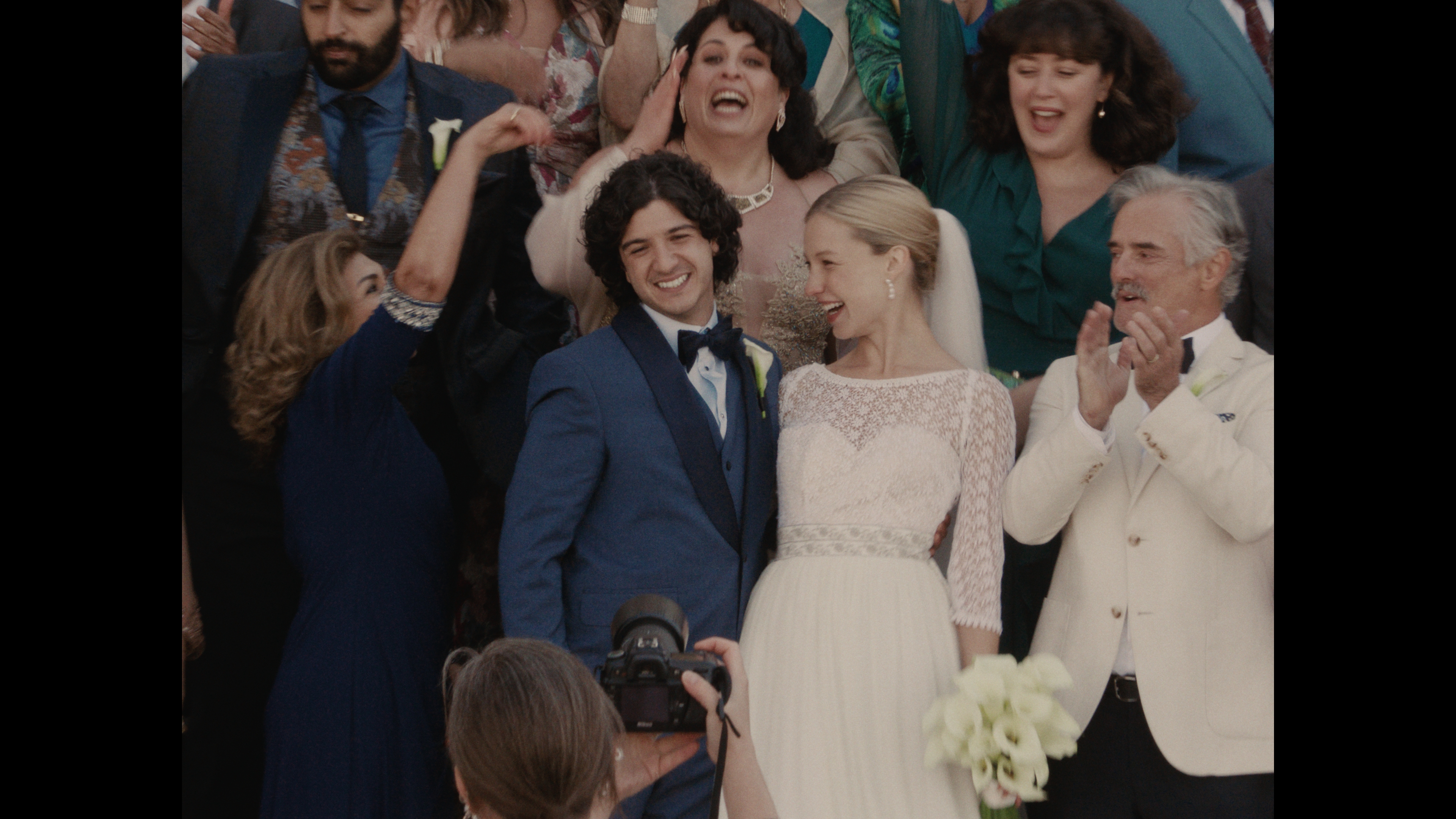
Toronto 2025 Review: LOVELY DAY Turns a Wedding Movie Into a Neurotic Comedy of Errors
Philippe Falardeau adapts Alain Farah's autobiographical novel into a formally restless portrait of anxiety and memory, using the wedding-movie framework less to stage a union than to examine the unstable ground beneath it.

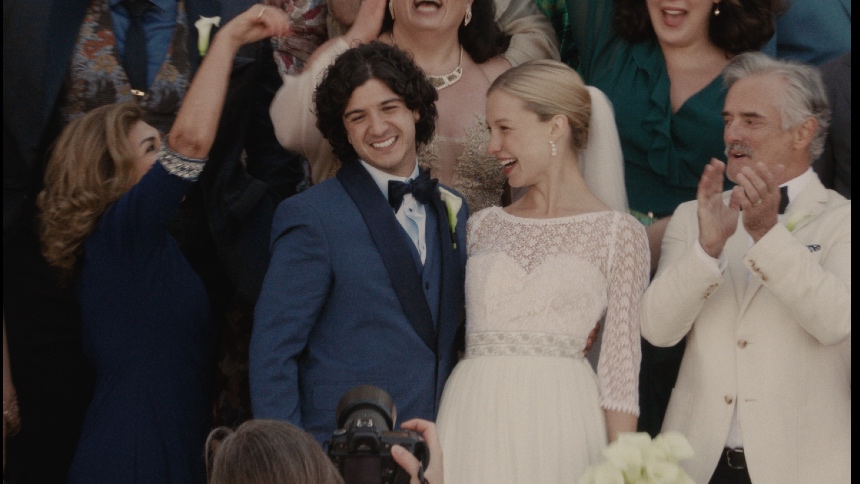
Quebec filmmaker Philippe Falardeau adapts Alain Farah's autobiographical novel Mille secrets mille dangers for the big screen in his latest work, Lovely Day, a neurotic entry in the wedding-movie genre.
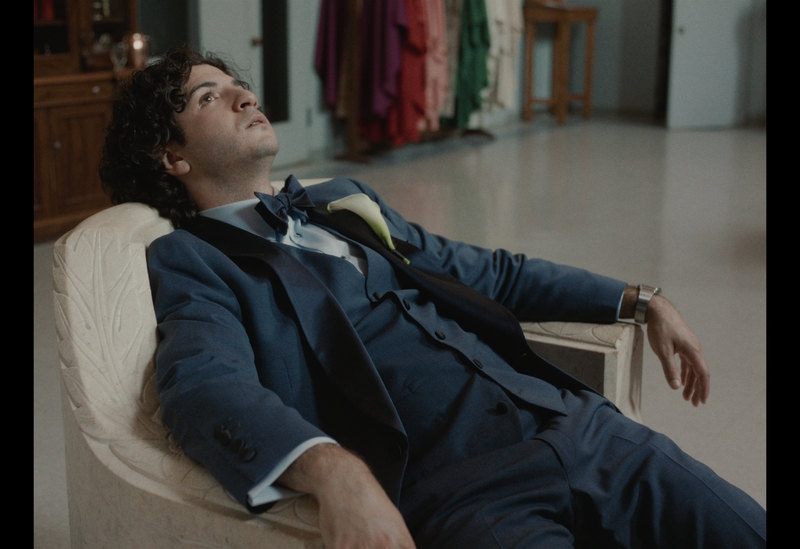
On the morning of his wedding, Alain (Neil Elias) should be preparing for vows and toasts. Instead, he is consumed by stomach pain, spiraling anxiety, and the looming shadow of divorced parents who will soon occupy the same reception hall.
His cousin Édouard (Hassan Mahbouba), ostensibly there to play the supportive best man, is preoccupied with his own obscure scheme, pulling Alain into a haze of unease and painful memories. Falardeau’s Lovely Day unfolds across this fragile terrain, where family festivity collides with personal disarray, and a man’s ambition is reduced to surviving what should be the most celebratory day of his life.
Falardeau has long been a director attentive to the friction between public rituals and private states of being. From his early The Left-Hand Side of the Fridge through the cross-cultural resonance of Monsieur Lazhar, his films frequently explore individuals negotiating identity, dislocation, and social expectation.
Lovely Day returns to this territory with a formal strategy that seeks to replicate the experience of anxiety itself: elliptical structure, claustrophobic framing, and intermittent moments of rupture. If his My Internship in Canada relied on satire to examine political representation, and My Salinger Year took on literary apprenticeship as a filter for self-discovery, here the inquiry narrows to an intimate threshold, what it means to come of age not in adolescence, but at the edge of adult commitment.
Within the director´s filmography, Lovely Day resonates most clearly with Congorama, not only in its narrative disjunctions but also in the layering of personal and collective histories. The Lebanese community in Montreal is present less as subject matter than as environment: the sound of airplanes over the neighborhood, the presence of intergenerational migration.
Falardeau refrains from constructing an immigration drama, instead weaving cultural markers into Alain’s psychological landscape. What results is a story less about marriage as a union than about how memory, trauma, and inherited histories complicate one’s ability to inhabit such moments fully and navigate life.
Lovely Day departs from the linear progression typical of wedding films. Past and present overlap in fragmented sequences, producing a sense of disorientation that reflects Alain’s own instability.
The film unfolds within a 24-hour frame, sustained by a manic energy as plans unravel and each incident further heightens the protagonist’s anxiety. The path to the altar is interrupted by memories of Alain’s parents’ marriage and its eventual collapse, as well as recollections of his teenage infatuation and conflict with a close friend over the same girl. Some disruptions come directly from Édouard, whose well-meaning interventions repeatedly backfire and only intensify the chaos.
While Falardeau employs the framework of the wedding film, the 119-minute feature is layered around its central character. Elements of coming-of-age, divorce drama, and buddy comedy intersect, but the focus is less on Alain and Virginie’s marriage than on the experience of living with debilitating anxiety, compounded by physical and psychological ailments. The title Lovely Day, intentionally ironic, frames the film as a neurotic dramedy in the tradition of Woody Allen, here transposed into the context of the Canadian-Lebanese community.
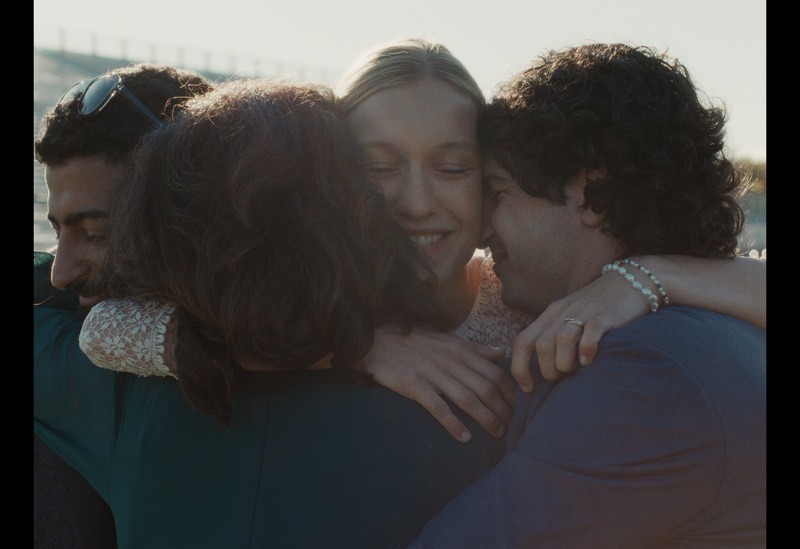
Lovely Day is not a wedding film in the traditional sense. Its rituals and ceremonies serve primarily as scaffolding for an exploration of psychological rupture. If earlier Falardeau works often juxtaposed individual struggle with broader systems -- educational institutions in Monsieur Lazhar, political structures in My Internship in Canada -- this film concentrates on the porous boundary between intimate history and immediate circumstance.
Where Michael Angelo Covino´s Splitsville relied on a rapid succession of jokes delivered in near-sitcom cadence, Falardeau opts for a more uneven rhythm, alternating between comedic peaks and reflective, melancholic flashbacks. He occasionally incorporates elements of slapstick, particularly through the character of Édouard, who serves as a counterpoint to Alain in a loosely configured odd-couple dynamic. At nearly two hours, the non-linear and elliptical structure is sometimes weighed down by an abundance of secondary characters and their parallel storylines, which momentarily slow the narrative momentum.
Lovely Day is less concerned with nuptials than with the fragile effort of holding oneself together during moments that demand celebration. Falardeau adopts the genre’s conventions only to dismantle them, shaping a narrative that is as much about memory and anxiety as it is about vows and champagne.
The film suggests that life’s most decisive thresholds are not always defined by ceremony but by the private struggles taking place beneath them. Rather than paying tribute to the wedding movie, Falardeau engages with the tradition of the neurotic (auto)biography, where the seemingly chaotic plot and the protagonist’s subjective psychology provide the film’s underlying coherence.
Mille secrets, mille dangers
Director(s)
- Philippe Falardeau
Writer(s)
- Philippe Falardeau
- Alain Farah
Cast
- Rose-Marie Perreault
- Georges Khabbaz
- Neil Elias Abdelwahab