MotelX 2025 Review: Norbert Pfaffenbichler's 2551-TRILOGY Transcends A Depraved Hellscape
Norbert Pfaffenbichler's trilogy is bizarre, fascinating and WILL have an effect on you...

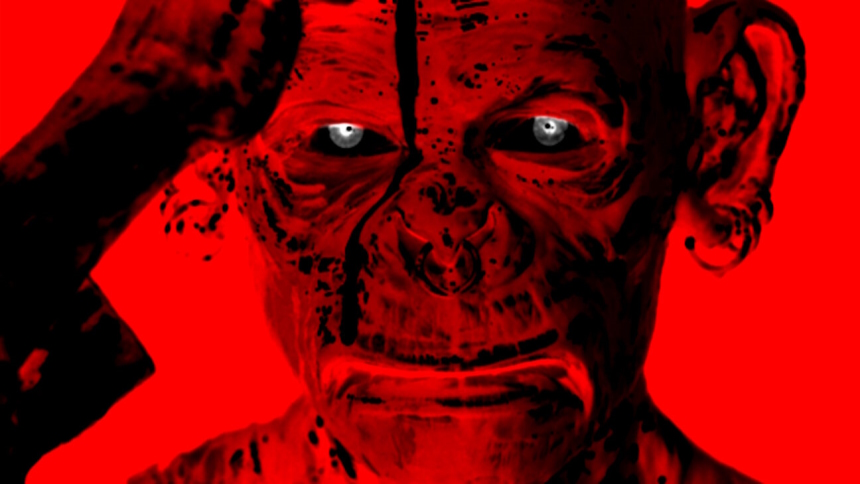
Norbert Pfaffenbichler's 2551-Trilogy is something else entirely. Consisting of three films, all running for less than 90 minutes (The Kid is even only 65 minutes long), it is still so heady and heavy that the entirety of it is a lot to take in. Truly transgressive art is rare, but Pfaffenbichler joins the ranks of favorite transgressive filmmakers of mine like Nick Zedd, Bruce LaBruce, Jörg Buttgereit and Kenneth Anger. Pfaffenbichler operates on an entirely different level, though, building a surprisingly heavily populated dystopian world, in a cinematic style that also shares DNA with the works of Gakuryū Ishii, Guy Maddin, David Cronenberg, Mark Romanek and Terry Gilliam. It is as manic and maximalist as that sounds.
2551.01 The Kid, the first installment, is a good introduction to what Pfaffenbichler is setting out to do. In its deceptively simple story, an apeman finds a young boy during a riot against dystopian police forces. He saves the kid, but then fears responsibility and tries to abandon him. While walking through a set of increasingly dark and dystopian vistas, the bond between ape and child strengthens. The kid is then kidnapped, leading into the second installment.
2551.02 The Orgy of the Damned, plays a lot like a more extreme version of the first one: the story is roundabout the same. The Apeman walks through several parlors and places in this world, here trying to find the kid. The story seems to mostly be a means for increasingly surrealist worldbuilding, carving some really interesting symbolic set pieces in the meantime. Pfaffenbichler uses the world to expand on the themes of sex and violence in this part, really going into the depravity, dehumanization and debasement that comes with the loss and abuse of power.
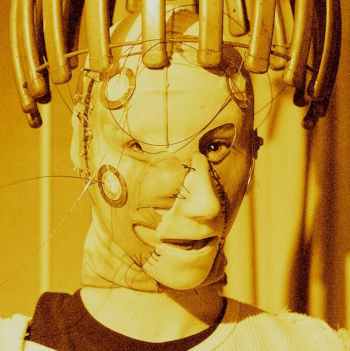 The latter stretches of the film are not for the faint of heart. Where the first part already showed a world caked in a thin membrane of viscera, and some really innovative gore, this part of the film turns into an all-out perverted gonzo muck-fest, full of animated body-horror. It never feels like a fetishist porn fantasy though, nor a moralist nightmare. Pfeffenbichler just presents it as is, and finds some really interesting imagery in the process. Think H.R. Giger doing a Nine Inch Nails video inspired by Rule 34 furry fandom.
The thing about these films that warrants a mention is that the films are fully free of dialogue: the only few spoken sentences are unintelligible gibberish, pulled through layers of reverb and rewinding. The style of the film is seemingly inspired by silent cinema, and early cinema, throwing in references to the likes of Charlie Chaplin, Eisenstein, and James Whale's Bride of Frankenstein. The shots are colorized monochrome, like the techniques used in early cinema.
Infusing this silent era-pastiche with punk-rock energy, through the means of stroboscopic effects, stop-motion animation and pixelation, the style of the film becomes entirely its own. Helping set itself apart from other silent-era pastiches, is the fact that everyone in the film wears grotesque masks. A cast of hundreds of extras all don rubber and leather masks, some of them more of a masqued ball variety, some of them wear gunny sacks on their heads, while others are just out of a Halloween-store, and most of them smack-dab in the middle of the uncanny valley. The result is at times terrifying and dehumanizing, at other times eerily beautiful and inspired.
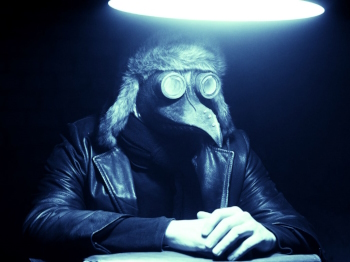 2551.03 The End, starting with opening credits that are an extended ode to Tarkovski's Stalker, ups the ante of this world and brings the whole to a satisfying and surprising conclusion. Picking up some time after the original two films, the Apeman still searches for the kid. He finds him, now much older and part of the antagonistic system. He is captured by his surrogate son, and at the time of his upcoming execution, things start to shift and evolve. The film turns increasingly heady and surrealist, trying to leave the world it so strongly built behind, and aiming for transcendence. If part 1 was about hope and connection in the face of a violent system of oppression, and part 2 was about debasement and depravity in an unjust world, then part 3 is trying to talk about art and religion and other means in which we try to leave this mortal world behind.
For extended stretches 2551.03 The End turns into a surrealist trip through heaven and hell, stages of nirvana and the search for enlightenment. That it does so by introducing new stylistic means is something of a whiplash, but the shock is deliberate. When we finally head into the final scene, the things that go down feel both surprising and inevitable. 2551.03 The End ends on a pitch perfect note. This trilogy will not be for everyone, as proven by the walk-outs during the screening of the entire series. But those that dare stick with it, might find something new and profound. In the trilogy Pfaffenbichler takes many sources of inspiration, turning it into a world both ours and somehow unrecognizable. Like a true great artist he uses the works of his reference points as fuel for the fire of his own conviction. He makes a world, wallows in its darkest corners, and then finds means for enlightenment. 2551 is a tour de force, making grand statements about a world of its own design. It is hard not to be moved by it, even if you dislike it. Anger or awe, the 2551-trilogy inspires emotion.