BiFan 2025 Review: I KILL U, Yoo Ha's Action Melee High on Punchy Set Pieces, Low on Narrative Beats

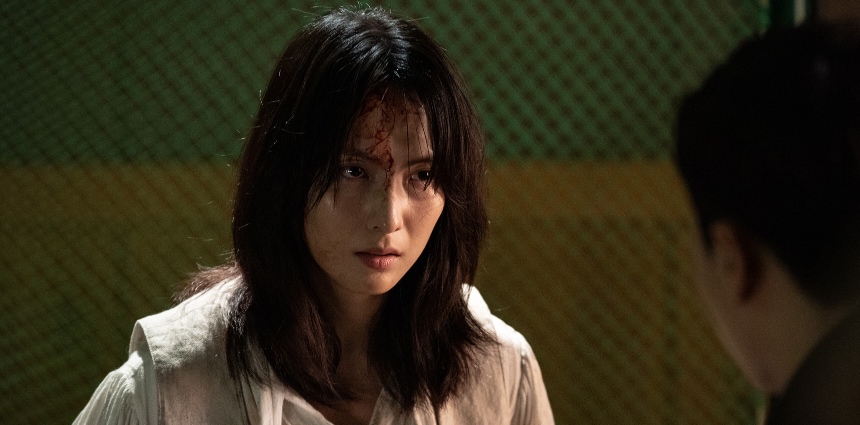
In I KILL U, from director Yoo Ha, taekwondo athlete Kang Sun-woo (Kang Ji-young) reluctantly agrees to pose as the double for an heiress (also Kang) implicated in a hit-and-run scandal. The money is good and the task seems simple enough, but before long, she is forced to face off against hordes of goons in an out-of-the-way hotel who don't quite realise what they have come up against.
Actress Kang Ji-young, who rose to fame as a member of K-pop outfit Kara, returns to the Bucheon International Fantastic Film Festival (BiFan), where she previously featured as a cast member in various Japanese films, including the manga adaptation Assassination Classroom. The film also features the comeback of actor Uhm Tae-woong, who has spent most of the last decade away from the public spotlight following a sexual assault scandal in 2016.
I KILL U screened its theatrical cut at BiFan, with a longer six-part web series set to debut later this summer.
Though he was initially known as one of the foremost Korean poets of the 1990s, thanks to collections such as On a Windy Day We Must Go to Apgujeong and The Love of the Sewoon Mall Kid, for the past few decades, Yoo Ha has been more well-known as a filmmaker.
While Yoo the filmmaker has tried his hand at several genres over the years, including the affair drama Marriage Is a Crazy Thing (2002) and the queer period drama A Frozen Flower (2008), he has quietly become one of the most reliable purveyors of screen pugilism in Korean cinema.
With I KILL U, Yoo strips away the drama of his earlier films and doubles down on the action set pieces that many of them thrived on, including Once Upon a Time in High School (2004), A Dirty Carnival (2006) and Gangnam Blues (2015). Though he doesn't get recognised it for it the way that someone like Ryoo Seung-wan does, Yoo has always had a knack for punchy fight scenes and he once again delivers the goods here, though with far fewer resources at his disposal than usual.
The trouble is that the drama he's purposefully excised here makes its absence felt. I KILL U attempts to find its place alongside the many Korean Nikita/John Wick knock-offs. Sun-woo may not be a trained killer, but the simplistic set-up, stylised action and sheer number of opponents are enough for her to gain admittance to this popular club of screen fighters.
The early part of the film is a strung-together series of motivations for Sun-woo to arrive at the Motel California, where dozens of opponents converge on her. Once she gets there, there's nothing else to the story, and while that's fine as long as the action flows, it prevents it from finding its way to a satisfying dramatic conclusion.
Thanks to the physical demands and the dual roles she has to play, the film rests squarely on Kang's shoulders. She manages to distinguish between struggling taekwondo athlete Sun-woo and embattled heiress Ji-yeon, but her real strength is her commitment to the action, which comes early and never really lets up.
With its mostly solid action and the disappointing threadbare plotting, I KILL U adds up to a serviceable affair that is a far cry from the best work of its celebrated director and might seem like an odd choice for an acclaimed poet, were it not for the fact that his first volume of poetry was called The Martial Arts Diaries.