CHINA BEAT: Sex Sells but the Party Still Prevails


Another week, another excuse
to admire the attractive figures of 3D SEX AND ZEN. However, its not Vonnie
Lui's curves that are making the news this week, but rather that in the first
half of 2011 no other Chinese language film came close to earning as much cash
at the Hong Kong box office as Christopher Sun's camp classic in-the-making.
From its release in early April to the end of June, EXTREME ECSTACY had raked
in an impressive HK$40.6million, and it is still playing strongly both to local
crowds and commuting Mainlanders, as it will not see a release in China. This
huge figure places the film second only to PIRATES OF THE CARIBBEAN: ON
STRANGER TIDES in the 2011 standings, which has taken HK$45.1 million to date,
as Hong Kong continues its love affair with Johnny Depp. The next notable local
release was TVB-backed New Year comedy I LOVE HONG KONG with HK$27 million,
followed by Benny Chan's action epic SHAOLIN on HK$20.5 million, although the
Andy Lau starrer was a China co-production, rather than a wholly homegrown
venture. In total, Hong Kong's box office takings fell 4% compared with the
same period last year, although 2010's figure was bolstered by AVATAR's more
than healthy performance.

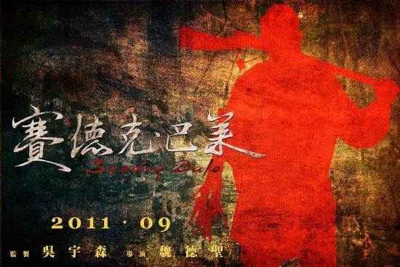
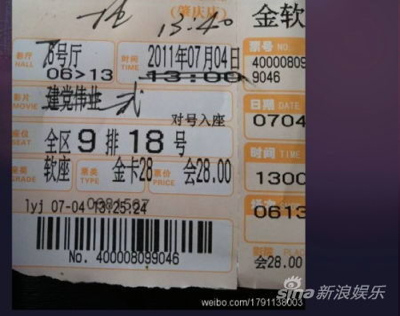
North of the border, the biggest domestic hit of the year so far will come as no great surprise. THE BEGINNING OF THE GREAT REVIVIAL, the government-sanctioned dramatization of the founding of the Communist Party of China took RMB255 million in the first 16 days of release, but looks to be slowing down now and unlikely to hit its desired target of RMB 800 million. The most recent figures put the film's box office haul at around RMB 350 million and already it is disappearing from some screens, making way for other potential blockbusters like Peter Chan's WU XIA. It has also been announced that Michael Bay's TRANSFORMERS: DARK OF THE MOON will now be released in the Mainland on 21 July, regardless of REVIVAL's box office receipts. This is a smart decision by China Film Group, who handles distribution for more than 50% of all theatrical releases in China, including both REVIVAL and TRANSFORMERS. There is a huge fanbase hungry for Bay's film in China and it would be foolish to risk that box office being adversely affected by piracy or illegal streaming, and they can continue to screen REVIVAL on a reduced number of screens indefinitely until the-powers-that-be are happy with its performance.

However, no such tactics could disguise the fact that the most successful film in China in 2011 has been Dreamworks' KUNG FU PANDA 2, which has so far taken a colossal RMB585 million and is still going strong. There have been grumblings over the film's content and whether or not it is disrespectful to Chinese traditions, but most outspoken commentators have chosen to interpret the film's success as a positive and cited it as an example of China's overwhelming influence on global entertainment in general. Reinforcements are nevertheless on the way, as homegrown 3D animated feature LEGEND OF A RABBIT opens later this month, but it's already been taking a beating from critics at home and abroad for the uncanny similarities between its visual style and that of KUNG FU PANDA. It remains to be seen if audiences will accept the film, or if they've had enough martial arts-infused animals for one summer.

Crossing over the Taiwan Strait, there has been cause for celebration in the film world this week, and not solely because Chang Tso Chi's excellent WHEN LOVE COMES just picked up the best narrative feature award at Saturday night's Taipei Film Festival awards ceremony. Rather, positive steps have been made to open up film distribution between China and Taiwan, whose relationship has been notoriously frosty for the past 60-odd years. NIGHT MARKET HERO, a Taiwanese comedy drama with a bankable cast of both veterans and young stars, will be the first film distributed in Mainland China under the new Economic Cooperation Framework Agreement that was signed by the two countries last year. This means that Taiwanese films will no longer fall under China's strict quota system limiting the number of foreign films released each year, and likewise it is sure to mean more mainland films get a wider release in Taiwan.