PRIMETIME Review: Form and Performances Shine Through Fairly Standard True Story Drama
Robert Pattinson, Merritt Wever, Skyler Gisondo, Matthew Maher and Bokeem Woodbine star in director Lance Oppenheimer's drama, inspired by true events.


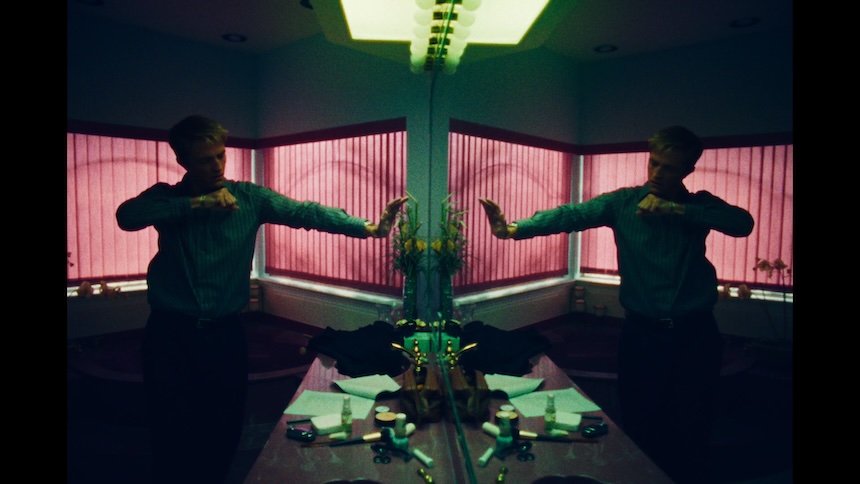
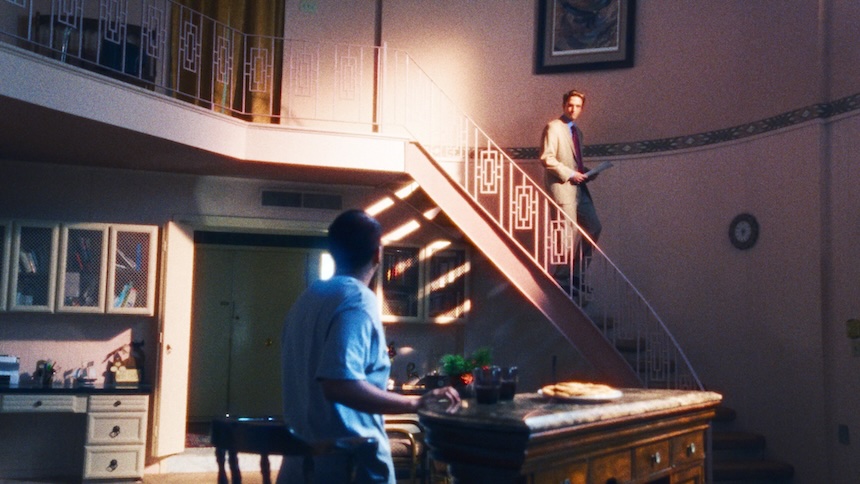
More than any revelations about Chris Hansen's psychology or the (at very least) dubious ethics behind the scenes of To Catch a Predator, and more than the multiple fantastic performances it offers, Lance Oppenheim's Primetime is remarkable for its visual style.
Presented in the 4:3 aspect ratio of most home television sets at the time of the show's airing in the mid-2000s, Oppenheim and cinematographer David Bolen have made Primetime look like nothing else. Overwhelmingly shallow focus and intense digital grain blur the majority of the screen besides characters, giving the film a pastel look -- in texture and color -- during well-lit scenes and shrouding backgrounds in mystery during darker scenes. Those darker scenes vary in their color; sometimes characters seem stuck in murky yellows and greens, other times a cold, almost oppressive fluorescent blue or red is cast on their faces. And that's the movie's baseline.
Flourishes of all kinds then punctuate that baseline. There are extreme, abrupt shifts in saturation, occasionally deployed through sharp jump cuts that create a glitch effect. Similarly visualizing the penetration of the internet into reality are classic fast-paced rollercoaster POV shots through the insides of wires. One sequence has a character transported through his imagination to India as he listens to a story Hansen (Robert Pattinson) tells. In the final moments, the movie lifts a camera technique used on the show of mounting cameras on the guns of cops as they raid a home.
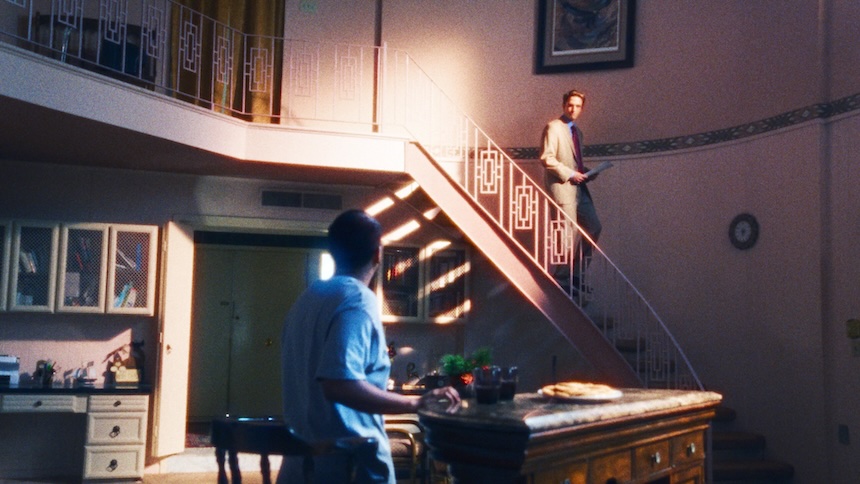
Unsurprisingly, that's one of several times Primetime collapses images captured for To Catch a Predator (within the movie) and the primary images of the film. In the cold open, what we see rotates between the hyperstylized look of the movie, the video quality of the cameras used for the show (with big red "REC" letters at the top), and shots of monitors from just far away enough that we can see a bit of the world of Primetime while focusing on the action being shot for Predator.
Directly following the title drop, Oppenheim begins zoomed in on aspiring decoy Dan Plumb (Skyler Gisondo) during a camera test in video quality, before slowly pulling back to reveal this as an omniscient camera filming a screen within the world of the film. It's not revolutionary, but it's effective at introducing us to the worldview of Hansen and the show's producer Andie Bender (Merrit Weaver) as they increasingly perceive everything through the lens of Predator.
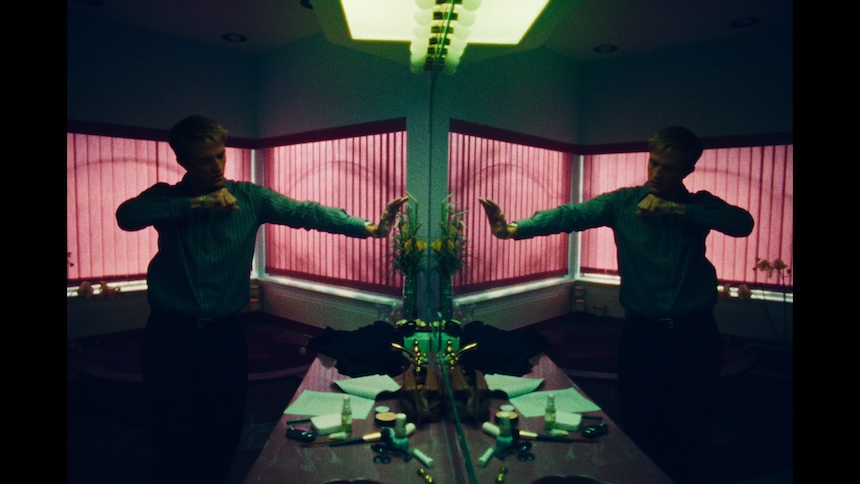
Daniel Garber's montage-heavy editing and the frenetic pacing also contribute to this, pulling the audience into a strange sense of unreality that never feels firmly grounded in any one time or place. That near-constant motion for the majority of runtime makes the final third, where it transforms into a one-long-night movie, feel that much more grueling as Hansen, Bender, and "Perverted Justice" vigilante consultant Xavier Von Erck (Matthew Maher) grow desperate in their attempts to lure out a "whale;" a member of government whose exposure as a predator -- in their minds -- would garner the show the respect it deserves.
The performances from the ensemble all successfully balance broad satire and naturalism, but the key trio of Pattinson, Weaver, and Gisondo are truly fantastic. Pattinson never seems comfortable, visibly thinking about every movement he makes. It's far from poor acting, though; he's inhabiting a man who is always performing for someone, whether in front of cameras, in the office of an executive, or with Plumb when the two grab a drink so Hansen can convince him to stay on as a decoy after a traumatic start.

Gisondo plays the slipping innocence of Plumb beautifully and heartbreakingly without ever falling into a caricature of a naive aspiring actor. Weaver communicates Bender's fluctuations between arrogance and desperation not only with her eyes but also with how she carries herself, delivering an affecting portrait of someone struggling with doubt creeping into her fierce convictions.
Primetime also cleverly marks its period. From an early "London Bridge" needle drop to the popular stories on the National Enquirer's website about Kevin Federline and Anna Nicole Smith, and of course the key plot point of Predator going up against Lost in the same time slot. The ideology of the early war on terror is also highlighted at one point when Hansen tells someone "you're with him [a predator] or you're with me," invoking George W. Bush's classic "you are either with us, or against us."
That line also highlights where the movie falters. Primetime doesn't sufficiently investigate or comment upon the culture that birthed To Catch a Predator, or the culture the show then helped birth in turn. Coming out on the heels of David Osit's stunning (for better and worse) documentary Predators, which manages to tackle both the psychological and sociological, will certainly help place Primetime in a greater context, but it also makes the narrative film feel more basic, and standard, in comparison.
Not to say Primetime would be breaking new ground had it arrived on screens earlier. Because while it works as a portrait of its three lead characters, that's a bar most biopics clear before being forgotten. Many of those biopics include phenomenal performances that weren't enough to save them from the dustbin of cultural history, so there's no reason to think Pattinson, Weaver, and Gisondo's work here would set Primetime apart.
What undeniably sets it apart, and marks it as one of the most singular "based on a true story" films, is its bold visual style.
The film opens Friday, September 25, only in movie theaters, via A24 Films. Visit their official site for more information. For locations and showtimes, visit the film's official site.