
Karlovy Vary 2026 Interview: Sharon Horgan on BAD SISTERS, Global TV and the Lure of Cinema

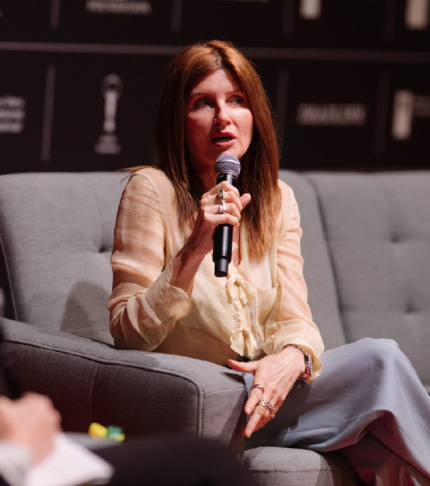
Sharon Horgan understands the demand for television that travels.
Through Merman, the production company she co-founded with Clelia Mountford, the Irish writer, actor and producer operates between British, Irish and American markets, where cultural specificity must increasingly coexist with international financing and global distribution.
Her current slate illustrates that position. Following two seasons of Apple TV+’s Bad Sisters, Horgan is writing, starring in and executive-producing Youth, an HBO comedy about a 50-year-old divorcée balancing sex, family and caring for parents. The project is the first series under Merman’s two-year first-look deal with HBO and has received a straight-to-series order.
Merman also executive-produced Netflix’s Vladimir, the Rachel Weisz-led adaptation of Julia May Jonas’s novel, released in March 2026, while the company’s BBC comedy Amandaland won the 2026 BAFTA for scripted comedy and returned for a second series. Yet when Horgan begins writing, she attempts to put those industrial considerations aside.
Horgan spoke about storytelling in the age of streaming at the industry strand of the 60th edition of Karlovy Vary International Film Festival. Screen Anarchy sat down with the Irish writer and producer to discuss the contracting television market, the economics of internationally financed comedy and why commercial calculations must stay out of the writing room.
“As a writer, as a creator of shows, you really just have to write what you want to write about,” she says. “If you thought about all that stuff, you wouldn’t pick your pen up.”
For Horgan, the people considering prestige positioning, commercial viability and international sales should not be the people facing the blank page. “Your producer thinks about that, and your executives and the people commissioning the show,” she says. “I don’t know if I ever think about it when I’m writing. I just think about the characters.”
That approach helped Bad Sisters retain a recognizably Irish identity while reaching a broad international audience. Horgan attributes its exportability not to neutralizing the local elements, but to placing them around two immediately legible ideas. “It’s got two very big, global, recognizable themes,” she says. “Family, and then that sort of wish fulfilment of having the opportunity to kill someone you hate, to kill a bad person.” The show’s Irish setting, humor and family dynamics gave it personality. The underlying emotions allowed it to cross borders.
“Even though there were a lot of ingredients that were very specific to Ireland, culturally, it had these global, recognizable themes,” Horgan says. “I think that, together with the Irish charm, allowed it to break through globally.”
Horgan’s position as both creator and company co-founder might suggest that production realities inevitably enter her screenwriting. She insists that she separates the functions. “I am a very good producer of other people’s shows,” she says. “When I make my own shows, I work more as a showrunner than a producer. I’m less involved in the nuts and bolts. I don’t look at budgets. I think about it really just creatively.”
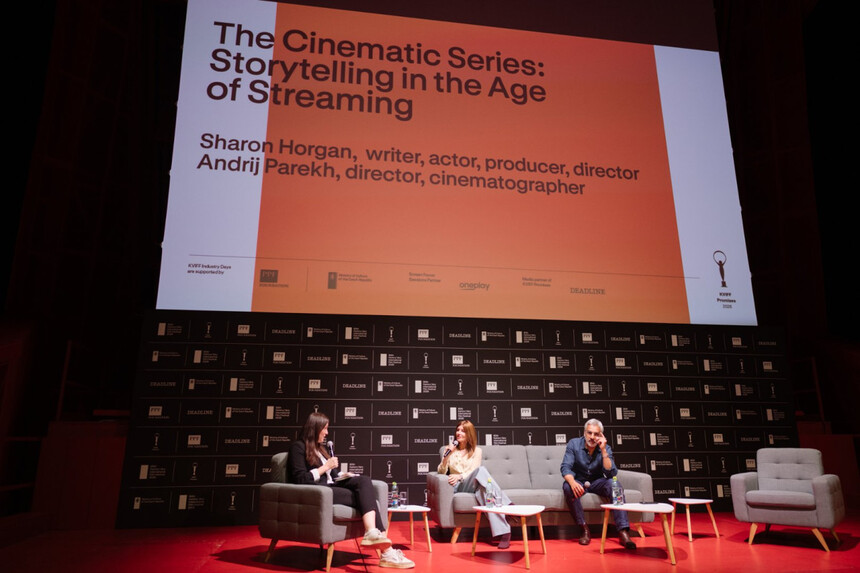
That separation has become more difficult as the television market has contracted. The high-volume commissioning associated with peak TV has been replaced by longer development processes, greater competition and less certainty that a project will move from script to production. “It’s not fun,” Horgan says. She describes herself as fortunate that HBO moved decisively on Youth. “They were like, ‘Let’s just make it,’” she recalls. “They didn’t make me jump through a lot of hoops.”
Merman benefits from successful returning programmes and long-standing relationships with broadcasters and platforms, but Horgan resists presenting that stability as a predictable outcome. “We make great TV,” she says, “but we’re also lucky.”
Merman’s reputation was built partly on its ability to connect British and Irish comic sensibilities with US partners and audiences. Catastrophe, Divorce and Bad Sisters emerged from different production and distribution structures, but each demonstrated that culturally distinctive comedy could circulate internationally. That success has created its own expectation. “When we make something, it does feel like it will travel,” Horgan says. “People expect that of us. They expect us to come up with shows that have global appeal.”
Her own work suggests that international potential begins with recognizable human behavior rather than a checklist of territories. “I think about what I want to make,” she says, “and then I hope people want to watch it.”
Although television remains Merman’s commercial and creative center, Horgan continues to pursue film as a writer, producer and performer. Cinema, she says, offers a concentrated experience that long-form production cannot replicate. “The lure of cinema is how it’s just its own world for an hour and a half or two hours,” she says.
Film acting also provides temporary release from her broader responsibilities. Creating a television series can occupy two years. An acting role may require only six or eight weeks. “I’m not thinking about the production,” she says. “I’m not thinking about anything other than playing the part.” She describes it as a “busman’s holiday”: still part of the same profession, but a break from producing, rewriting and overseeing an entire series.
Roles in films including Game Night and The Unbearable Weight of Massive Talent appealed partly because they allowed her to enter someone else’s creative structure and concentrate on performance. “When something seems really fun, or something I would never get to do again, or an experience working with actors that I love, I just want to do it,” she says.
Horgan’s series are known for expansive, contradictory female characters, but she resists describing their creation primarily as a political intervention. Asked whether British comedy could produce a female character with the cultural durability of Alan Partridge or David Brent, she responds immediately: “Yes. We created her.” She means Amanda, the status-conscious and frequently disastrous mother played by Lucy Punch in Amandaland. “I wanted to make a big sitcom character that all ages in a family could watch,” Horgan says. “It was always my dream to make something that has wide demographic appeal, but is still really good and really funny.”
She acknowledges that comedy remains weighted towards men, although most of the writers she works with are women. But writing formidable female characters, she says, is not conceived as an abstract statement against the industry. “I just like writing great female characters,” she says. “I’m a woman, so I have access to the inner workings of female characters.”
That answer returns the conversation to Horgan’s central principle. Platforms may need global intellectual property, producers may need co-financing; commissioners may need reassurance that a project can travel. But the work itself still begins at a smaller scale, with a character whose behavior is precise enough to feel true.
Images courtesy of Karlovy Vary Film Festival Servis.



