BY HOOK OR BY CROOK Interview: Harry Dodge and Silas Howard Look Back on Their Landmark Film in Advance of Restoration Tour

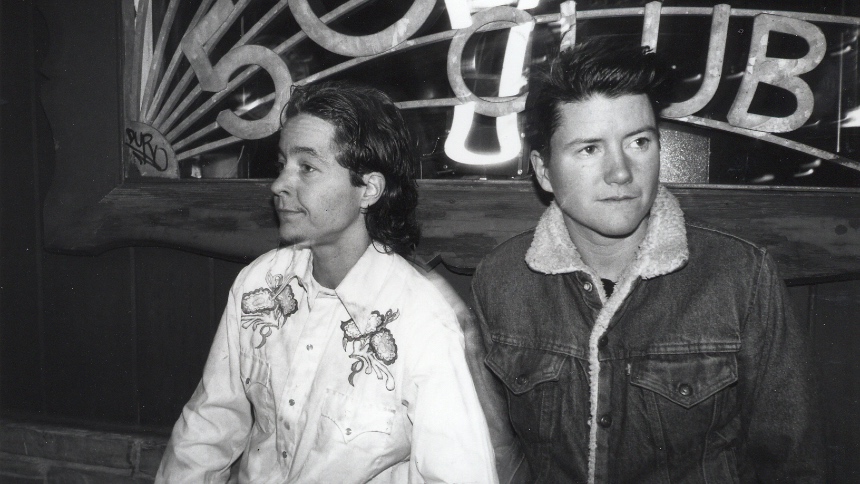
In the time since By Hook or by Crook premiered at the 2001 Frameline Film Festival and established itself as a landmark of queer cinema, the two writer/director/stars behind the film have gone in very different directions.
Silas Howard has become one of the most respected television directors of the 21st century, made history as the first trans director to work on Transparent, and continues to make both narrative and documentary films. Harry Dodge became an interdisciplinary artist, whose work earned him a Guggenheim Fellowship in 2017, and more recently an author; his 2020 book My Meteorite Or, Without the Random There Can Be No New Thing was a New York Times Book Review Editors' Choice.
Despite their divergent creative paths, the two, who became close friends and collaborators almost 40 years ago, are still very close friends. It's clear when speaking with them, as I had the chance to do in advance of a restoration of By Hook or by Crook coming to theaters across the US, that there are decades of love and familiarity between them.
Our conversation touched on specific filmmaking choices and influences, breaking established rules, and the ways in which community and creativity inspire and support each other. You can read that conversation, with some edits for length and clarity, below.
ScreenAnarchy: I watched the film originally four or five years ago and hadn't rewatched it until a couple days ago; I was struck by a few things -- I know we're celebrating the 25th anniversary, so no worries if y'all don't totally remember. But I have some questions about things that struck me.
The first is the editing, the use of slow motion and repetition, especially that moment early on where the guy turns around to look at [Howard's character] Shy in the car. It adds this really wonderful dreaminess to the movie. Could y'all talk about that choice and how you landed on that?
Harry Dodge: It's hard to remember all those decisions. I remember really caring about all the decisions a lot. My guess is that it was two things. One, I had seen this documentary about Fugazi just a little bit before. Have you ever seen that movie?
INSTRUMENT?
Harry Dodge: I'm not sure what it's called. But there's this section that we borrowed for our movie. There's this section in the Fugazi documentary where the people are either in line or they're at the show and they film them in slow motion, with little smiles or these little expressions, all these cute little punk kids. And they either just smile a little bit or they kind of look around furtively.
Silas Howard: They hold it long enough, Harry, I remembered you saying they held the shot long enough that people break a little.
Harry Dodge: Yeah, break a little, it's so beautiful. And I remember it being one of those filmmaking moments that really moved me. And I was in love with that. So I know we have a section like that in our movie where they're in the bar. And where we waited until people kind of broke a little bit. And I remember editing that in, like when they sort of look away and then look back.
And so when the guy turns around to look at Shy, it's either that we didn't have very much footage of him, or I just wanted to make sure that people were getting those two beats. One is, "I don't trust you in the backseat behind me". And then Shy's cute smile being so disarming as another beat. And then the beat is "Weeeeeell, all right." So it could be that I needed to slow that down a little bit in order to get all that.
Silas Howard: But I think that is the intentional moment, right? We were making up the rules of the world. We both were making art in the world where society said, "we hate you." But our art was bringing us into rooms where people didn't hate us. And we were able to connect with people that weren't like us even. And so that smile was definitely intentional. I'm glad that you mentioned it, because we got to decide who smiled and who scowled.
Harry Dodge: I mean, it's a little microcosm of us as artists bringing these characters into the world. And we're not going to explain anything to you, but we don't have to, because this guy's nice, he's cute, he's not perfect. He's not a perfect character. But all the best movie characters are not perfect. But he is charming. And I think you're gonna like him, you know?
Yeah, I was gonna ask about that moment in the bar with the medium shot portraits that you held on but I love that you've already spoken to it because that was another moment that I was like, "I love this." On the dreaminess, and speaking of community and making art with people who don't hate you, I noticed that Ann T. Rossetti, who also shot GO FISH, worked on the film with y'all. How did y'all get connected with her?
Silas Howard: I think because I knew Guinevere Turner. She's going to do our Q&A for the first New York screening [on Friday, June 12], which is awesome. Because, yes, Spike Lee and Go Fish and Clerks, all of those movies were kind of paving the way for all of us hopefuls.
But yeah I think it was just that we knew each other. We knew Rose [Troche, director of Go Fish] as well. I think Rose was going to do a music video of Tribe 8, the band that I was in. So it was like 50 queers and a lot of smoke and mirrors kind of thing.
I love GO FISH so I had to sneak in a question about that connection. That's amazing to hear that you were all in the same community.
Harry Dodge: Yeah Silas's band Tribe 8 paved the way for our collaboration, not just the Bearded Lady [Red Dora's Bearded Lady, a cafe and art/performance space Dodge and Howard ran with other community members in San Francisco], but sort of getting the word out globally. So we'd have people coming to visit this queer cafe from all over the place after Tribe 8 had toured around.
Also just when we were writing our scripts, because we wrote two scripts that were not good enough before we wrote By Hook or by Crook over the course of two or three years. But I remember these trips Silas and I would take to New York City, we were trying to meet with people that Silas had met on the road. Silas is very charming, very good at collecting these connections. And that was really, really helpful as we tried to get the word out and tried to fundraise and find producers, what have you.
Silas Howard: But do you remember Harry, we racked up $200 at Kinko's, this is how long ago it was. We were devastated.
Harry Dodge: I still remember the Kinko's trauma. It was that Kinko's by the old Kmart there, by that big weird cube.
Silas Howard: Yeah, I know what you're talking about, in New York.
Harry Dodge: [Lets out frustrated sigh about the Kinko's trauma.]
Silas Howard: Yup.
So speaking more about people, Jenni Olson's name pops up in the credits. And I discovered and watched BLUE DIARY [a short Olson directed and Howard narrates], which I really loved. How did y'all decide to bring her on? And what exactly is a "consulting producer"? I know that she's been a huge champion of the movie and has helped y'all along with the restoration as well.
Silas Howard: The requirement was years and years of unpaid work and gratitude from us. [Laughs] No, but really, again, part of the community. Jenni had been one of the directors of Frameline way back and really helped us. We hadn't made anything. We were really just flying by the seat of our pants.
Harry Dodge: We were just brand new filmmakers. I don't know if you remember this, Silas. Silas and I were new friends in the late 80s, early 90s. And there was some point in there, and I'm going to guess it was the late 80s. If I'm not mistaken, maybe I'm wrong, didn't Jenni teach a night class on queer cinema that you and I went to together? We sort of were like "What's the history of queer cinema?" And wasn't Jenni teaching that?
Silas Howard: I don't remember but you I'm sure you're right. But basically, it was the community. There were only so many of us.
Harry Dodge: Yeah, Jenni was the person that was there if you wanted to do anything with queer cinema. Jenni was running Frameline, like you said, and also teaching classes.
Silas Howard: And it was a time where in spite of all the hatred and homophobia and transphobia running rampant, there were a lot of bands like Nirvana, who were like, "If you're racist, and you're misogynist and homophobic, don't buy our records, don't come to our shows." People were -- because of how terrible the times were, and I keep thinking of that with the relationship to what's going on today -- people were reaching across their different groups to support each other. And so that was happening too. And Harry got cast in a John Waters movie. I mean we barely knew how to play and we got a lot of press, so it was an interesting time that way, the hatred, but also the opportunity to get your name out there.
A friend of mine, when we were talking about starting a band when we were 18, said, "it doesn't have to be good, it can be punk."
[Laughter]
Silas Howard: Exactly! That is a true fact everybody.
The soundtrack is incredible and Carla Bozulich's score -- I love that thick beat with the steel guitar. How did all of that come together? Were those bands you had played with? Or did she mostly work on curation and bring things to y'all?
Harry Dodge: I think that in editing we added a lot of music, like working [temp] music into the soundtrack. And so when Carla came on -- Carla did a lot of work. I think a lot of those bands were connections that she had. She would go in and think, "Oh this is kind of how you want it. What can I find that kind of has that same vibe, or better?" There were a few that weren't Carla's connections, but mostly they were. And initially we had thought we were gonna try and make a soundtrack. But getting all the licensing and all that was a little too difficult.
Silas Howard: We were huge fans of the Geraldine Fibbers and Ethyl Meatplow, she's just brilliant. [By Hook or by Crook producer] Steak House was a friend of Carla's so that was a big in for us. We were fans of hers. She and Nels Cline, who has a big following as well across different music genres, they did this score for free and it's phenomenal. Our friend group was very talented and we're really lucky.
Harry Dodge: Yeah, Nels came and sat in the recording studio while the movie played and did some of that freestyle guitar stuff.
Silas Howard: Yeah, they did a theme like "Shy's theme," like a proper score. We had no budget for it, but they did it anyway.
The power of being two very charming people, you get a lot of people to work for free, for the love, for the art.
Harry Dodge: Well, it's funny because I think we knew that, yeah being charming, but that there was a power in people coming together with their bodies all together in one place in one room. And there's a joy. And both of those things were really important at the time and they're also really important again now that everyone's scrolling and on Zoom and doing all the things that we do. It's even more important to remember how different it feels to be in the room with people. That's something that's important.
Sometimes you can afford to do it, sometimes you can't. But helping people get their vision done, helping people on their projects is so fucking rewarding, and so amazing just on a personal level for all the people involved. And then you also have this collective power that sort of emanates from it, which is radical. It's revolutionary. It's something we can still do and should still be doing.
Silas Howard: And I would just add to that, it was a collective of people that made this with us. All phenomenal artists, many of whom had no prior film experience. But also, film is so conservative, it's so insanely conservative. And if I knew that, I don't think I would have even thought to try to do what we were doing. So when something breaks through that gets to be authentic, and doesn't explain things and allows people to connect -- I think we're craving these unexpected connections always, but especially right now. And I think that can happen when something's not restricted and played to a business plan or an algorithm or whatever. We're desperate for it and that's what the arts do.
On the note of being able to sell things -- Harry, you already talked about the fact that y'all had written two scripts before this. And I know those were more crime or even action movies before y'all shifted the focus to the friendship. But there are still genre elements in BY HOOK OR BY CROOK. Can y'all talk about finding that balance or even, I know we talk about "smuggling" a lot in indie filmmaking, smuggling in a queer, character-driven friendship story in a genre movie?
Harry Dodge: Three things pop into my head when you ask that question. One is A Woman Under the Influence, the Cassavetes movie, and that it wasn't like a mainstream hit or anything, but it was a beautiful movie with beautiful performances. The characters were so intense and so moving, and we just loved that movie at the time.
And there was Midnight Cowboy, which was the movie about friendship, and somebody coming to town and somebody guiding them. And who was the guide? Who was the host and who was the follower? And how did they actually affect each other?
And then the other thing that had just happened was Bottle Rocket. And that was their [Wes Anderson and the Wilson brothers] first movie, and again, that indie thing where you could just be nobody, write a movie, get it made -- 'cause they had made a short and shopped it around, whatever the story was. And there were a few stories like that, that we were sort of going off. But the idea of the caper feels to me like it came from Bottle Rocket. I could be wrong, Silas?
Silas Howard: No, you're not wrong. I think we were talking about how Bound had come out and that was an amazing film. To see these super authentic queer characters in the story that didn't explain and got right to the point about "They're gonna sleep together and it's gonna be great and now they have to deal with the Mafia." I think that was inspiring.
And genre's fun to play with. So we wanted a little caper-ish stuff. It's just fun to put characters you don't see in those settings, although our command of genre was a little loosey goosey. But I like the wild tone shifts that we have in the movie.
Yeah, absolutely, it's also very funny. I especially love the moment after Val is sort of having a breakdown about "Where did Billie go? Where did Billie go?" And then at the end of that Shy's like "We have to find Billie!" and Val goes "Yeah, she's doing the wash."
[Laughter]
Harry, can you talk about how you created Val? I know that some of it was drawn out of things in your own life. And I know that other parts were drawn out of a character you had been working on in theater.
Harry Dodge: Yeah, I had done a couple of evening-length shows. We started doing a lot of performances at the cafe, at the Bearded Lady. There were a lot of performance spaces in San Francisco at that time, probably 13 just in the Mission. And so we were out at performances almost every night watching the weird crap that other people were doing. So I started doing performances, and there were dancers and there were film strips, there was live music sometimes with our buddies, all these lighting cues,. It was really fun.
And one of the characters that I had worked up for the second show I did, which was called From Where I'm Sitting (I Can Only Reach Your Ass). [Laughter] One of the characters I had worked up for that, there were a lot of lines that started there. There was actually one character in Muddy Little River that we used a lot for Shy's character. And then the crazier dude that we use for Val's character was a little bit more in From Where I'm Sitting.
So that character Val felt like it was a character that was the real me -- [Laughs] -- that lives inside me. And I'm doing all this work every day to act normal and not act like that so it was not hard to access those performances because it was kind of right there under the surface. If I had to do any other character that would have been really impossible. But it was a character that felt accessible for sure.
And then there were a few details added. A lot of the birth mother stuff was drawn from my life and added on to the characterization of this person who had a tenuous hold on normal speaking and normal friendships.
Silas Howard: I'll just add two things. One, yes, we put Harry's birth mother information because we thought maybe his mom would watch the movie. We did find her shortly after the movie, but not because of that.
And the other thing is that people that were screenwriters, who were familiar with the format when we were not would say, "Oh, you really can't do this language." And I'm so grateful that we decided that if we were going to fail, we'd rather fail by our own standards than by pandering to an audience that ... who knows if they were even there.
I knew from watching Harry perform, how brilliant he is and that this was something that he could pull off. And I'm so glad we did that.
Harry Dodge: We taught ourselves to make movies from reading books and watching movies forward and backward. But we read a lot of books. We read screenplay books and we read working with actors books. Then we read the movie directing books, Scorsese on Scorsese.
But every screenplay book tells you mainly: show everything visually, don't do anything with language. Language is not the star of the show, the visuals are the star of the show, so don't do work with language. So this was definitely flying in the face of that -- all of the flowery language we wanted to try, the more literary sentences, what have you, were an experiment and sort of going against best practices, quote unquote, "best practices."
I have to let you go, but one last question as a huge [Albert] Camus lover: Did you purposefully open and close the movie with quotes from "Al"s, even if one is Alphonse [Capone] and one is Albert [Camus]?
Harry Dodge: Yes.
Silas Howard: Eventually, yes. We wrote those towards the end, right? The voiceover.
Harry Dodge: [in French accent] Albert Camus! Yeah. "This guy Al."
Silas Howard: Yeah that was kinda our joke.
Harry Dodge: Yeah, that was on purpose, the high and the low. One of our best tricks!
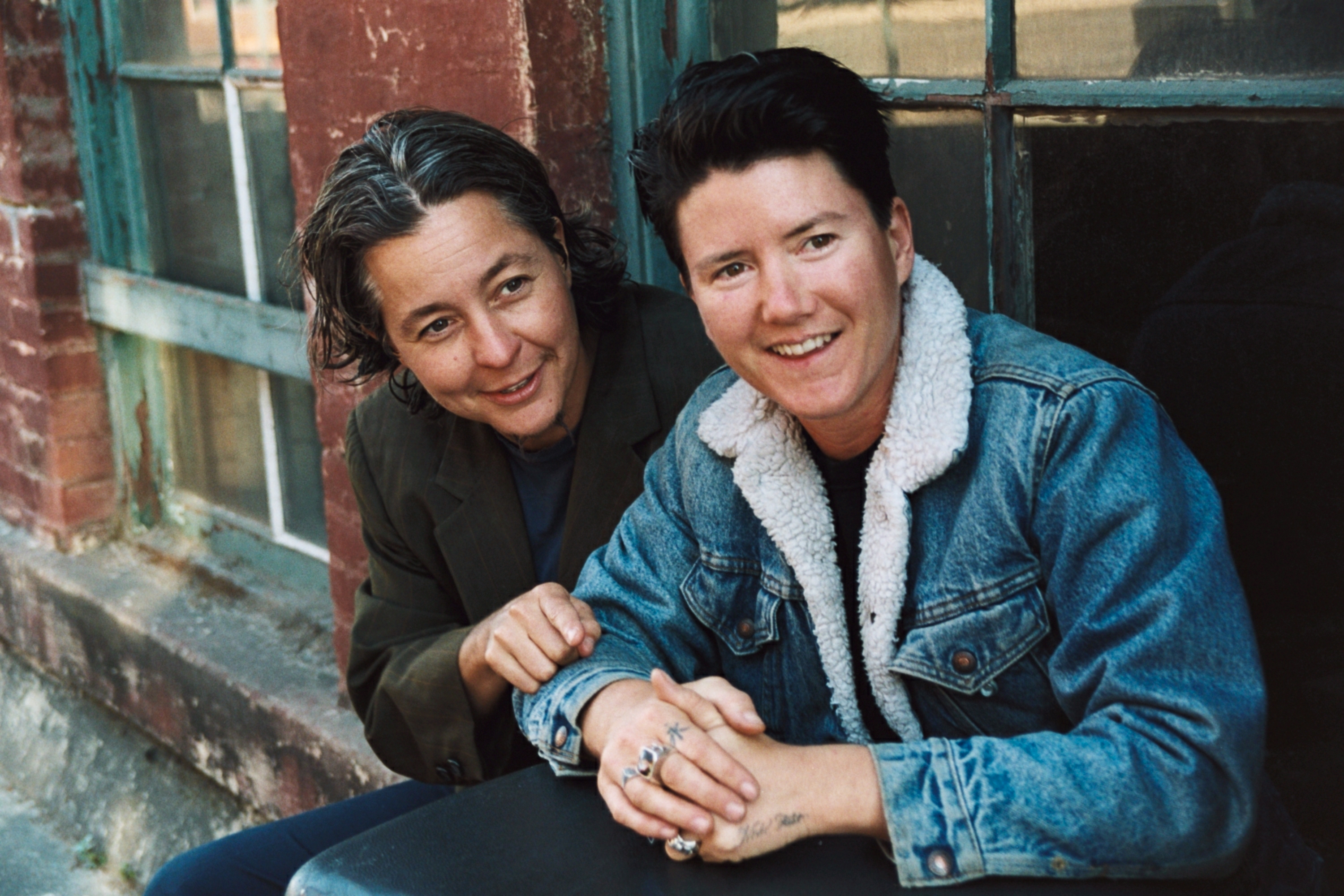
 and Silas Howard Photo by Chloe Sherman Courtesy of Altered Innocence-thumb-80x80-104705.jpg)
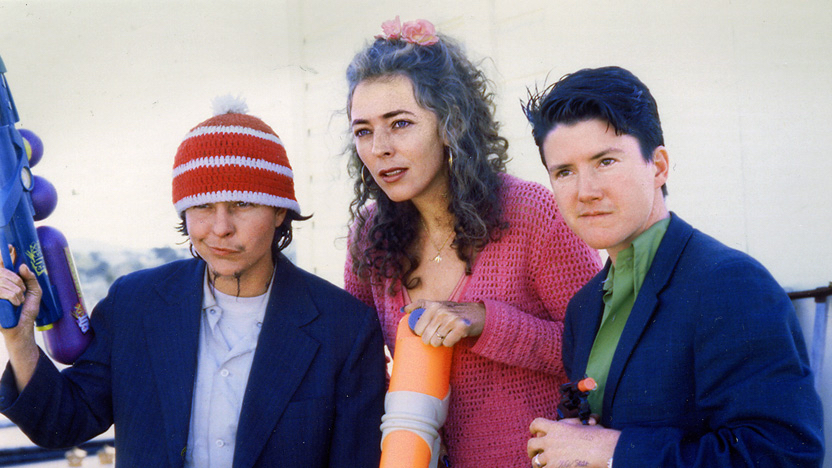
 Stanya Kahn and Silas Howard Photo by Chloe Sherman Courtesy of Altered Innocence-thumb-80x80-104706.jpg)
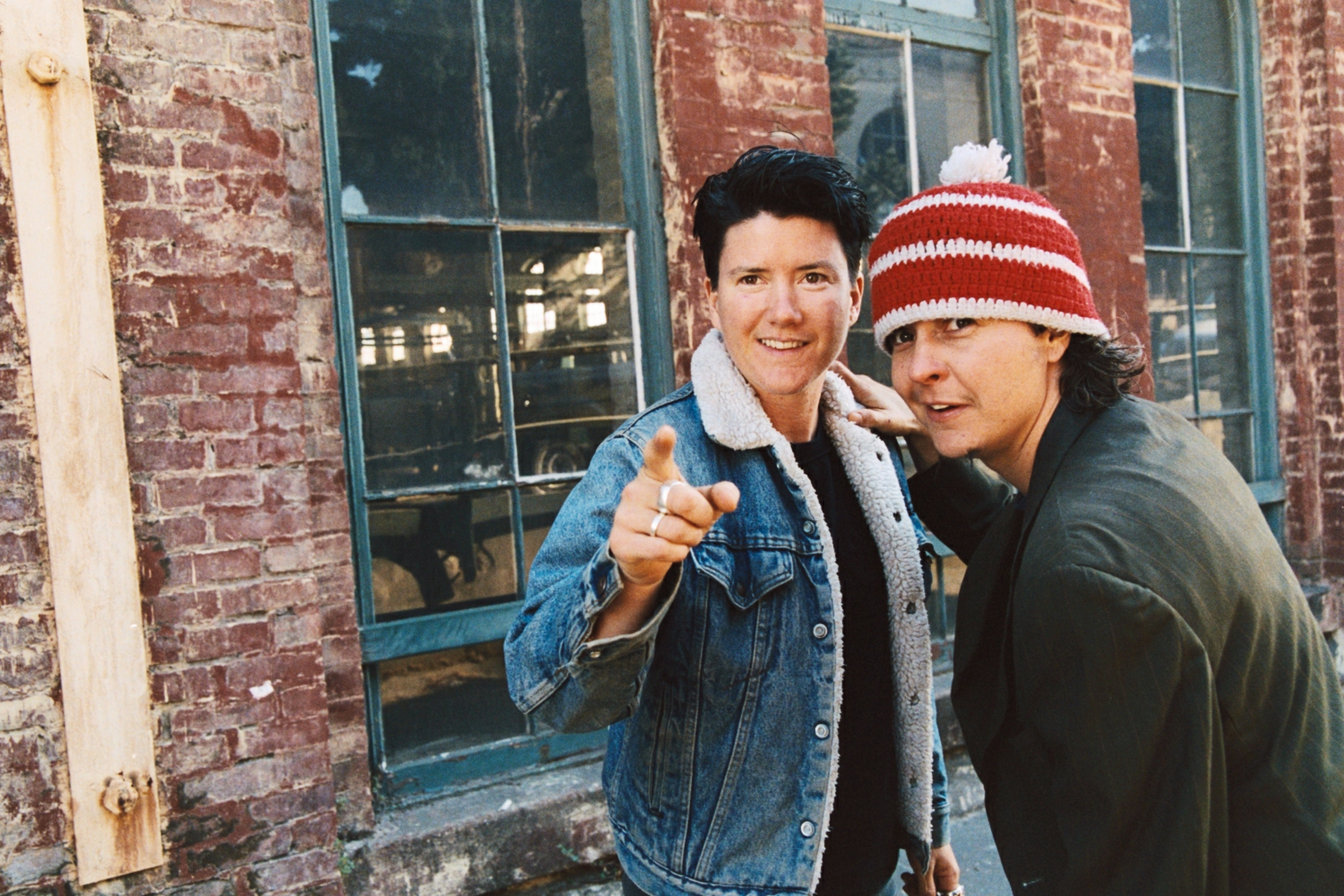
 and Harry Dodge Photo by Chloe Sherman Courtesy of Altered Innocence-thumb-80x80-104707.jpg)
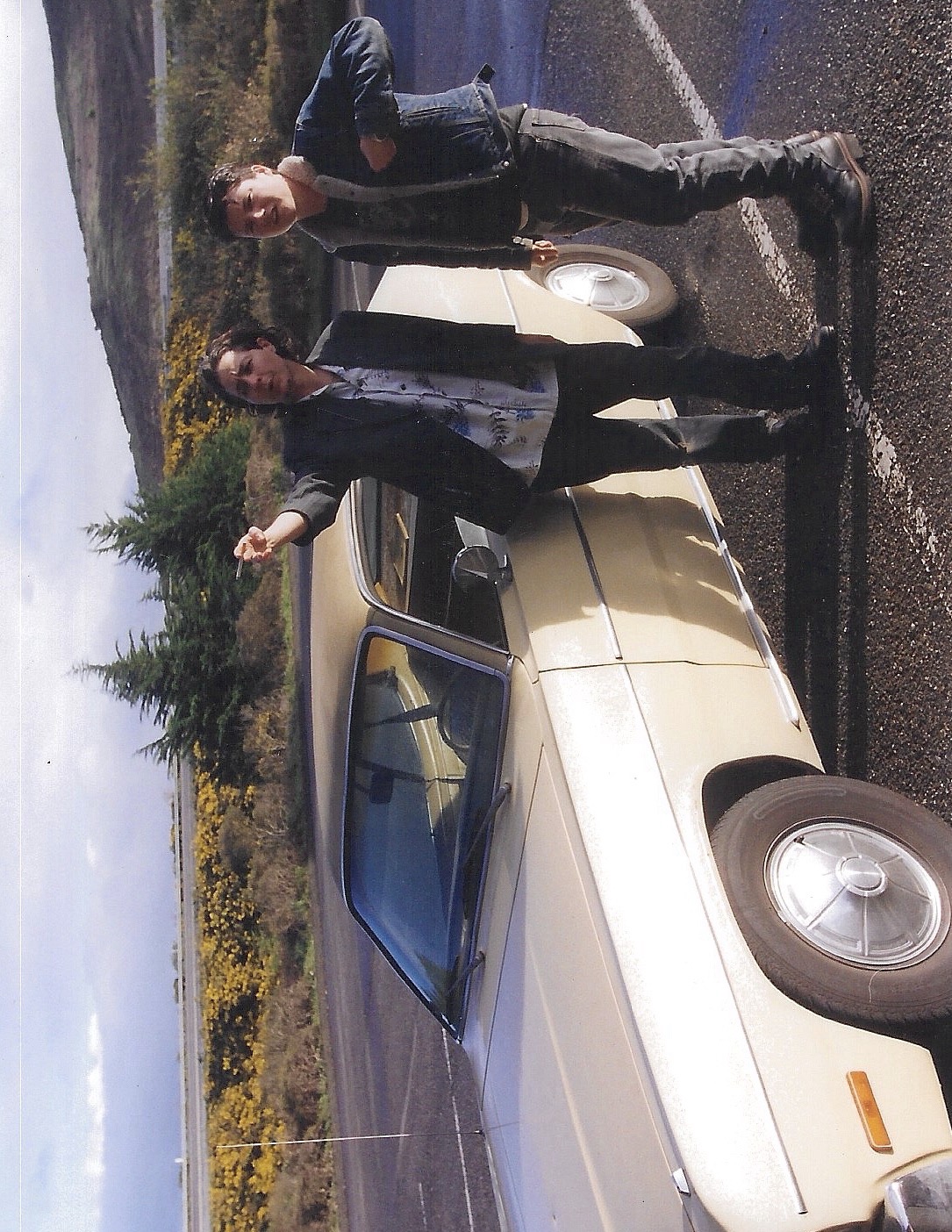
 and Silas Howard Photo by Chloe Sherman Courtesy of Altered Innocence-thumb-80x80-104708.jpeg)