Diagonale 2026 Preview: Gender Masquerades, Bureaucratic Absurdities, and the Fragility of Belonging

Opening today, the 29th edition of the Diagonale – Festival of Austrian Film, which will run through March 23 in Graz, presents an expansive snapshot of contemporary Austrian cinema.
Across 149 films, including 77 Austrian or world premieres, this year’s lineup reveals a national cinema deeply engaged with questions of identity, political systems, and shifting social structures. From historical allegory to experimental essays, the program suggests that Austrian filmmakers are increasingly turning toward stories that interrogate how people inhabit, and resist, the roles imposed on them.
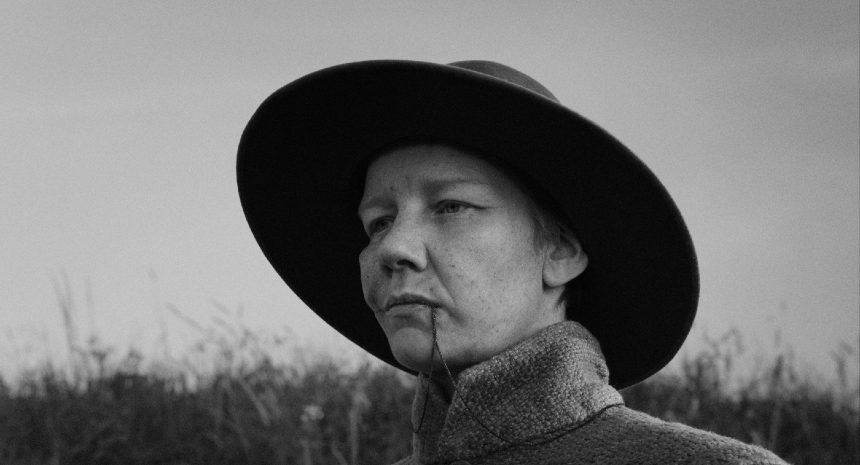
The festival opens with Markus Schleinzer’s historical drama Rose, a haunting allegory set during the Thirty Years’ War. Sandra Hüller plays a woman who disguises herself as a man to navigate a rigid Protestant village society, taking on successive identities as soldier, landowner, husband, and father.
The film’s minimalist approach and the quiet intensity of Hüller’s performance transform the historical premise into something eerily contemporary, probing how identity is negotiated under the watchful gaze of patriarchal power. Festival directors Dominik Kamalzadeh and Claudia Slanar describe the film as a parable about freedoms that must constantly be defended,and that can disappear as quickly as they appear.
Sebastian Brauneis’s AMS – Arbeit Muss Sein, one of the competition’s world premieres, approaches Austria’s labor bureaucracy with irreverent flair, presenting an offbeat musical where solidarity becomes a strategy for outwitting the state. The film’s satirical tone reflects a recurring thread throughout the lineup: institutions, whether bureaucratic, familial, or ideological, are treated not as stable structures but as systems constantly being negotiated or subverted.
Elsewhere, Maria Petschnig’s Beautiful and Neat Room relocates Austrian introspection to Brooklyn, where the constraints of urban living gradually tip toward the uncanny. Combining dark humor with hints of psychological horror, the debut feature explores how cramped domestic spaces mirror the emotional limits of modern relationships.
Questions of perception and moral responsibility come to the fore in Matthias van Baaren’s Licht, kein Licht, a formally rigorous drama that probes guilt and sanity, while Abu Bakr Shawky’s The Stories merges culture clash, contemporary history, and romantic comedy in a playful dismantling of cultural stereotypes. Together, the competition suggests a cinema comfortable with tonal hybridity, moving fluidly between satire, genre play, and philosophical reflection.
The documentary section expands these themes. Several films explore the intersection of personal memory and political history, often through the prism of family.
Massoud Bakhshi’s All My Sisters spans nearly two decades of observation, revisiting the filmmaker’s nieces in Iran as they reflect on their childhood under the weight of shifting social realities. Similarly intimate is Viki Kühn’s Mein halber Vater, which transforms an autobiographical search for identity into a meditation on the fragmented nature of family narratives.
Political tensions surface more explicitly in Gregor Centner and Birgit Bergmann’s Meeting Götz, where the filmmaker confronts his former schoolmate, the far-right ideologue Götz Kubitschek. By juxtaposing their shared past with radically divergent political paths, the film becomes a portrait of ideological drift, and the uncomfortable recognition that extremism can emerge from familiar beginnings.
Migration and displacement appear in Patric Chiha’s A Russian Winter, observing young Russians who relocated to Paris after the outbreak of war. Rather than framing exile solely as tragedy, Chiha’s observational approach captures the fragile formation of new identities in diaspora communities.
Alongside these personal stories, several documentaries examine the bureaucratic structures that shape everyday life. Tolga Karaaslan’s Baba, What’s Your Plan? follows a man navigating Austria’s labyrinthine disability pension system, turning administrative procedures into a quietly devastating portrait of waiting and uncertainty.
Beyond the competition strands, Diagonale’s program continues to position Austrian cinema within broader artistic contexts. The Position retrospective, dedicated to Icelandic filmmaker Hlynur Pálmason, underscores the festival’s international outlook, highlighting a body of work that merges austere landscapes with surreal humor and existential inquiry.
At the other end of the spectrum, the Innovative Film section embraces experimental forms, with works like Georg Tiller’s transmedial essay-horror The Valley Where LOAB Lives and the collaborative body-camera experiment Portrait of Nowness by Juri Rechinsky and Mario Hainzl, both reflecting a growing interest in hybrid cinematic language that blurs documentary, essay, and speculative modes.
Diagonale – Festival of Austrian Film running March 18–23, full line-up is available here.