
Tribeca 2025 Review: CUERPO CELESTE, Highs and Lows, Amplified By Shifting Tides
Helen Mrugalski comes of age in Nayra Ilic Garcia's Chilean drama.

Where were you in 1990?
Cuerpo Celeste
The film enjoys its world premiere at Tribeca 2025.
In Chile, the long dictatorship of Pinochet was coming to an end. But what does that matter when you're 15 and spending the holiday on a beach during the summertime?
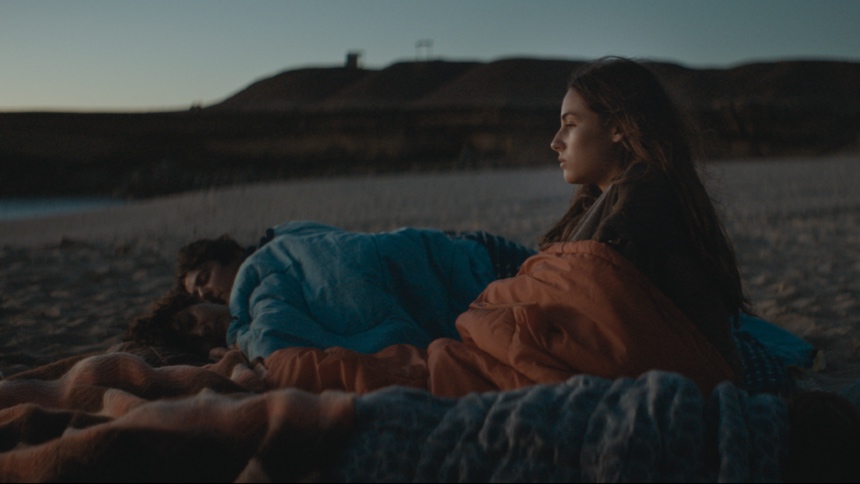
Celeste (Helen Mrugalski) is surrounded by her loving parents, her maternal aunt's family, and a friend or two as they enjoy leisurely days in a coastal town near the Atacama Desert. They are making lazy plans for New Year's Eve. (Remember, North American friends, in South America summer comes late in the calendar year.) Celeste's mother feels comfortable sunning topless on the beach.
The nuclear family spends time hiking and looking for fossils in the beautiful desert, though Celeste wonders why her father plants a tiny flag in a seemingly random location. Her parents wave off her questions. She's only 15, and too young to know what they are doing.
As their holiday concludes, something happens that changes all their lives, and Celeste is left adrift.
Steadily and poetically directed by Nayra Ilic Garcia from her own bracingly original script, Cuerpo Celeste is told through Celeste's eyes and feels intimately personal. When Helen Mrugalski first appears as Celeste, she looks young for her age, an ungainly figure who is nonetheless poised to take flight. After some months have passed, nearly a year, she not only looks different -- her hairstyle has changed, her clothes are more nondescript -- but she acts differently.
She is no longer the child in the early stages of puberty, as she appeared to be in the first part of the film. Now she is clearly on the cusp of adulthood: her gait is more steady and assured, and some of her emotions are closer to the surface, even though she is more often sullen and uncommunicative with those around her.
It's a startling transformation, really, through hair and makeup and performance and direction. Admittedly, though, even as Helen Mrugalski transforms, her now-closed stance makes it more challenging to follow the narrative. Since Celeste keeps most things to herself in the latter portion of the narrative, the actions of those around her become more difficult to understand; there's barely enough interaction to see what's happening.
The change in Celeste's character and its rippling effects through her psyche and personality ring true, in view of what she experiences in the course of the film. One could only wish for the other characters to be less opaque, simply for the sake of understanding their actions. Still, Cuerpo Celeste stings quite hard, once things play out.
The film accurately portrays the pain and agony that accompanies adolescence, as adults finally realize that you're old enough to hear the truth about loved ones. And then you have to figure out how to deal with that pain and agony.



-thumb-80x80-107109.jpg)

