Asian Retrospective - "Vengeance is Mine" review

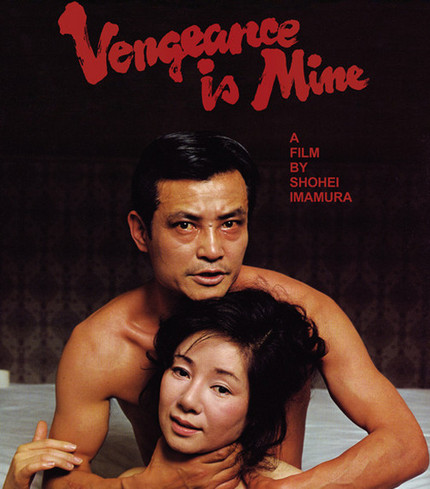
"It's gonna be damn cold in
the clink" mutters the reprehensible Iwao (Ken
Ogata in his finest performance) as the police car travels through the
bleak snowy terrain. Oblivious that he has been captured as he is calm and
concerned only of his well being and thus begins the loosely true tale of this
clinical sociopath and serial killer. This prolific account is told with utter
detachment by one of the true masters of Japanese cinema Shohei Imamura, and it is told during the cynical post-war period
of
The first point of
contention is found within the title "Vengeance
is Mine" which does not describe the protagonist and his murder spree, but
instead suggests a holistic approach; a personal attack against
The film continues with the
facts, as Iwao smugly grins at his interrogators they trace his path through
The investigation continues,
the bodies are found and the interrogation in the present continues to unravel
Iwao. A flashback goes to his distant past, a case of Christian prejudice on a
small island as his family is forced to give up their fishing boats for the
Japanese army. They are being treated unkindly and Iwao as a child rebels
against this and attacks the captain while his meek father looks on. In fact,
as a child, during his brief time in war and as an adult it is clear that Iwao
has always rebelled against the norms. His chequered past continues to unravel.
It is a strict Christian upbringing but he ignores all of it, hates his father
and worries his mother to death. Even for his family he feels nothing as he
engages in criminal and lurid acts.
But there are no innocents
in Vengeance is Mine. His father is a
hypocrite and tries to deny his feelings for Iwao's reluctant partner. She also
seduces him and Iwao is unfazed by this, but there are some disturbing images
of the father and his partner's relationship in which an animal is tortured and
killed by them and this flash suggests that evil is inherent and ultimately
everywhere. This bizarre love triangle continues for awhile, especially after
Iwao is released from jail, his time there is not described, but the initial
reasons are petty larceny. It seems his actions are degrading to worse crimes.
Throughout the flashbacks
more people are murdered; some merely to assist him practically with shelter
and money. The interrogation continues and it is revealed at some stage in his
past Iwao pretended to be a professor; the narrow view of the streets close in
as he walks purposely towards a family inn which is similar to the one his
actual family runs. He stays at the inn, the caretaker is the grandmother of a
girl that also works there; both of them are morally ambiguous. Dodgy dealings
and illicit sex are the norm here and Iwao fits in nicely. His vicious streak seems
long gone and he is now a humble but faux educated man.
It is terrifying how his
persona changes. His chameleon like attitude throughout his life has been
ultimately refined and he is an effective con artist but at this stage the
careless trail he has left behind has him wanted by the authorities. His face
now recognisable by the common mass, he continues to hide in the inn and
changes his appearance and clothes as suitably as he can.
Vengeance is Mine suggests that there is a sociopath in everyone and that even
It is not long before Iwao
is recognised, by a prostitute no less, and his cold heart emerges again, in
the ultimate sociopathic act before the film's conclusion Iwao proves himself
to be truly psychotic and not at all fitting for the human race.
But perhaps the real view that
Imamura suggests is that Iwao's actions are excusable and decency, at least in
Japan, is to be found nowhere in sight. He is caught but he is unfazed, because
he knows that evil is indeed everywhere.