Fantasia 2010: A HOLY PLACE Review

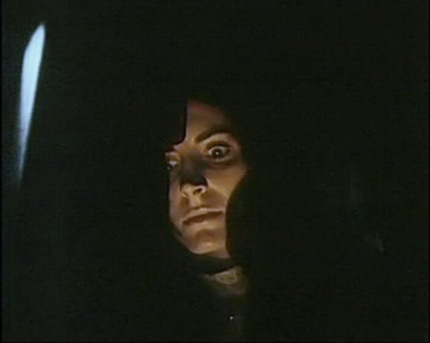
We cinephiles suffer from an irrational obsession. It's an insatiable lust for obscurity and esotericism, the nagging need to locate that one ultra-rare picture by that Korean director from the seventies that everyone's forgotten, the uncontrollable urge to see the last surviving 16mm print of Godard's discursus on Maoist colonoscopy. When, just over a month ago, the New Zealand Film Archive discovered a treasure trove of long-lost silent films, including a John Ford production and a Clara Bow period picture, we experienced a collective petite mort. And when A Holy Place showed up at the Fantasia Festival - "the version of Nikolai Gogol's short story Viy that foreign audiences have barely ever seen," says the festival guide - we all came out to have a look.
Shot in the Yugoslav countryside in 1990 as the shit dangled
menacingly above the fan, A Holy Place's
negatives ended up shanghaied in a Croatian production facility, a hostage to
the ethno-nationalist insanities of its time. The slightly faded 35mm copy we
saw at Fantasia, in the film's first public foreign screening, was a one-off
print intended for potential distributors. It was never meant for mass
consumption, and it showed. The print was dark, lacked colour collection, and
featured subtitles that wriggled about the screen in the moribund scrawl of a
harlequin fetus, bearing bizarre and, on occasion, serendipitously comical
spelling mistakes ("you are mush too old for me," utters our hero to the
grizzled and rather amorphous geriatric pining for his pud).
Given a properly titrated dose of camp, such lack of
professionalism is not only excusable, but endearing. A Holy Place, with its synthesizer soundtrack coming a decade too
late, punctuating moments of terror with a flatulent waveform and a preciously
digitized flute, would seem to be a plausible candidate for kitsch immortality,
but it just doesn't measure up. It begins as a classic, though transplanted,
retelling of Gogol's story, following three theology students as they trek
through the countryside. When they spend the night at the house of an aged
peasant woman, she attempts to seduce one of them, only to be beaten and left
for dead. Soon enough she has her vengeance, transforming into a voluptuous
young witch who haunts our prospective priest, forced against his will to pray
over her spontaneously reanimating corpse for three tortured days.
And tortured they are. A Holy Place is practically defined by its banality. The budget here is obviously Balkan in scale, but that doesn't mean we should give director Djordje Kadijevic a pass for a lethargic camera that meanders about his characters in near-permanent medium-long shots. There's just very little going on here. The few moments of levity - the priest's forest romp with his elderly seductress is worth a laugh or two - are largely offset by the leaden weight of the film's essential dullness. Even Kadijevic's main deviation from Gogol's original plot, a psychological interrogation of the origins of the witch's evil powers, is largely unmotivated and unbelievable. His characters, especially the women, who serve mostly as emasculating foils, are afforded no psychological credibility. They just don't talk, or act, enough for us to care.
Those of us who went to see the film as part of Fantasia's "Subversive
Serbia" series were animated by the promise of finding the diamond in the
rough, that rare and precious film that, by the accidents of history, has gone
unremarked, waiting for our fortuitous discovery. At times, this passion pays
off: Witness the recent wave of rediscovery of Japanese Art Theatre Guild
pictures from the 1960s. But more often than not, those films that have fallen
from grace, or never attained it in the first place, are shunned with good
reason. The false revelation of A Holy
Place is a case in point, a film so utterly unremarkable that, as I type
these words, it strikes me as paradoxical that I'm remarking it.