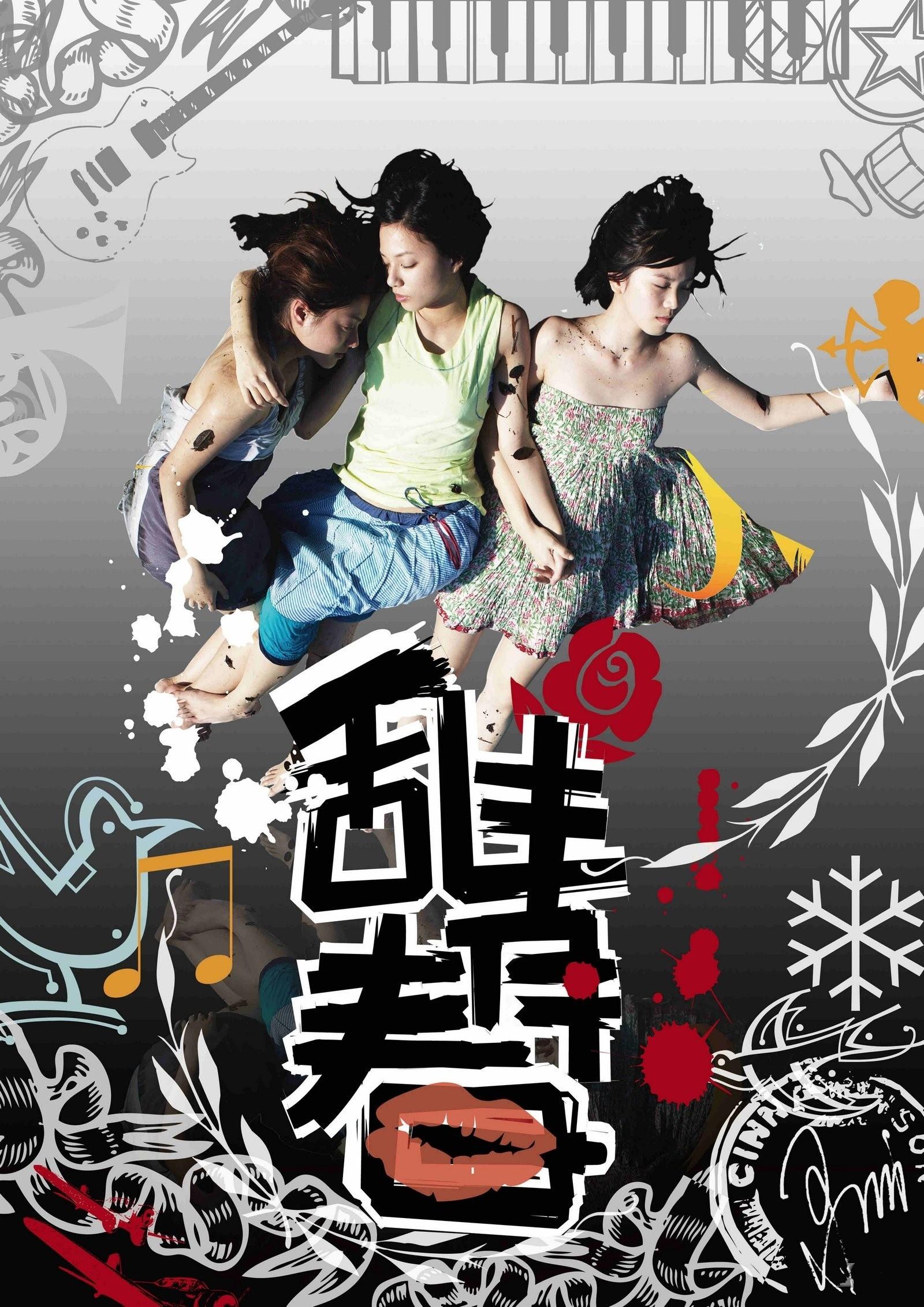
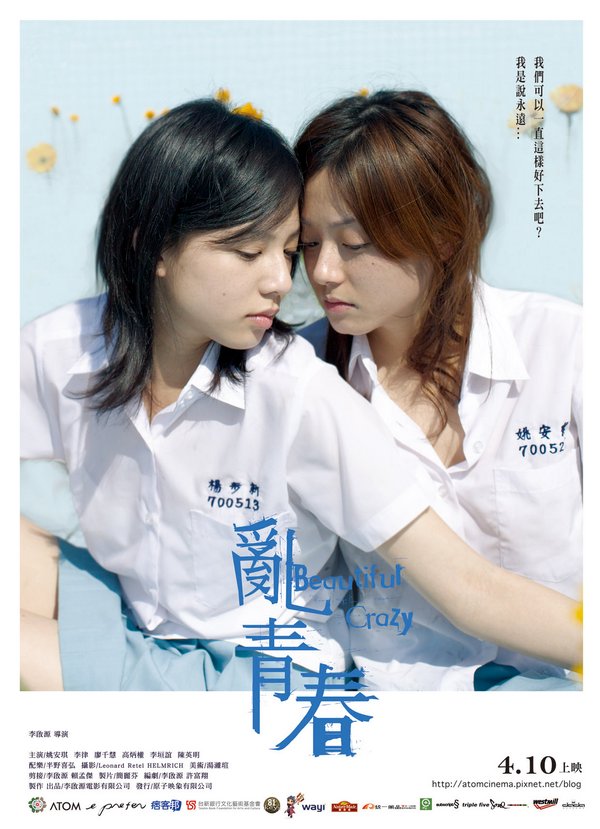
BEAUTIFUL CRAZY review

'Beautiful Strange' might be more apt. Little-known outside his home territory, director Chi Y. Lee's third film about the tangled relationships between three Taiwanese schoolgirls is the epitome of many an arthouse cliché (not to mention yet another entry in the country's very own sub-genre), and it never really does anything with the premise that comes off as truly startling or unexpected. But it is fantastically shot and scored, not to mention surprisingly heartfelt, even with its loose, hallucinatory structure and pacing.
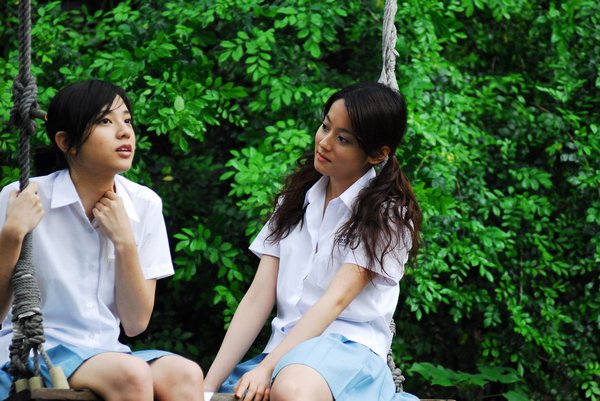
There's Angel, Xiao-Bu and Ah Mi; one the extrovert, acting out in denial of her home life, the tiny, rundown flat she shares with her morbidly obese father; another the sensitive, concerned about her friends, wondering where their relationship is headed and the third the shy girl, tortured by her inability to reach out over what each of them is going through.
The narrative is a tenuous thing - this is the kind of film where the story is a scant few details yet the visuals and direction fill in many of the blanks. There are hardly any concrete answers, and even with those plot threads which seem relatively coherent there are still several points where it's difficult to establish whether they're actually real.
Very little about it is grounded in reality; we never see anything mundane; none of the three go to school, engage in simple day-to-day things or even have an ordinary conversation without every word ending up weighed down with significance. It doesn't help that much of the dialogue is improvised, which is fairly obvious from a few minutes in - the director is practically a tangible presence urging the leads to say something, anything, to break the awkward silence.
And yet on its own terms Beautiful Crazy is frequently a captivating little oddity. If it must be ambiguous and obtuse, at least it clearly establishes this early on; if it must be clumsy and sporadically cohesive at least it makes this an underlying theme, and if it must tell its story through dreamlike imagery at least the production values are frequently wonderful.
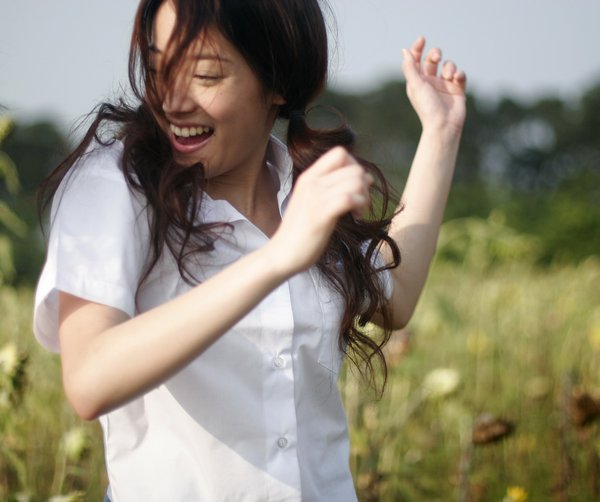
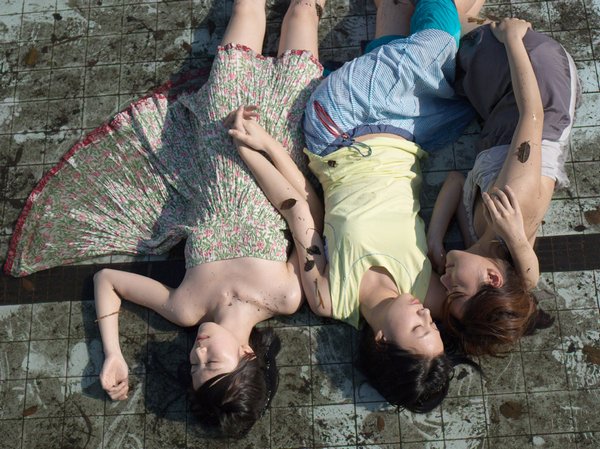
Cinematographer (and noted documentary filmmaker) Leonard Retel Helmrich shoots with a deceptively unhurried style, lensing in shaky, spontaneous DV that always remains confident and controlled at the same time - flipping between languid, sweeping camera movements and hovering, intimate closeups, or from black and white to a lush, saturated colour palette and back again. Yoshihiro Hanno's score is reflective, almost regretful, encompassing mournful piano solos, ragged, psychedelic guitar drones and wistful swing.
The end result is something like Christopher Doyle's take on Miao Miao might end up, ragged, raw, drunken and physical. On that note it is quite startling to sit through a piece of Taiwanese populist queer cinema that actually credits its leads with having had sex, or at least sexual experiences that weren't in soft-focus.
Beautiful Crazy isn't particularly explicit (apart from one conversation), nor does it fetishize its young actresses (much), but it does pitch its sexual scenes (gay or straight) as blunt, awkward, uncomfortable and jarring, intended to jolt or unsettle the audience. Much like the film as a whole, these sequences teeter on the edge of camp, pretension or outright histrionics but Lee and his cast just manage to keep things under control.
It isn't believable per se, but then that really doesn't seem to be what the director was aiming for. This is a tone poem or a mood far more than a conventional narrative (the kind of film Cheng Yu-Chieh's Do Over should have been) and taking that into account Beautiful Crazy is quietly effective, even heartbreaking, more often than not. The three leads do a creditable job of inviting empathy, despite all their characters' shortcomings and mistakes, and though they only experience brief moments of actual happiness the film never resorts to arthouse miserablism.
Some will detest Beautiful Crazy outright, guaranteed; it is wilfully vague, uses style as substance and doesn't so much peter out as stop dead. Yet the same things that come across as self-indulgent doodling on celluloid will also be reasons to watch for some; there are no pat life lessons here, no canned nostalgia or maudlin self-pity. It warrants definite reservations, but for once Taiwan has produced a teenage drama that's free-wheeling where it could have been rigidly linear, painterly where so many of them are visibly over-produced and painful where most are decidedly non-threatening, and for the right audience it comes highly recommended.