Karlovy Vary 2026 Interview: THE FRIEND'S HOUSE IS HERE Directors Maryam Ataei and Hossein Keshavarz

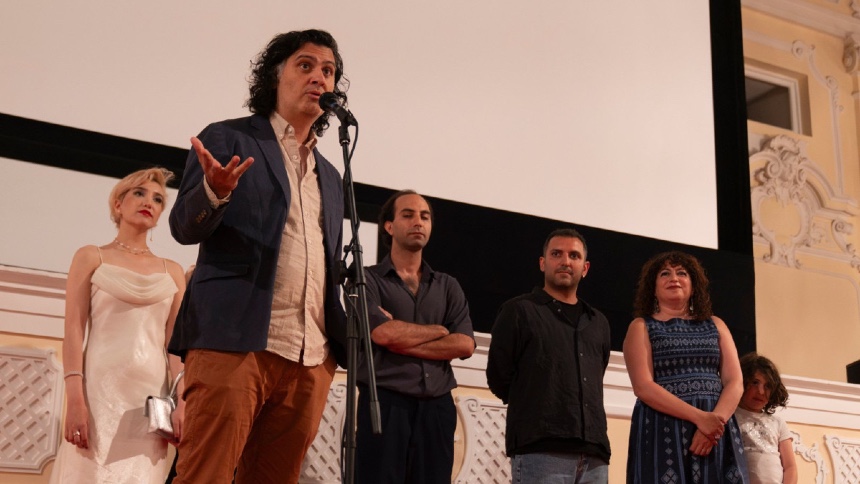
Made clandestinely on the streets of Tehran, The Friend’s House Is Here follows Pari, a curator and independent theatre director, and Hanna, a dancer determined to leave Iran, as political pressure complicates their lives but strengthens their friendship.
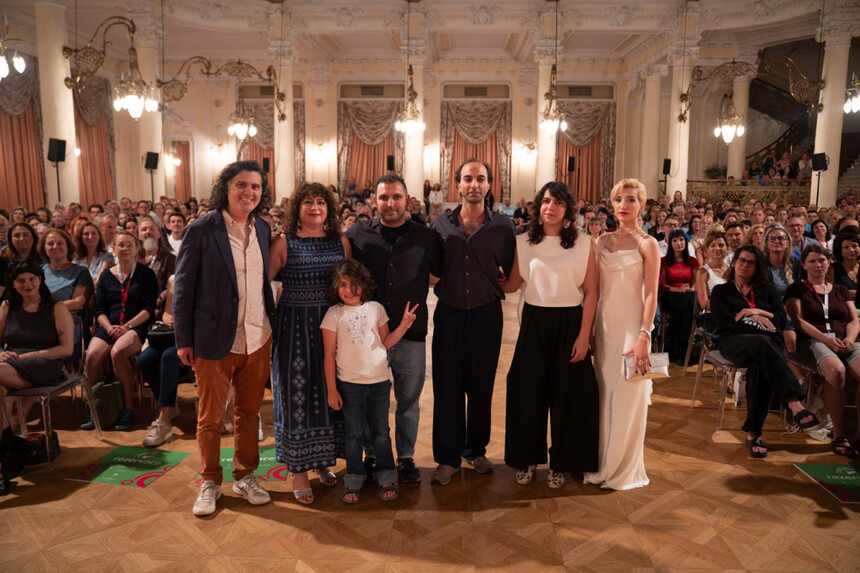
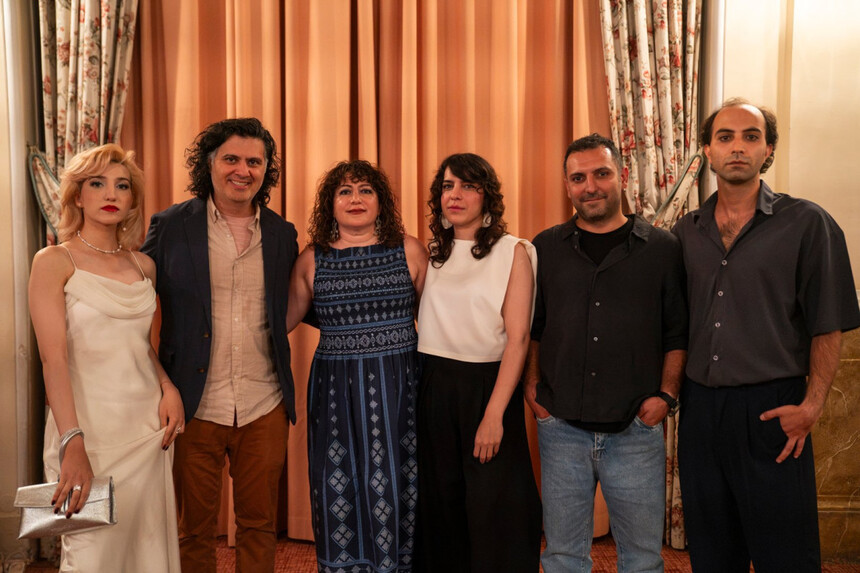
Directed by Maryam Ataei and Hossein Keshavarz just days after the June war, the film captures a generation increasingly unwilling to submit to imposed rules or surrender its right to artistic freedom. Screen Anarchy sat down with Ataei and Keshavarz to discuss the risks of underground filmmaking, their improvisational approach, and the community that helped bring the film to the screen.
ScreenAnarchy: The film has already had a remarkable journey. How did it come together so quickly?
Maryam Ataei: We made it very fast. We began shooting at the end of the summer, submitted it to Sundance almost immediately and got the call a week later. We planned to complete the color and sound in Iran, but then the protests happened and the internet and phone lines were cut. We lost contact with our crew. As the Sundance screening approached, we thought, “What are we going to do?”
We contacted post-production people in New York and prepared to finish everything there in three days. Then our cinematographer’s wife called me from the United Nations office in Tehran. She said, “Don’t be frightened, but two crew members are taking the film across the border on a hard drive.” I said, “Oh my God, this is too dangerous. Don’t do it.” But they crossed safely and uploaded the film. It arrived the day before the press screening. Everything happened incredibly quickly. It was very stressful.
Hossein Keshavarz: Maryam and I had wanted to make this film for about five years. We had been consulting on a large Hollywood production, but it was cancelled. After that, we said, “We have to make our own film. We can’t depend on other people.”
We were attending a lot of underground theatre in Iran, and that was where we met Mahshad, who plays Pari. We were blown away by her and by the whole group. We wanted to make a film that introduced these young artists to the world and allowed audiences to fall in love with them as much as we had.
Then the war began. We were in Iran with our six-year-old daughter, who kept asking what was happening. We left, but returned as soon as flights reopened.
We developed the film with the actors, shot from mid-September to mid-October and returned to the United States in time for Halloween, as we had promised our daughter. We edited the film and showed a very early cut to one or two people. They immediately said, “You have to submit this to Sundance.” The collaborative nature of the film felt magical. Everyone was completely committed, even though we were under enormous pressure because we were working underground.
But you were filming openly in the streets?
Hossein Keshavarz: We had experience. We used a very small camera that looked like a still camera. People assumed we were taking photographs, but we were shooting a feature film. We filmed in Tehran and in northern Iran. The scenes in which the mother asks for her money were shot in Rasht and Bandar Anzali, near the fish markets. Maryam and I had previously made Dog Sweat, one of the first post-revolution Iranian films to show women without veils. So we already knew something about underground filmmaking.
You have to structure the shoot differently. There is no visible boom operator or large crew. The sound recordist carries the equipment in a bag. We don’t call “action” or “cut.” A day or two beforehand, we visit the location with the cinematographer and make a rough version of the scene on a phone. We rehearse with the actors, show them the location and plan their movements.
When we return, we perform the scene two or three times in a continuous loop. We walk around as though we are simply part of the street. We sometimes had access to the camera monitor through a phone app, but the connection rarely worked, so we mostly listened. We would pass the actors, quietly give a note, do another take and leave before attracting trouble.
Did people realize you were making a movie?
Hossein Keshavarz: They saw a camera, but people film themselves for Instagram all the time. That doesn’t necessarily look suspicious. Officially, you need permission to shoot a film. In the past, you might have obtained a permit for a short film or a religious film and shown it if somebody stopped you. But if you are filming women without veils, the permit doesn’t matter. What you are doing is still illegal.
Maryam Ataei: It is a confusing moment because so much has changed since the Woman, Life, Freedom movement. Many women in Tehran, especially in the areas where we live, no longer wear veils. In a strange way, the situation has reversed.
When the government shoots in the street, it sometimes has to bring veiled extras because there may not be enough women wearing veils naturally in the background. We were also very careful about people’s identities. After filming in the bazaar, I approached people whose faces were visible and asked whether they were comfortable appearing.
During another scene, a man demanded to see our permit. I thought he might be bluffing, but he radioed the details in. He said, “You can’t shoot here.” I said, “We can.” Then he stood there and announced that he was going to watch us. Our cinematographer wanted to leave.
Hossein Keshavarz: He didn’t even want to press record.
Maryam Ataei: The actors had already started, so I pressed record myself.
Do you think the man was actually an official?
Maryam Ataei: I think he was bluffing.
Hossein Keshavarz: But he did radio in the permit.
Maryam Ataei: That is the problem: you never know. Before we started, a filmmaker’s house had been raided. After we finished, another filmmaker’s house was raided, and somebody else had just been arrested.
Hossein Keshavarz: We wanted to communicate two things. The situation is dangerous, and people have to be careful. But danger has also become part of everyday life. In the film, Pari is arrested, but she continues living. That reflects our own experience. We were frightened, but we continued making the film.
Almost everyone involved has been arrested at some point, but they are not victims. Repression is part of their lives, but it does not define them. Their lives are much greater than the government trying to stop them.
They are dynamic people with extraordinary visions for their art and their futures. A different film might end with an arrest, or with one friend sacrificing her life for another. What we see in Iran is people helping one another. We see solidarity and community. That is what we wanted to celebrate.
Is there a large underground artistic community?
Maryam Ataei: A huge one: theatre, film and many other forms of art. So many people helped us. One crew member had worked with Jafar Panahi and spent twenty days in jail, but she came out and continued doing what she believed was right.
After this film, I worked on a documentary with someone who had appeared in one of Mohammad Rasoulof’s films and had also been jailed. She continued too. That resilience is spectacular to me. It pushes you to work because these people already exist and are already doing the work.
Has the film’s international visibility brought consequences?
Hossein Keshavarz: Usually, the authorities try to sabotage a film before it is completed. Once it reaches major festivals, they may pretend it is unimportant, that they have bigger fish to fry. Hopefully everything will be fine. But there is no predictable law. They may harass one person and leave the next person alone.
Our film is political, but it is also deeply social. It is a celebration of these people. We are trying to say something truthful about their lives. Mahshad often says that people in Iran encounter restrictions from a young age. What they learn is how to overcome them.
How extensively did you rehearse?
Maryam Ataei: We rehearsed the major scenes for two or three weeks. Much of that work was improvisational.
Hossein Keshavarz: Almost every scene is a single shot. There are no intercuts until the final scene. We chose that form partly to preserve the immediacy of the improvisation, but also because we wanted to show the real Iran. We weren’t cherry-picking individual images. We wanted the camera to capture Tehran as it looked around us.
Combining improvisation, long takes and unpermitted exterior filming made the production extremely difficult. The margin for error was very small.
How do you prevent mistakes in that situation?
Maryam Ataei: Mistakes happen. That is part of life.
Hossein Keshavarz: You have to trust the cast and crew. We didn’t give the actors a conventional script. Maryam and I knew what each scene needed to accomplish, but we wanted the actors to find the words themselves. During rehearsal, someone would say something interesting and we would develop it.
By the time we entered the street, the actors had lived through the scene. If something unexpected happened, they could adjust. They weren’t repeating memorized dialogue; they were inhabiting an experience they had helped create. And, miraculously, people kept helping us.
Ordinary people who happened to be there?
Maryam Ataei: Yes. We filmed in a shopping mall, and people helped even though they knew it might be dangerous. We didn’t pay them.
Hossein Keshavarz: The film would have been impossible without shopkeepers, mall workers and people at the fish market. We might arrive in front of a shop and say, “We are shooting a short scene. Can we film here? Would you appear in it?” We would explain the basic conversation, rehearse it a few times and shape it together.
Sometimes people added something beautiful. A woman at the fish market said, in effect, “If this character is asking for help, I want to make sure I actually give her something.” She wanted to give her a freshly caught fish. Her hospitality became part of the scene. Another woman told us that something similar had recently happened in her own family. We said, “Use that experience.” Everywhere we went, people seemed to be saying, “This should be part of the film too.”
Was the central story drawn from real experiences?
Maryam Ataei: Yes. It is based on things that happened to many of our friends. We were interested in how much roommates and friends helped one another. One story came from a singer we met while writing. The authorities had closed her Instagram account because she posted videos of herself singing and ordered her to appear for questioning. Her roommate drove her there and waited outside until she came out.
We heard many stories like that. Sometimes someone is arrested and suddenly disappears. Their friends are the ones who begin looking for them. Another actor who auditioned told us that his roommate, also an actor, had been in prison for almost three years. It was heartbreaking to hear how relentlessly he was trying to secure his release. Those stories of genuine friendship moved us.
Hossein Keshavarz: The singer also told us that, during interrogation, the authorities placed everything she had ever done in front of her. They had been following her and knew whom she had spoken to. To get out, she had to sign a statement promising never to sing again. The first time she sang after that, she was terrified. She knew she was taking a risk, but she began singing again. That always impressed me. People understand the danger and overcome it.
Did you hold a regular casting process?
Maryam Ataei: We auditioned many people, and some stories in the film came from those auditions. We contacted friends and friends of friends. I studied theatre and film directing at two major universities in Iran, so I knew people in those communities.
Hossein Keshavarz: Trust was essential. If you trust the wrong person, you can be arrested. But the actors also had to trust us. Because we had made Dog Sweat, people knew our work and were willing to take that risk.
Maryam Ataei: The singer we mentioned lost her close friend Soroush in the bombing. Three days into the war, the place where he was staying was hit. He was a remarkable artist. He understood computers, new media, lighting, filmmaking and graphic design, and he brought other artists together around him. The place where she taught singing was also bombed. The government is already putting people under pressure, and then the war makes everything worse.
Did you discover during editing that you were missing anything?
Hossein Keshavarz: No. We used around ninety percent of what we shot. Because each scene is essentially one shot, there were only four or five shots we didn’t use. There was an opening sequence we removed and one other scene we cut, but we didn’t need additional filming. We were constantly adapting while shooting. Sometimes an idea emerged from a location; sometimes something became impossible and we had to restructure the sequence.
I was also assembling the film during production. We had planned a scene in which Pari has a small breakdown after everything that has happened to her. We didn’t want to show the prison or familiar images of state violence. Those scenes have been seen before, and we didn’t want to grant the government that power within the film. We wanted to celebrate the artist.
Originally, we planned to shoot the scene in a beautiful, windswept location. But when I looked at the footage, I realized we already had so much beauty. Then we passed an ugly industrial stretch of road filled with pipes. I said, “Stop here.” We pulled over and filmed the scene beside the road.
How do you divide responsibilities as co-directors?
Maryam Ataei: We disagreed only once.
Hossein Keshavarz: Over a scarf.
Maryam Ataei: I said the character had to wear one in a particular scene. Hossein said she shouldn’t.
Hossein Keshavarz: In many parts of Tehran, especially in more liberal communities, most women now go without one. But in some neighborhoods, women still feel compelled to cover their hair. When the characters go to the bazaar to ask for money, Maryam said the scarf was necessary. I thought the character might not have the mental energy to put it on. But Maryam made a good point: Even while we were shooting there, everybody was looking at us. It was the kind of place where the character would feel exposed.
Maryam Ataei: She was also coming out of a government building. I felt she would still feel threatened and instinctively put the scarf on. Government offices and banks may refuse to serve women who are not wearing one.
Hossein Keshavarz: It became a way of showing the contrast between overlapping versions of Iran. Audiences outside the country are not used to seeing Iran as it looks now. Some people watch the film and ask, “Is this really taking place in Iran?” It was also important not to deny anybody’s existence. Religious and secular people both have rights, and they have to find a way to coexist.
What are you working on next?
Hossein Keshavarz: We are developing an elevated genre film set in Iran in the 1880s, our own version of a vampire story. It is a feminist thriller about two sisters separated through forced marriage. One ends up in a royal harem, while the other is trapped in a merchant’s house.
The logline describes the founding of modern Iran through three groups of bloodsuckers: the politicians, the clergy and the British. It deals with imperialism and history, but it will also be a fun film. We want to use genre to reach a larger audience while keeping the story grounded and politically meaningful.
Would you shoot it in Iran?
Hossein Keshavarz: Probably not. It is a larger production, so we would most likely shoot elsewhere in the region.
Images courtesy of Karlovy Vary Film Festival Servis.