
Echoes: Zombies Are Just the Beginning: Why Great Writing Is Pakistan's Next Big Challenge

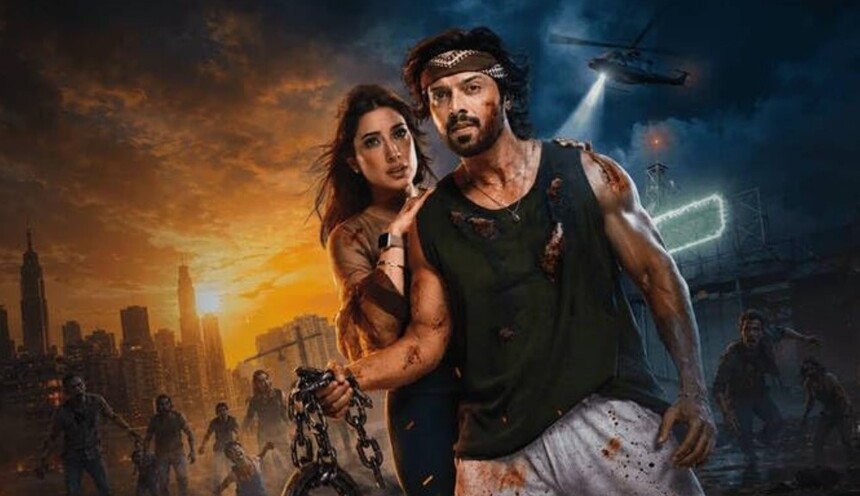
The recent release of the first-ever Pakistani zombie horror movie, Zombeid (2026), marks a big win for the Pakistani film industry. However, the film has been criticized at length for its shallow story writing and thin, rather basic plot. (Read our review by Simon Ramshaw.)
Lollywood is full of films that are mostly released on Eid for commercial premieres, as most of the country's film culture has thrived on box office earnings on Eid. Hence, the stories have been formed that should appeal to families and are deemed age-appropriate for people belonging to all age groups.
Movies like Love Guru (2025) and Na-Baligh Afraad (2024) have attracted a significant amount of box office earnings as cinegoers flock to their nearby theaters to have a good family fun time on Eid. No wonder Lollywood therefore relies heavily on family, comedy, and romantic themes that guarantee a safe and broad-appeal investment.
At this point, Pakistani cinema should realize that people here have all the subscriptions to Netflix, Hulu, and Amazon Prime, and are explicitly exposed to every type of complex-written content from around the world, and expect better writing as well.
It was truly a heartwarming moment for everyone in the region when they first watched Zombeid's trailer that had genuinely impressive top-tier prosthetic gore, VFX scenes, and special effects for a grounded horror feel. The social message of the film was also placed well within the story, but the story itself wore off quickly. Most parts of the film actually gave a semblance of the alpha zombie in 28 Years Later (2025) and killed the vibe altogether.
The extremely basic script robbed the film of its ability to touch the peaks of success as it tried to fuse Hollywood-style horror that resulted in a cookie-cutter plot. Deepening of the lore, character arcs, and genre-blending are the areas where the industry still needs to up its game.
The writers of the film, Fizza Ali Meerza and Nabeel Qureshi, are known to be the dynamic duo of Pakistan, who also served as producers under Filmwala Pictures, a famous distributor in Pakistan. The duo is known for their earlier hit collaborations like Na Maloom Afraad (2014) and Actor in Law (2016), but were equipped with a truly unique opportunity with Zombeid. Both these films had comedic narratives with Fahad Mustafa starring in both, just as in Zombeid.
The writers could have capitalized on the actor's reprising premise and could have known that the zombie genre is one of the most saturated film genres in the world. The audience could quickly get tired of watching the unsightly transformation of humans into another being and chasing the non-infected humans. It now needs a powerful story to keep the audience hooked throughout the film, rather than making a two-hour film feel like torture.
The zombie genre now asks for meaning and substance rather than producing mere special effects for the zombies only. And I would like to make a comparison here with other Pakistani horror films that have done great work in the writing domain before.
For example, Usman Mukhtar's Gulabo Raani (2023), a short film that bagged several awards at international film festivals. The 35-minute film is my personal favorite, as even in its limited time, it packs a serious punch, leaving a cold feeling behind.
I would also like to count 2025's Deemak, a supernatural thriller film, as one of the impactfully written flicks of the industry. Zero surprises that it was scribed by a well-known book writer, Ayesha Muzaffar, whose writings mostly include her father's tales of exorcism, authored in Abu's Jinns, published in 2018. The eerie atmosphere and psychological tension penned by Ayeha could be felt in the film as well, though the film wasn't free from criticism for poor visual effects and sluggish pacing.
Similarly, Zibahkhana (2007) also received fair praise for being a Western slasher teen film, counted as a rarity in the Pakistani horror genre. Our own Kurt Halfyard saw the film when it played at Fantasia 2007, commenting: "The film could easily have been titled Islamabad Morningstar Massacre. If the no-budget production could afford to cough over royalties, they should be posted to Tobe Hooper, Lucio Fulci and Sam Raimi, stat.
"But here is the difference. There is much more atmosphere, character and style injected into the proceedings. The result is something that should feel old-hat is born again surprisingly fresh. ... This is not exoticism for exoticism sake (a complaint leveled at many a countries exported cinema product) but rather a loving hug to a rich B-cinema past."
The film is also known as Hell's Ground, and was written by Omar Ali Khan and Pete Tombs. Knowing that the co-writer is a British author, the film definitely did well in paying a solid tribute to 1970s and 80s slasher pics.
It leaves me wondering: What if Pakistan's pioneering zombie movie got any one of these writers to draft a story that could have actually worked wonders, despite being clear that the filmmakers intentionally leaned toward a family comedy film, staying true to the traditional formula of Eid releases, which is why Fizza Ali Meerza and Nabeel Qureshi were chosen for the project, since they have worked in similar territory before.
Would it still have worked? Would the film have been counted as a family event and earned the filmmakers decent box office numbers? Would it transpose to a bigger audience? Must film writing always be about making money without making an impact on the audience?
As mentioned before, the Pakistani audience is accustomed to consuming complex international content and craves good writing in their own country as well. The reviews for Zombeid speak for themselves.
Films like Zombeid, which is still considered the beginning of a broader creative movement, could become unforgettable stories rather than one-time experiments if story writing is bettered proactively. The appetite for something real and gutsy is clearly there, which gives me hope for a bright future for the Lollywood horror genre.
Echoes is an opinion column on film and television from the perspective of a writer based in Pakistan.

More about Echoes
- Echoes: HANGING BY A WIRE, Pakistan's First Academy Award Documentary Entry, Was Shot Entirely on a Phone
- Echoes: Pakistan Wants A Film Industry. Does It Have the Crew to Build One?
- Echoes: The Changing Art of Pakistani Film Posters
- Echoes: Pakistan Has An Indie Film Movement. Why Aren't We Talking About It?
- Echoes: 10 Pakistani Performances That Deserved Far More Attention

More about Zombeid
- Echoes: Pakistan Has An Indie Film Movement. Why Aren't We Talking About It?
- Echoes: Why Did It Take So Long For Lollywood to Make Its First Zombie Movie?
- Echoes: After ZOMBEID, Can Pakistan Build Its Own Horror Universe?
- Echoes: Why Is Horror the Most Untapped Genre in Lollywood?
- Echoes: Pakistan Has Yet to Build a Strong Animation Industry


